


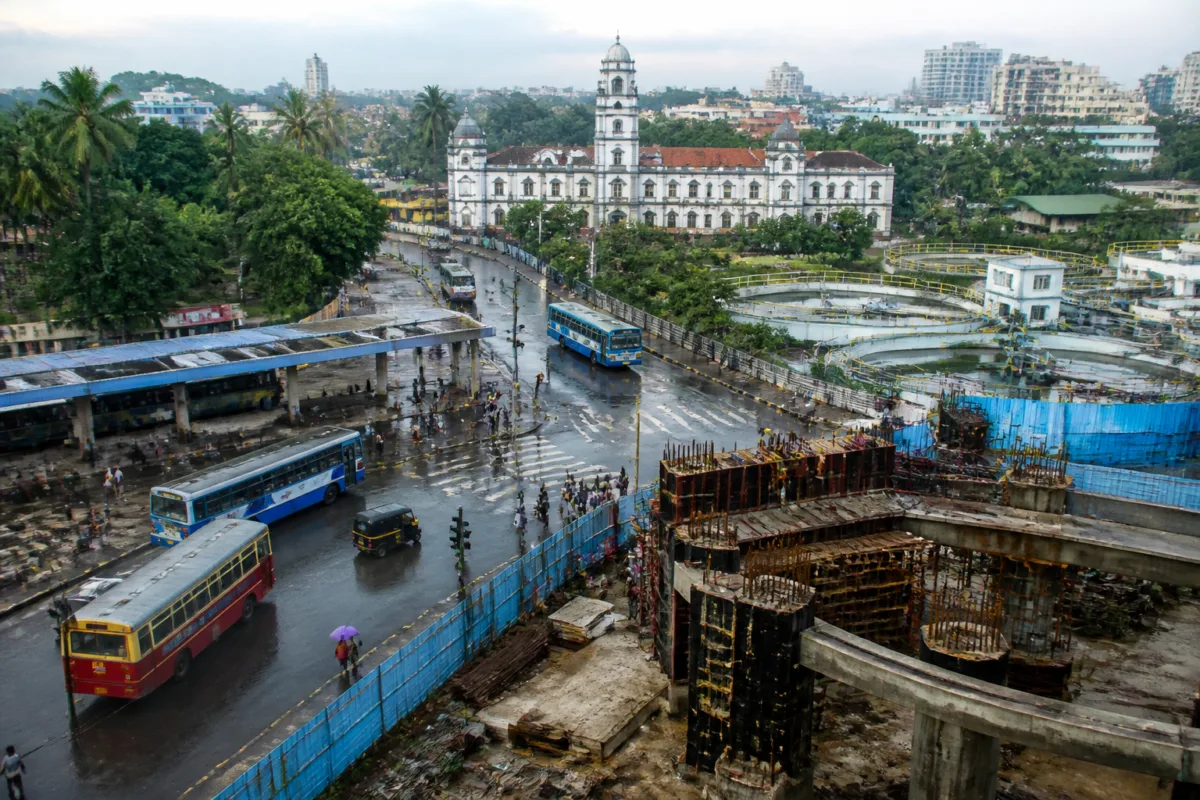
Kochi Projects 2050, a proposed ₹1,500-crore framework approved by the Kochi Corporation council, places the city’s next phase of development at the intersection of infrastructure ambition and municipal financial capacity. The plan brings together 30 large projects, including mobility hubs, bus-stand modernisation, a civic tower, a digital twin, a waste-treatment plant and cultural facilities. Its implementation, however, will depend not only on project approval but also on the Corporation’s ability to assemble debt, grants, private participation and its own revenues.
The council approved the broad development document after a presentation and explanation of the 30 proposed projects. The Corporation intends to use the Union government’s Urban Challenge Fund to take the proposals forward. The project recommendations will first be submitted to the state government. Only projects that receive approval will have detailed project reports prepared and sent to the Centre.
That sequence is important. The council approval is a political and institutional commitment to a project pipeline, not yet confirmation that all 30 projects will be sanctioned, financed or built. The supplied report does not establish a final implementation schedule, land-acquisition plan, procurement timetable or operating model for the individual projects. Those details will determine whether the framework becomes a coordinated urban programme or remains a list of ambitions.
## Kochi Projects 2050 and the financing test
The proposed financing structure reveals the central challenge. The report states that 25 per cent of project costs would be available as a central grant. The local body would be required to raise at least 50 per cent of the balance through municipal bonds, green bonds, bank loans or public-private partnership models. The remaining share is not specified in the report.
For a ₹1,500-crore programme, a 25 per cent central grant would amount to about ₹375 crore if the entire proposed value were eligible and approved. The local body’s minimum contribution through borrowing or private participation would be at least half of the balance after the grant, or about ₹562.5 crore. These figures are indicative calculations based on the stated proportions, not a confirmed financing sanction. They also assume that the full project value is accepted under the funding programme.
This structure shifts a substantial part of the development responsibility to the municipal institution. A grant can reduce the initial burden, but it does not remove the need to prepare bankable projects, service debt, manage contracts and maintain completed assets. Municipal bonds and green bonds require credible financial disclosures and repayment capacity. Bank loans create scheduled liabilities. Public-private partnerships require clearly defined risks, revenue arrangements and public safeguards.
The report does not provide the Corporation’s existing debt position, annual revenue, borrowing limit or the proposed repayment source for the projects. It also does not specify which schemes would qualify for green financing or which projects would be structured as public-private partnerships. These gaps do not invalidate the proposal, but they show why the next stage of documentation will be as important as the council’s approval.
## A project list that spans the whole city
The proposed projects cover several layers of Kochi’s urban system. The Kaloor Integrated Mobility Hub is estimated to cost between ₹150 crore and ₹200 crore, while the proposed Vypeen Integrated Mobility Hub is estimated at ₹75 crore to ₹100 crore. Modernisation of bus stands is expected to cost between ₹50 crore and ₹75 crore.
Together, these proposals suggest an attempt to treat public transport infrastructure as more than a collection of individual terminals. Mobility hubs can bring together different transport services and supporting facilities, but the source report does not describe the proposed transport modes, interchange design, land requirements or operational authority for either hub. Without those details, it is not yet possible to assess whether the projects will improve transfers for passengers or simply create larger terminal buildings.
The proposal for a civic tower at Kacheripady, estimated at ₹175 crore, represents another kind of intervention: the concentration or modernisation of municipal functions in a major public building. Its urban value will depend on how it changes access to civic services, how much public money it requires to operate and what happens to existing municipal facilities. The supplied report does not provide those details.
The list also includes an ₹80-crore cultural centre at Koker and a ₹70-crore development of the Palluruthy Relief Settlement. These projects indicate that the framework is not limited to transport and revenue-generating assets. The Palluruthy proposal, in particular, brings settlement improvement into the same capital programme as mobility, civic administration and technology. That raises a question about how the Corporation will balance projects that may generate direct income with those whose returns are primarily social or public-service based.
## Revenue generation versus balanced development
The funding model has already prompted a political debate inside the Corporation. LDF parliamentary party leader V.A. Sreejith reportedly warned that giving priority only to revenue-generating projects could harm balanced development. He also expressed concern about shifting locations currently used for welfare schemes to revenue-generating projects.
This is one of the most consequential issues within the proposal. Urban infrastructure produces different kinds of returns. A bus terminal may generate commercial income, while a waste-treatment plant may produce public-health and environmental benefits that are harder to capture as municipal revenue. A settlement-development project may improve living conditions without creating a conventional income stream. If all projects are assessed primarily through their ability to earn money, programmes serving lower-income residents or unpriced public needs could be disadvantaged.
The source report does not identify which of the 30 proposals are revenue-generating, which require public subsidy and which would depend on grants. It also does not state whether the Corporation has prepared a social-impact framework or an affordability test. Those distinctions will matter when the detailed project reports are prepared and projects are ranked for approval.
The cultural component has produced a separate debate about whose histories and contributions are represented in public space. A proposal for a memorial to singer K.J. Yesudas was criticised for excluding literary critic M.K. Sanu and ghazal singer Umbayi. The Mayor reportedly assured the council that the proposal would be revised into a public cultural centre.
That change would broaden the purpose of the project, but the report does not specify its governance structure, programming model or capital and operating costs. It nevertheless illustrates that urban projects are not only technical or financial decisions. They also determine which civic identities are made visible and how public institutions define shared cultural space.
## The infrastructure and technology layer
The proposed ₹32-crore Brahmapuram waste-treatment plant is among the clearest examples of a project with citywide implications. Waste infrastructure affects public health, land use, environmental management and municipal operating costs. The proposal’s inclusion in a larger capital framework could allow waste management to be considered alongside transport and civic facilities rather than as an isolated service.
However, the report does not state the proposed treatment technology, capacity, land arrangements, environmental safeguards or operating agency. It also does not clarify how the plant would connect to collection, segregation and disposal systems. Those details will be essential in the detailed project report stage because a treatment facility’s performance depends on the wider waste chain, not only on the plant itself.
The proposed modern slaughterhouse for West Kochi, estimated at ₹20 crore, is another service facility with regulatory and public-health implications. Its inclusion shows that Projects 2050 includes basic urban services as well as high-visibility buildings and mobility infrastructure. Yet the available material does not establish its capacity, location, land status or management arrangement.
The ₹35-crore Kochi 3D digital twin and urban intelligence platform would create a technology layer for the wider programme. A digital twin can potentially support the visualisation and management of urban assets, but the supplied report does not describe the platform’s data sources, departments, public-access provisions or privacy safeguards. It is therefore not possible to determine whether the proposal is intended primarily for internal municipal management, planning, citizen services or all three.
The project’s value will depend on whether it is connected to actual administrative decisions. A digital platform that does not update asset information, support approvals or improve service monitoring would remain a visualisation tool rather than an urban intelligence system. The approval stage provides no evidence yet about how that connection would be established.
## What happens after council approval
The next institutional step is submission of the proposals to the Kerala government. Only approved projects will proceed to detailed project reports for submission to the Centre. This creates several decision points between the current announcement and construction: state-level scrutiny, central-fund eligibility, project prioritisation, technical design, financing closure, tendering and implementation.
The report does not state whether all 30 projects will be submitted together or whether they will be divided into phases. It also does not identify the authority responsible for coordinating the programme across transport, sanitation, public works, culture, finance and digital governance. A portfolio of this size will require more than individual project execution; it will require a system for sequencing works, managing interfaces and reporting progress.
The proposed framework also raises the question of municipal accountability. If bonds and loans finance a significant share of the programme, residents will ultimately be affected by the Corporation’s repayment obligations and operating costs. If private participation is used, contracts will shape access, pricing, land use and revenue distribution. The supplied report does not provide those terms, so the public consequences remain to be established through future documents.
Kochi Projects 2050 therefore marks an important transition from isolated project announcements to a citywide capital pipeline. The evidence currently confirms the scale of the ambition, the broad financing conditions and the range of sectors involved. It does not yet confirm which projects will be approved, how they will be financed in practice or how their social and operational outcomes will be measured.
The immediate developments to monitor are the Corporation’s submission to the state government, the list of projects that receive approval, the detailed project reports sent to the Centre and the financing arrangements attached to each proposal. Those documents will show whether Kochi’s long-term development plan can balance revenue generation with welfare, basic services, cultural infrastructure and inclusive urban improvement.

