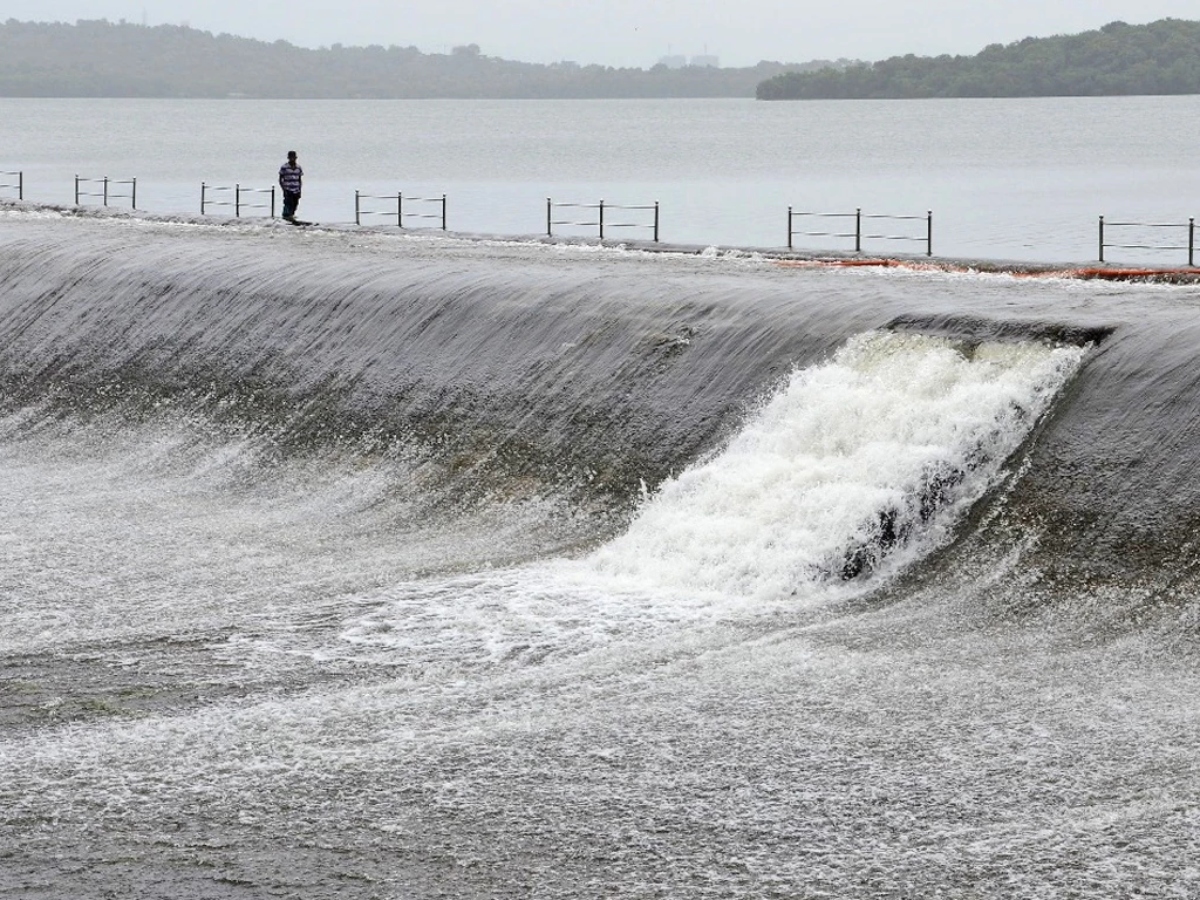
Mumbai Reservoirs Retain Strong Water Stocks Into September
Mumbai is entering September with its principal drinking-water reservoirs holding almost 96% of combined live storage, providing the city with a substantial buffer as the monsoon moves towards its final phase. The seven lakes contained 13,88,054 million litres at 6am on August 31, equivalent to 95.90% of capacity. The level is marginally below recent years, highlighting the importance of monitoring rainfall rather than relying only on near-full storage. The latest figures from the civic Hydraulic Engineer’s Department show that Vihar is completely full, while Modak Sagar is at 99.99%. Tansa and Middle Vaitarna are also close to maximum storage, at 98.33% and 98.18%, respectively. Bhatsa, Mumbai’s largest reservoir by storage capacity, stood at 95.83%, while Upper Vaitarna remained the least filled at 89.76%.
The overall position nevertheless represents a slight year-on-year decline. On the same date in 2025, the reservoirs held 13,93,408 million litres, or 96.27% of live storage. The corresponding figure in 2024 was 13,97,342 million litres, equal to 96.54%. The differences are relatively small, but they demonstrate why Mumbai’s water reserves need to be assessed against rainfall patterns and seasonal demand rather than a single percentage. The distribution between reservoirs also matters. Bhatsa alone accounts for a substantial share of the city’s stored water, meaning its level has a greater bearing on overall supply than the smaller lakes within the system. Upper Vaitarna’s lower storage provides another reminder that rainfall is not uniform across the catchment areas feeding Mumbai’s water network.
Rainfall over the latest 24-hour period was limited. Upper Vaitarna received 5mm and Modak Sagar 3mm, while several other reservoirs recorded no rainfall. Yet cumulative monsoon rainfall across the catchments has been substantial, allowing storage to remain close to capacity despite the recent slowdown. For Mumbai, high reservoir storage offers more than short-term reassurance. Water availability influences household supply, commercial activity, construction and the city’s ability to manage periods of weak rainfall. A strong reserve can also reduce pressure for emergency interventions when the monsoon becomes less reliable. But near-full lakes should not obscure longer-term water risks. Climate variability can produce intense rainfall followed by extended dry periods, while a growing metropolitan population continues to increase demand. Efficient distribution, leakage reduction, catchment protection and careful demand management therefore remain important even when reservoirs are well stocked.
The immediate picture is favourable, with Mumbai water reserves providing a strong cushion at the end of August. The next question is how much of that buffer remains once the monsoon withdraws and the city’s dry-season demand begins to draw steadily on the stored supply.