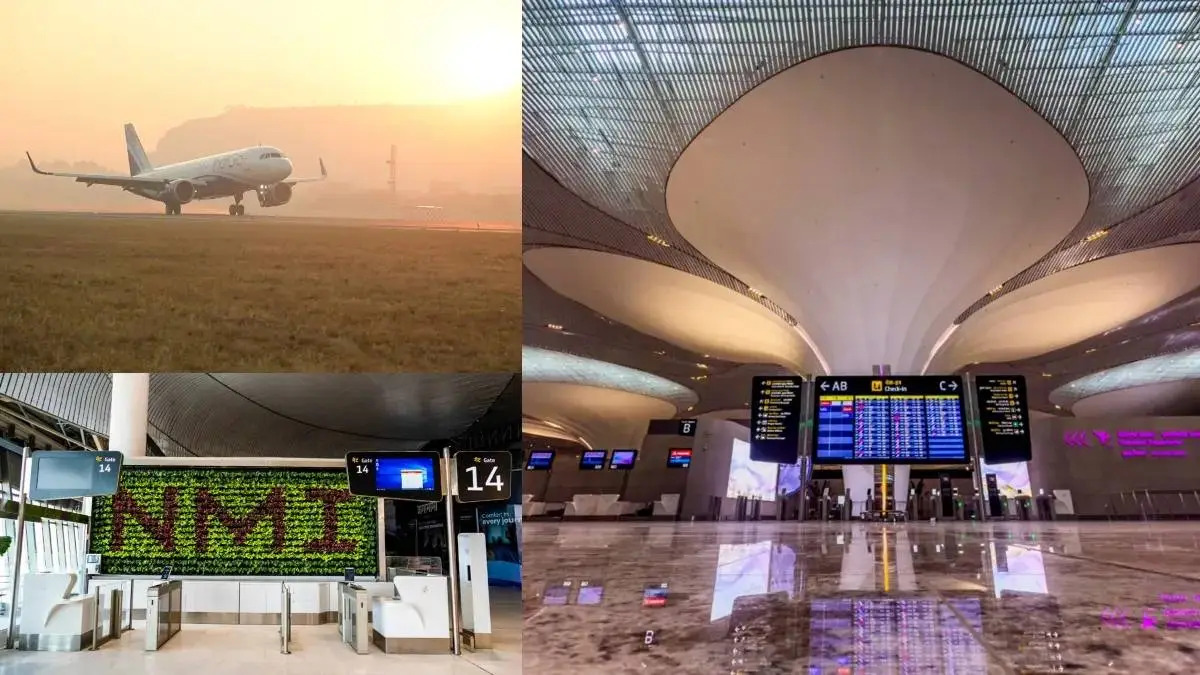
Mumbai Airport Staff Prepare For Navi Mumbai Shift
Mumbai’s airport network is preparing for a significant operational transition ahead of the redevelopment of Terminal 1, with a portion of international flight movements expected to shift to Navi Mumbai International Airport from October 1. The change is part of a phased redistribution of traffic before work begins on the northern section of Terminal 1B in January 2027, creating new logistical challenges for passengers and airport workers. The immediate trigger is the planned reconstruction of Terminal 1 at Chhatrapati Shivaji Maharaj International Airport. Regulatory documents have recorded the need to replace the ageing terminal complex, while the airport operator has previously said the rebuilt facility is intended to add capacity.
According to correspondence reported this month, at least one-third of international air traffic movements currently handled at Mumbai airport are planned to move to Navi Mumbai International Airport from October 1. From October 25, at least one-third of the traffic operating from Terminal 1 is expected to shift to Terminal 2. The operator has been engaging airlines on the transition, with the changes designed to create operating capacity before demolition begins. The distinction between Mumbai airport operations and individual passenger numbers is important. The proposed redistribution is based on air traffic movements, meaning flights rather than a fixed proportion of passengers. Travellers therefore cannot assume that exactly one-third of all passengers will move to Navi Mumbai or that every airline will follow the same schedule. The transition has also exposed a less visible urban issue: the workforce supporting Mumbai’s aviation system. Ground handling, cleaning, security and other airport services depend on thousands of workers whose homes and daily travel patterns are concentrated around the existing airport.
A move to Navi Mumbai could increase commuting distances and transport costs for some employees unless staff mobility is planned alongside flight redistribution. For passengers, airport choice will become more important. Mumbai and Navi Mumbai are separate airports with different road and rail access patterns. The operational shift will require clear communication on airport codes, terminals, transfer arrangements and public transport connections. Confusion could be particularly costly for passengers travelling during peak periods or with tight schedules. The redevelopment also has a wider infrastructure dimension. Rebuilding Terminal 1 while maintaining Mumbai’s aviation capacity requires the region’s two airports to function as a coordinated system rather than as isolated facilities. Regulatory assessments have previously highlighted the relationship between T1 reconstruction and the availability of Navi Mumbai’s capacity.
For Mumbai airport operations, the next phase will therefore test more than construction management. Reliable passenger information, affordable staff transport, strong airport-to-city connectivity and coordinated airline scheduling will determine whether the transition can absorb the disruption while keeping Mumbai’s wider aviation network accessible. The October changes should be treated as the beginning of a longer transition, with the major construction phase scheduled to follow in January 2027.