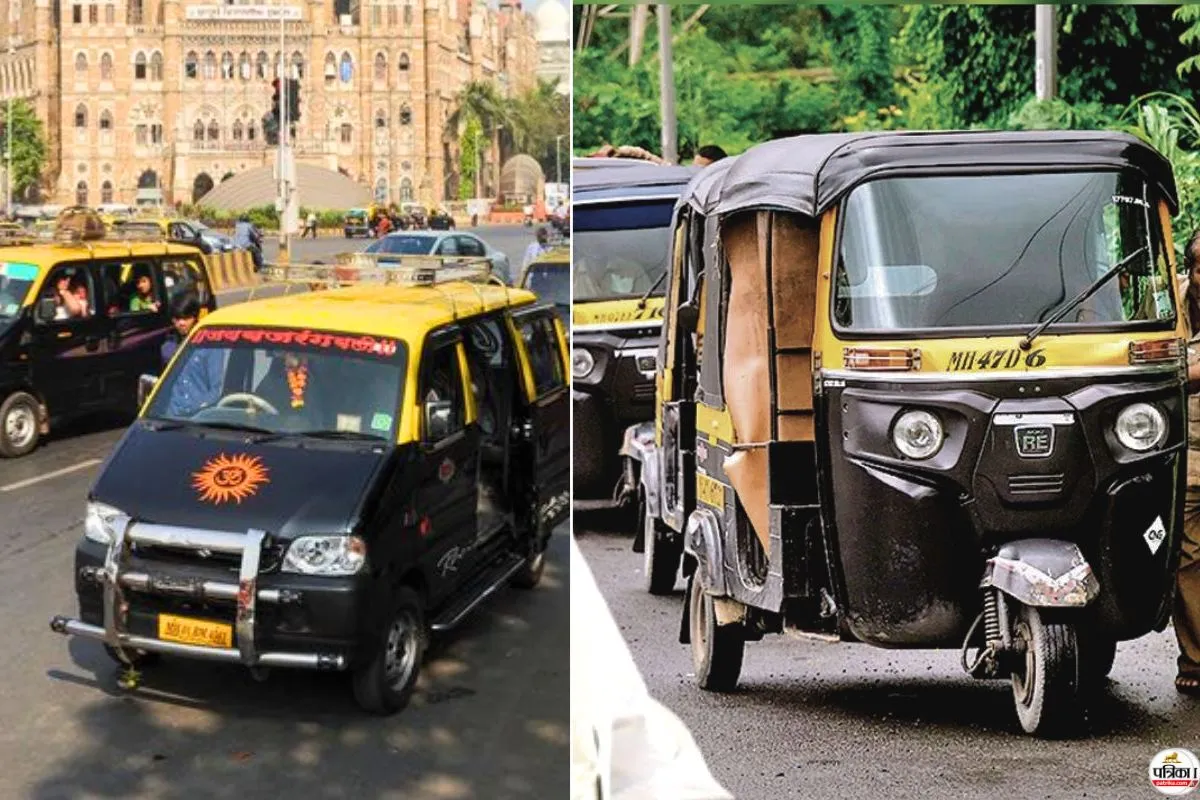
Mumbai’s everyday road commute is set to become more expensive from September 1, with revised fares coming into effect for autorickshaws and taxis across the Mumbai Metropolitan Region. The Maharashtra Transport Department has issued updated tariff cards, setting minimum fares at ₹27 for autorickshaws and ₹33 for taxis. The increase could add pressure to household transport budgets while reshaping the cost balance between road-based and public transport options. Under the revised structure, the minimum autorickshaw fare covers the first 1.5 km, while the corresponding minimum taxi fare applies over the same distance. Beyond the initial trip, autorickshaws will be charged at ₹18.22 per kilometre, rounded to ₹18, while taxis will have a subsequent kilometre rate of ₹21.90, rounded to ₹22.
The change affects a large pool of daily journeys, including short trips to railway stations, metro stops, workplaces, markets and neighbourhood services. For passengers who regularly use autos or taxis for first- and last-mile connections, even relatively small increases can accumulate over a month. The revised Mumbai auto taxi fares also introduce a higher rate for overnight journeys. Trips between midnight and 5 am will attract a 25% surcharge. That provision is particularly relevant for airport workers, hospitality staff, night-shift employees and passengers travelling during hours when public transport services may be less frequent. Drivers, meanwhile, have been given three months to recalibrate their meters to reflect the revised tariff structure. This transition period means passengers may encounter meters operating under different stages of implementation during September and the following months. Clear display of the approved tariff remains important to prevent disputes over fares.
The increase comes within a transport system where autos and taxis play a crucial role in connecting residents with mass-transit networks. Their affordability can determine whether commuters choose metro and suburban rail for the main part of a journey or rely on private vehicles for door-to-door travel. For the city, that relationship matters beyond individual fares. If higher Mumbai auto taxi fares make shared public transport less attractive for certain journeys, some trips could shift towards private vehicles, potentially adding to congestion and emissions. Conversely, reliable integration between taxis, autos, metro stations and railway nodes can help retain public transport as the backbone of longer journeys. Transport specialists say fare revisions need to be considered alongside service quality, operating costs and commuter affordability. Transparent meters, accessible tariff information and effective enforcement will be important as the new rates take effect.
The immediate change for passengers is straightforward: short road journeys will cost more from September 1. The longer-term test will be whether the revised fare structure can balance the economics of operating these services with the need to keep Mumbai’s wider transport network affordable and connected.