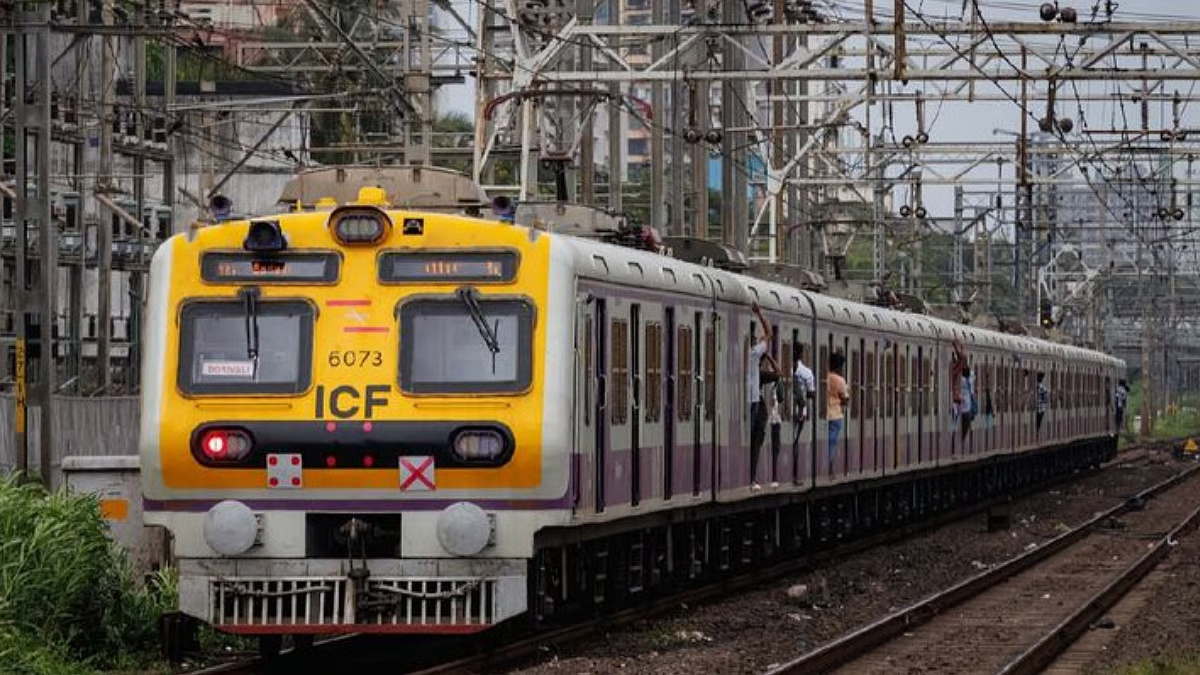
Mumbai Suburban Rail Adjusts Services From September
Mumbai’s Western Railway suburban network will operate under a revised timetable from September 1, bringing changes to train timings and introducing six additional services without increasing the overall daily service count. The adjustment affects one of the city’s most heavily used public transport corridors and is intended to distribute services more effectively across changing commuter demand, particularly during periods when small timetable gaps can translate into longer waits and heavier crowds. Western Railway currently runs 1,414 suburban services on its Mumbai network. Under the new schedule, six services will be introduced, comprising two Up and four Down trains. The additions are being accommodated through timetable rationalisation rather than an expansion in the total number of daily services.
Among the new services is a morning train from BYR to Virar, departing at 7.46am and reaching Virar at 8.12am. A late-evening service will also operate from Borivali to BYR, leaving at 10.14pm and arriving at 10.30pm. The revised schedule includes other timing adjustments intended to improve the distribution of trains along the suburban corridor. For passengers, the practical effect of the Mumbai local train timetable will depend on individual routes and interchange patterns. A change of only a few minutes can affect connections between suburban trains, buses and metro services, particularly for workers and students travelling at fixed times. The move comes as Mumbai’s transport system becomes increasingly interconnected. Metro corridors are expanding while BEST bus services and suburban rail continue to carry large commuter volumes. Better coordination between these modes can reduce transfer delays and make public transport a more viable alternative to private vehicles.
Yet timetable optimisation has limits. With no increase in the overall number of Western Railway services, the revised Mumbai local train timetable primarily redistributes existing capacity. It cannot by itself resolve persistent peak-hour crowding, infrastructure constraints or the uneven availability of trains across different sections. Transport planners say the effectiveness of the changes should therefore be assessed through actual passenger experience. Measures such as platform crowding, train occupancy, punctuality and interchange times can reveal whether timetable changes are translating into meaningful improvements rather than simply shifting pressure between services. The late-evening additions may also have a wider social value. Reliable services beyond conventional office hours matter to healthcare workers, hospitality employees, retail staff, students and others whose working patterns do not follow a standard nine-to-five schedule. Improving the reliability of these journeys can support a more inclusive metropolitan transport system.
For Mumbai, maintaining and refining suburban rail capacity remains important even as newer mass-transit corridors come online. Rail travel produces fewer emissions per passenger than comparable private-vehicle journeys when services are well utilised, making efficient operations relevant to both mobility and the city’s longer-term climate goals. Passengers should check the revised timings before travelling from September 1. The real measure of the new timetable will be whether it improves reliability and connections without transferring existing crowding problems elsewhere on the network.