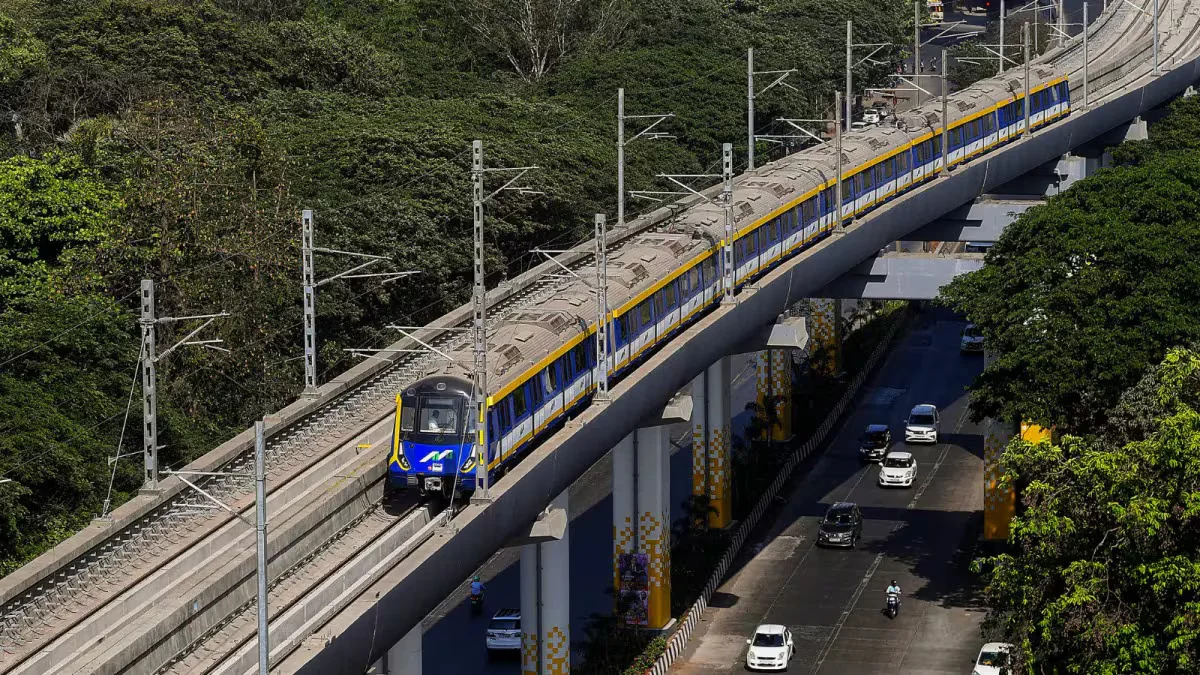
Mumbai Metro Network Extends Into New Growth Areas
The Centre has cleared the revised plans for Mumbai Metro Line 5 and its 11.83-km Line 5A extension, unlocking the next stage of a long-delayed transit corridor towards Kalyan and Ulhasnagar. The decision allows the remaining work to move towards tendering while resolving alignment constraints around Bhiwandi. For a rapidly expanding metropolitan region, the project could strengthen public transport links between established employment centres and growing residential districts. The wider Line 5 corridor was originally conceived as a 24.9-km connection between Thane, Bhiwandi and Kalyan. Its implementation has faced obstacles including land acquisition, rehabilitation and conflicts with existing road infrastructure. The revised design changes the treatment of a section near Bhiwandi, where an underground alignment is now planned to avoid a key infrastructure conflict.
Line 5A will extend the network by 11.83 km at an estimated cost of ₹4,063 crore. Its alignment is planned to serve Durgadi, Khadakpada, Bhoirwadi, Chhatrapati Shivaji Path, Kalyan, Shanti Nagar, Chhatrapati Shivaji Chowk and Ulhasnagar. The corridor is targeted for completion by 2030-31, subject to implementation and construction progress. The strategic value of Mumbai Metro Line 5A lies in its potential connections with the wider metro system. A planned interchange at Kalyan with Metro Line 12 would provide a future route towards Navi Mumbai, creating a broader eastward transport network rather than leaving the extension as an isolated corridor. The first section of Line 5 is already being built between Thane and Bhiwandi. The 11.9-km Balkum-Dhamankar Naka stretch is designed with elevated stations and an interchange with Metro Line 4. Once the different sections become operational, passengers could gain more alternatives to road-based travel across the northern and eastern parts of the metropolitan region.
For residents, the benefits will depend on more than the number of stations delivered. Bhiwandi, Kalyan and Ulhasnagar combine dense neighbourhoods, industrial activity and significant commuter movement. Reliable rapid transit could reduce dependence on buses, cars and shared road transport, while improving access to jobs and services across municipal boundaries. Urban planners also caution that new metro capacity works best when stations are connected to safe walking routes, feeder services and affordable last-mile transport. Without those links, the investment may not fully translate into lower road congestion or more equitable mobility. The approval also illustrates the cost of resolving design and land constraints late in major transport projects. Moving part of the corridor underground adds complexity, but redesign can prevent prolonged disputes and allow construction to progress within heavily developed areas.
The next test for Mumbai Metro Line 5A will be execution. Tendering, land readiness, construction coordination and integration with neighbouring corridors will determine whether the 2030-31 target is achievable and whether the investment delivers a practical, low-carbon alternative for everyday regional travel.