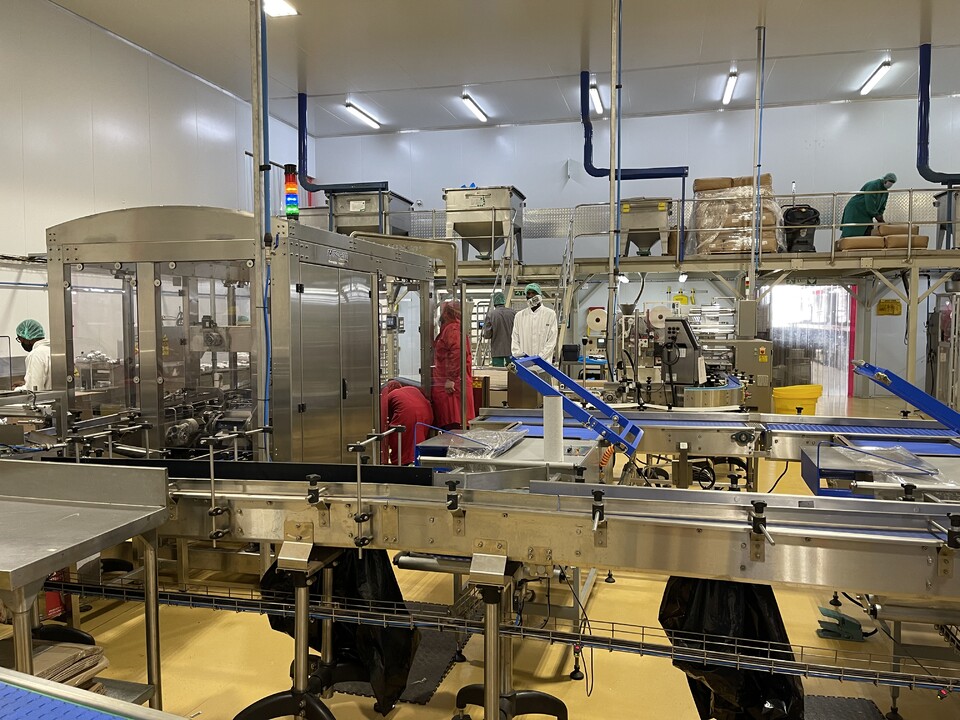
Bengaluru Gains New Machine Tool Manufacturing Capacity
South Korean machine-tool maker DN Solutions has opened its first manufacturing facility in India, investing about Rs 600 crore in Bengaluru. The plant adds fresh capacity to the city’s industrial base and strengthens its position as a location for advanced manufacturing, while also raising the importance of skilled talent, industrial infrastructure and sustainable expansion around the city’s growing economic corridors.
The facility has been established at the Devanahalli Business Park and will manufacture computer numerical control (CNC) machine tools. These digitally controlled machines are used to produce precision components for industries including automotive, aerospace and general engineering. The investment represents a move towards local production rather than relying entirely on imported equipment. The company plans to develop the Bengaluru operation as an important manufacturing base for the Indian market and export destinations. Its initial production focus includes turning centres and related CNC equipment, with capacity expected to expand as operations develop. For Bengaluru’s economy, the development is significant because advanced manufacturing can generate demand beyond factory employment. Machine-tool production supports supplier networks, engineering services, maintenance, logistics and specialised technical roles. Greater domestic availability of precision equipment can also help manufacturers reduce supply-chain exposure and improve access to production technology. The plant’s location in Devanahalli is equally relevant to the city’s changing economic geography.
Northern Bengaluru has seen rapid expansion in industrial, logistics, technology and aviation-linked activity. Continued concentration of investment in this corridor could create new employment centres outside the traditional central and eastern business districts, potentially reducing some long-distance commuting if housing and public transport expand alongside jobs. That outcome, however, will depend on coordinated urban planning. Industrial growth around the northern corridor will require reliable public transport, road connectivity, water supply, waste management and worker housing. Without such supporting infrastructure, new employment clusters can increase pressure on roads and peripheral settlements rather than creating balanced urban growth. The investment also highlights Bengaluru’s evolving role in India’s manufacturing ecosystem. The city is widely associated with technology and services, but its engineering talent and established industrial base provide a foundation for higher-value production. Sustainability will increasingly form part of that industrial equation. New manufacturing facilities can reduce environmental pressures through efficient resource use, responsible waste handling, lower-emission logistics and energy management. For rapidly developing industrial zones, these considerations are important before surrounding land becomes heavily urbanised.
The Bengaluru facility therefore represents more than additional factory capacity. Its longer-term impact will depend on whether industrial investment is matched by infrastructure, skills development and responsible land-use planning, allowing manufacturing growth to create economic opportunity without adding disproportionate pressure to the city’s urban systems.