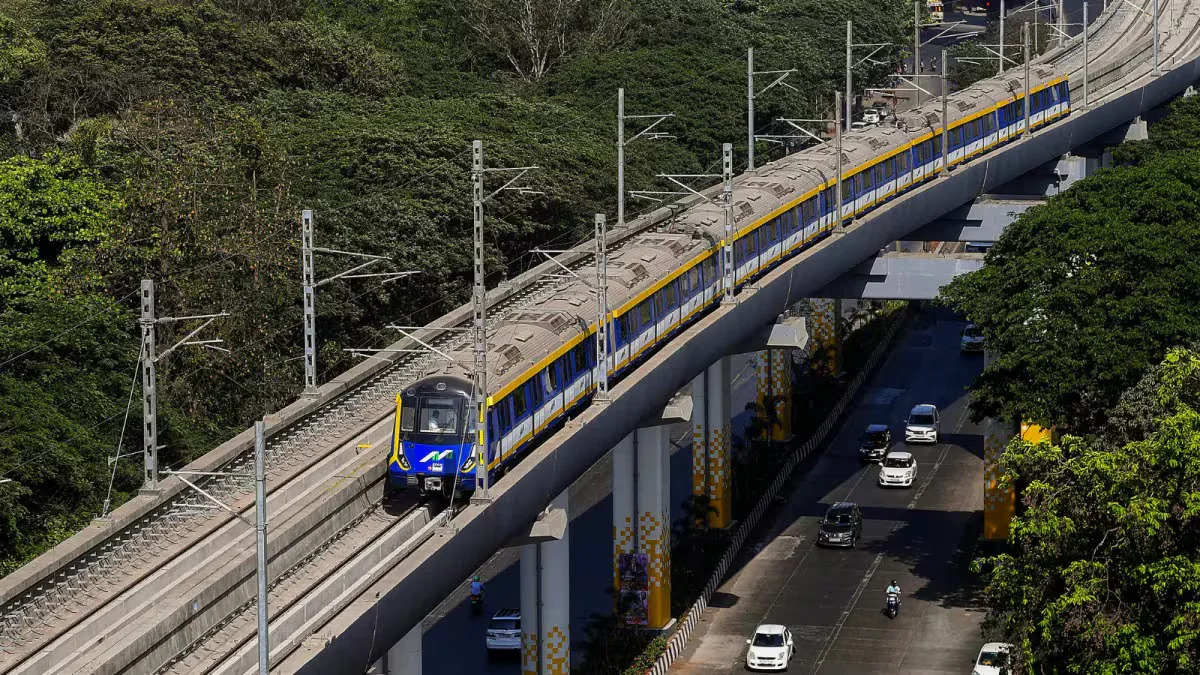
Mumbai’s transport network has gained a significant interchange point in Chembur, where the newly operational Metro Line 2B station sits within walking distance of both the suburban railway and monorail. The arrangement brings three rail-based systems into close proximity, giving commuters more options for completing journeys while reducing the need for short road transfers. The bigger test will be whether the physical connection translates into a genuinely convenient interchange for everyday passengers. The Chembur station is part of the 23.643-km Metro Line 2B corridor being developed between D N Nagar and Mandale. The Mumbai Metropolitan Region Development Authority lists 20 stations on the fully elevated route and identifies Chembur as an interchange with the monorail.
For passengers arriving by suburban train, the Metro 2B station is roughly 200 metres from Chembur railway station. The V N Purav Marg Monorail station is about 100 metres away. These distances are short by Mumbai standards, but the quality of the pedestrian route between them will determine how useful the interchange becomes. This makes the Chembur Metro station more than another stop on an expanding line. It creates an opportunity to connect journeys that have traditionally depended on separate transport systems. A passenger arriving by local train could shift to the metro, while a monorail user could continue through Metro 2B without relying on an auto-rickshaw or taxi for the connecting leg. The wider value lies in network integration. MMRDA’s project plan identifies several interchange points along Metro 2B, including Kurla East, Bandra, ITO Junction and Mankhurd, alongside Chembur. The corridor is intended to connect major residential and employment areas, including BKC, Kurla and the eastern suburbs.
For urban mobility, however, proximity alone is not enough. Safe crossings, continuous footpaths, shade, lighting, clear signage and barrier-free access are critical if passengers are expected to transfer comfortably, particularly older people, women, children and passengers with disabilities. The Chembur Metro station will therefore need to function as a pedestrian interchange, not simply three nearby stations. The development also highlights a broader shift in Mumbai’s transport planning. Instead of treating metro, railway and monorail corridors as isolated projects, their value increasingly depends on how effectively they work together. Better integration can encourage public transport use, reduce dependence on short private-vehicle trips and make cross-city journeys more resilient.
As Metro Line 2B extends towards Mandale and D N Nagar, Chembur’s importance is likely to grow. The next priority should be ensuring that the interchange experience on the ground matches the connectivity shown on the network map.