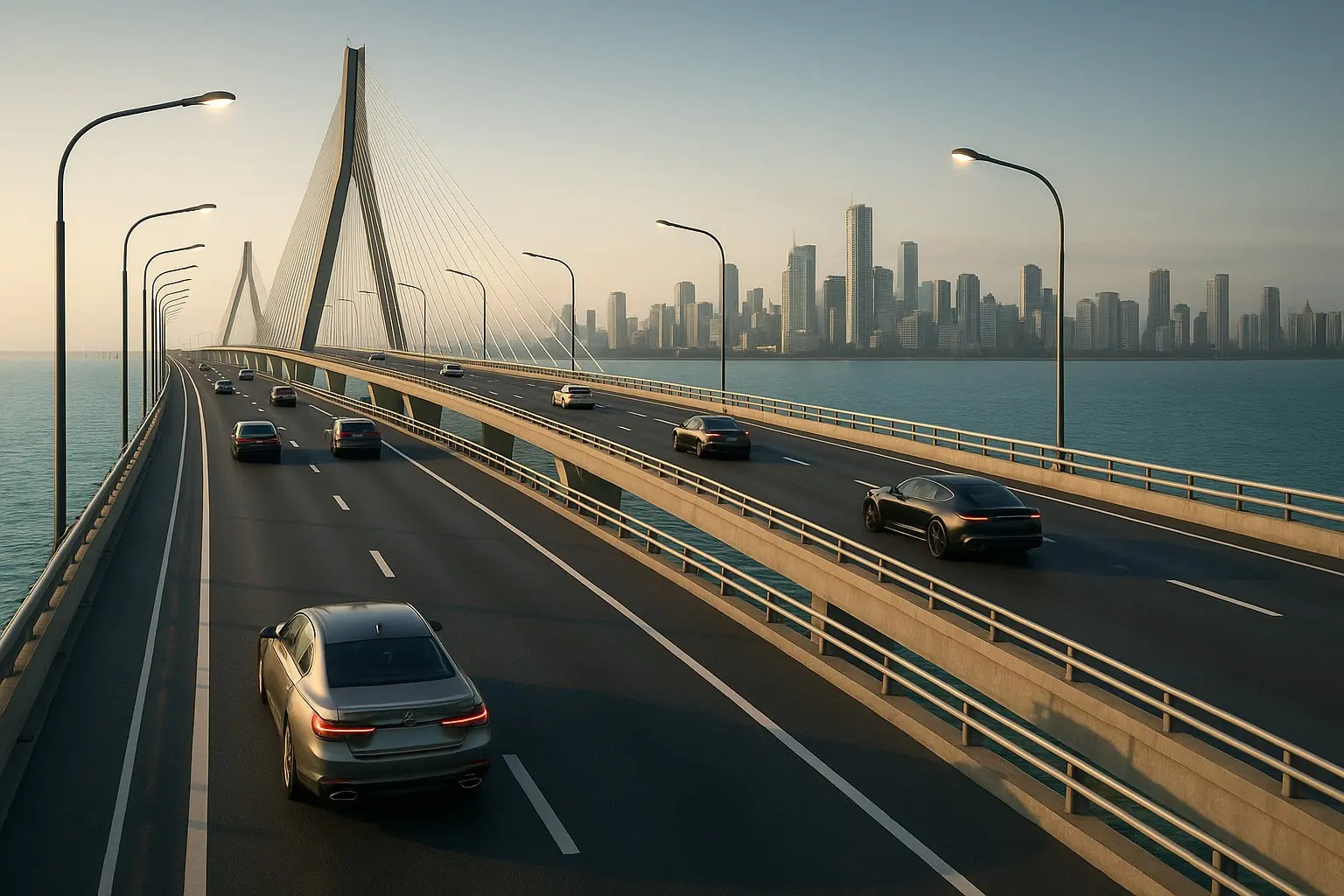
Mumbai has cleared a new road connection at the Bandra end of the Versova-Bandra Sea Link, opening the way for a 3.55-km four-lane corridor towards Bandra West. The ₹1,722.40 crore project is designed to provide another route for traffic heading towards Pali Hill, Bandra Fort and the Taj Lands End area, where limited road capacity has long constrained movement. The Bandra Fort Connector will operate with two lanes in each direction and include ramps and loops. The Maharashtra State Road Development Corporation will implement the project as an extension of the wider sea-link network. According to the project details provided by the state, ₹1,183.79 crore of the sanctioned amount is earmarked for civil construction, with the remaining allocation covering associated costs and GST.
The approval matters because the new infrastructure is being planned at a particularly constrained point in Mumbai’s western suburbs. The existing connection between the sea-link toll plaza and Pali Hill is approximately 2.6 km long and largely follows a one-lane-per-direction configuration. During peak periods, project assessments indicate that this relatively short journey can take 20 to 30 minutes. The proposed Bandra Fort Connector could add capacity to that movement, but its effectiveness will depend on more than the number of lanes delivered. Traffic planners typically assess whether additional road capacity is absorbed smoothly at junctions and downstream streets. Without corresponding improvements at connecting roads, bottlenecks can simply shift rather than disappear.
That consideration is especially relevant in Bandra West, where roads serve commuters, residents, pedestrians, commercial activity and emergency services within a tightly built urban fabric. Designing safe crossings, maintaining pedestrian access and managing construction impacts will be important if the project is to improve mobility without making local streets harder to navigate. The project also comes as Mumbai continues to expand its coastal road and sea-link network. Such investments can improve connections between major corridors, but they can also encourage additional private-vehicle movement if alternatives such as buses, suburban rail and last-mile connections are not strengthened at the same time. Urban planners therefore increasingly view road capacity as one component of a broader mobility system. The administrative approval follows a proposal submitted by the road development corporation to the Public Works Department in August 2024. A government resolution dated July 28, 2026 formally authorised the additional connector, moving the project beyond the proposal stage.
For Bandra residents and commuters, the next test will be implementation. The Bandra Fort Connector will need careful construction planning, transparent cost management and strong integration with existing streets. Its success should ultimately be measured not simply by faster vehicle movement, but by whether it creates a safer and more reliable transport network for the wider neighbourhood.