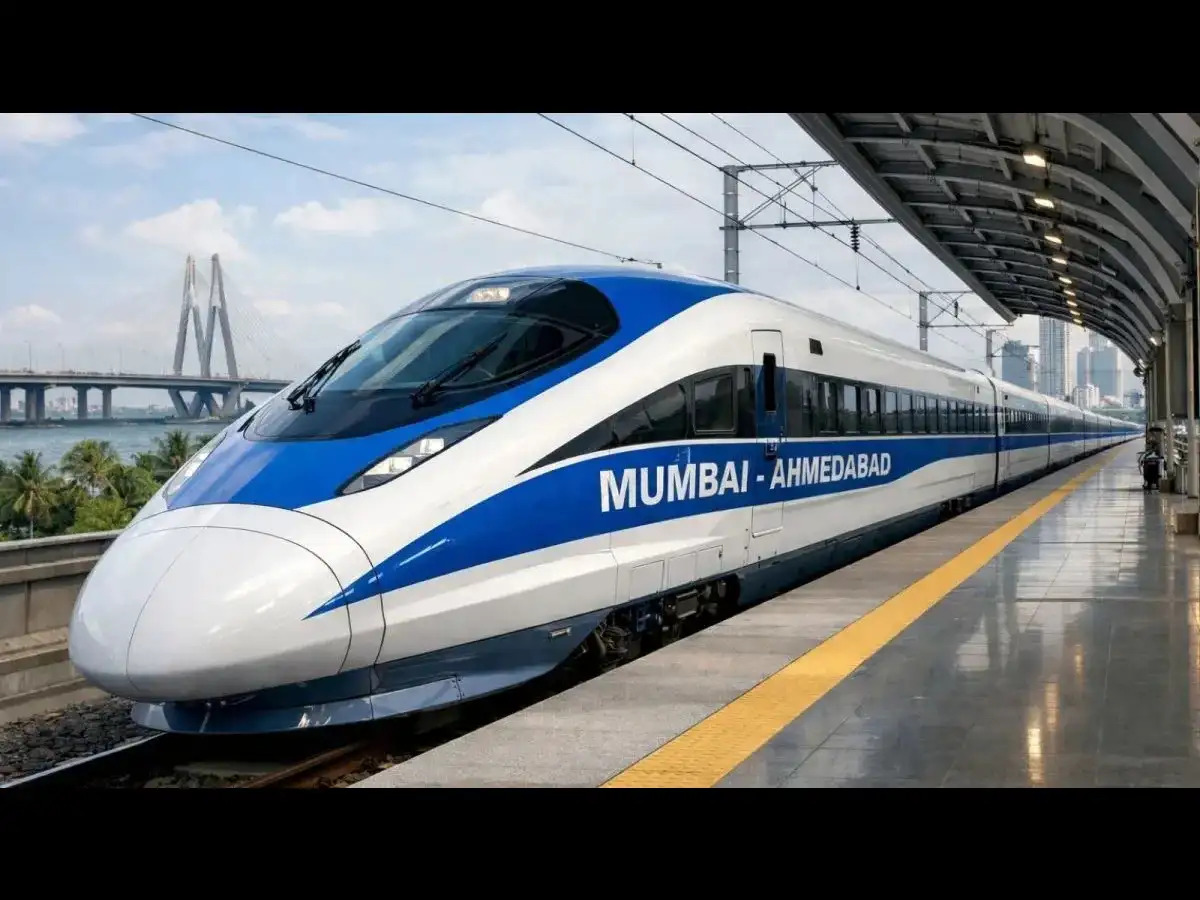
Mumbai Bullet Train Corridor Gains Ground Across Maharashtra
The Mumbai-Ahmedabad high-speed rail corridor is moving through a major construction phase in Maharashtra, with viaducts, stations, bridges and mountain tunnels advancing across Thane and Palghar. The Maharashtra section is particularly significant because it combines dense urban areas with ecologically sensitive landscapes and difficult terrain, testing how high-speed infrastructure can expand connectivity while limiting disruption. The 508-kilometre Mumbai-Ahmedabad High-Speed Rail project includes about 156 kilometres in Maharashtra. The corridor will connect Mumbai with Thane, Virar and Boisar before continuing towards Gujarat, creating a faster inter-city connection between major residential, industrial and commercial centres.
Across the 135.45-kilometre elevated section between Shilphata and Zaroli, construction involves a substantial network of viaducts and bridges. Nearly 74 kilometres of piers have been completed, allowing subsequent girder-launching activity to proceed. Multiple casting yards and launching systems are supporting the construction effort, reflecting the scale of the civil works required for the corridor. Three elevated stations in Maharashtra — Thane, Virar and Boisar — are also under construction. The Thane station presents a different urban planning challenge because its design responds to the surrounding mangrove-sensitive environment. Raising the concourse above ground level is intended to reduce interference with the local landscape, highlighting the need to integrate transport infrastructure with ecological constraints rather than treating them as separate concerns. The Palghar section presents another engineering test. Seven mountain tunnels are planned in Maharashtra, with three having achieved breakthrough this year.
The latest breakthrough was completed at Ambesari in Dahanu, where a 417-metre tunnel was excavated using controlled drilling and blasting. Drainage, waterproofing and lining work now form part of the post-excavation phase. Large river crossings add another layer of complexity. Bridges are being developed across the Ulhas, Vaitarna and Jagani rivers, including a 2.32-kilometre structure over the Vaitarna. The corridor also requires major crossings over existing railways, highways and other infrastructure, increasing the coordination needed to keep construction from affecting established transport networks. For businesses and commuters, the long-term value of the Mumbai Bullet Train Corridor will depend less on construction speed alone and more on how effectively stations connect with existing urban transport. Better integration with suburban rail, metro, buses and local roads will determine whether high-speed rail expands access beyond passengers travelling between terminal cities.
The Mumbai Bullet Train Corridor is therefore becoming more than a rail construction project. Its eventual impact will be measured through travel time, regional economic access and the quality of development around stations, while environmental monitoring and careful construction remain essential as work moves closer to completion.