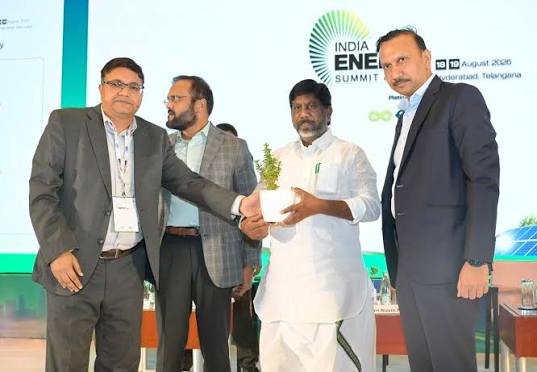
HYDERABAD: Hyderabad is set to host an international green-energy summit on August 28–29, bringing policymakers, technology providers, manufacturers and energy-intensive industries together around the challenges of decarbonisation. The sixth edition of the International Conference on Green Energy, Powering MSMEs for Future (ICGTPF 6.0) will focus on how industrial growth can be aligned with cleaner energy systems and lower operating costs.
The framework for the event was unveiled in Hyderabad by Union Minister for Coal and Mines G. Kishan Reddy. Organised by the Chandradeep Solar Research Institute, the summit will examine three broad themes: Industrial Energy 4.0, green mining and artificial-intelligence-driven decarbonisation. The focus comes as industries face increasing pressure to control energy costs while reducing emissions. For manufacturers, particularly small and medium-sized enterprises, the transition to cleaner energy can involve significant upfront investment in renewable generation, energy-efficient equipment, storage and digital monitoring. The summit’s organisers are planning a dedicated cost-optimisation track aimed at helping heavy industries identify ways to reduce energy expenditure. They have said some consumers could potentially lower energy costs by as much as 40%, although the actual savings would depend on the technology, operating model and energy profile of individual facilities.
The event is also expected to create a platform for international technology exchange. Diplomatic representatives from the British, Canadian and Korean missions are expected to participate, while more than 2,000 corporate and MSME delegates and manufacturers are projected to attend. For Hyderabad, the summit has relevance beyond the conference venue. The city is developing as a major base for pharmaceuticals, technology, aerospace, manufacturing and data infrastructure, sectors where electricity demand and carbon management are becoming increasingly important. Cleaner and more reliable energy systems could influence both industrial competitiveness and future investment decisions. The inclusion of green mining also reflects the changing requirements of India’s resource economy. Mining remains energy intensive, while technologies for electrification, renewable power, efficiency and emissions monitoring are becoming increasingly important to reducing its environmental footprint.
AI-driven decarbonisation represents another emerging area. Artificial intelligence can help industrial operators analyse energy consumption, identify inefficiencies and optimise equipment performance. However, the environmental benefit will depend on how these systems are deployed and the carbon intensity of the electricity powering them. The summit will also bring manufacturers and clean-technology providers into the same commercial space, potentially supporting partnerships and technology transfers. Knowledge partnerships with academic and engineering institutions are intended to connect industrial requirements with research and technical expertise. As Hyderabad prepares to host the gathering, the key test will be whether discussions translate into measurable projects. For the city and its industrial economy, progress will ultimately be reflected in lower emissions, more efficient energy use and greater access to affordable clean power rather than conference commitments alone.