


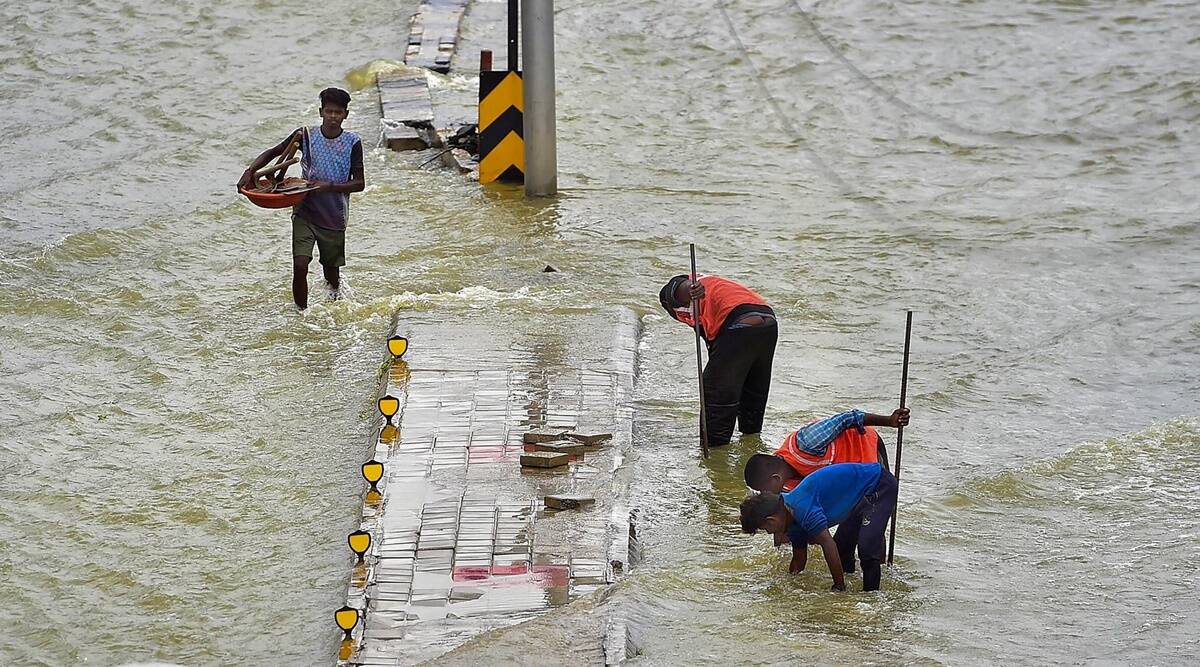
Residents in HBR Layout are once again preparing for possible flooding as blocked stormwater drains and delayed desilting efforts raise concerns ahead of the monsoon season in Bengaluru.Local communities say several internal roads and low-lying stretches remain vulnerable to waterlogging due to clogged drainage channels, accumulated waste, and incomplete maintenance works.
The recurring fears have intensified scrutiny of Bengaluru’s urban flood management systems as the city continues to experience rapid construction-led expansion and shrinking natural water pathways.Urban planners note that neighbourhoods such as HBR Layout have become increasingly susceptible to flooding because of extensive concretisation, encroached stormwater networks, and declining wetland connectivity.Bengaluru’s historical lake systems once functioned as interconnected ecological buffers, but decades of fragmented urban growth have weakened the city’s natural drainage capacity.The Bengaluru flooding challenge is no longer viewed as a seasonal issue alone. Climate researchers warn that extreme rainfall events are becoming more intense and unpredictable, increasing pressure on already strained urban infrastructure systems. Areas with inadequate drainage maintenance and heavy surface development are particularly vulnerable to flash flooding and traffic paralysis.Residents in HBR Layout say repeated civic complaints regarding blocked drains and waste accumulation have yielded limited visible improvement. Community groups argue that flood preparedness efforts often intensify only after heavy rain events rather than through sustained preventive maintenance.
Environmental experts stress that stormwater infrastructure requires continuous monitoring and ecological integration rather than reactive engineering interventions. Restoring water channels, protecting lake networks, and improving permeable urban surfaces are increasingly seen as essential for long-term climate resilience in fast-growing metropolitan regions.The Bengaluru flooding risk also carries wider economic and public health implications.Waterlogging affects daily commuting, damages local businesses, disrupts emergency access, and increases the likelihood of water contamination and vector-borne disease outbreaks during prolonged rainfall periods.Urban governance specialists further point out that fragmented coordination between civic agencies often delays effective flood mitigation. Drainage systems, road maintenance, waste management, and land-use regulation are frequently managed separately despite being deeply interconnected within urban ecosystems.The concerns in HBR Layout reflect a broader infrastructure challenge confronting Bengaluru as expanding residential and commercial districts place mounting pressure on ageing civic systems. Experts argue that future urban planning must move beyond road-centric development toward integrated ecological infrastructure capable of absorbing climate shocks.
For many residents, the approaching monsoon season has become a reminder of how vulnerable neighbourhood-level infrastructure remains despite Bengaluru’s status as one of India’s leading economic centres.As rainfall patterns grow more volatile, the effectiveness of Bengaluru’s flood preparedness measures may increasingly determine not only mobility and public safety, but also the long-term liveability of the city itself.
Also Read:Bengaluru Chennai Rail Demand Drives Faster Connectivity
