


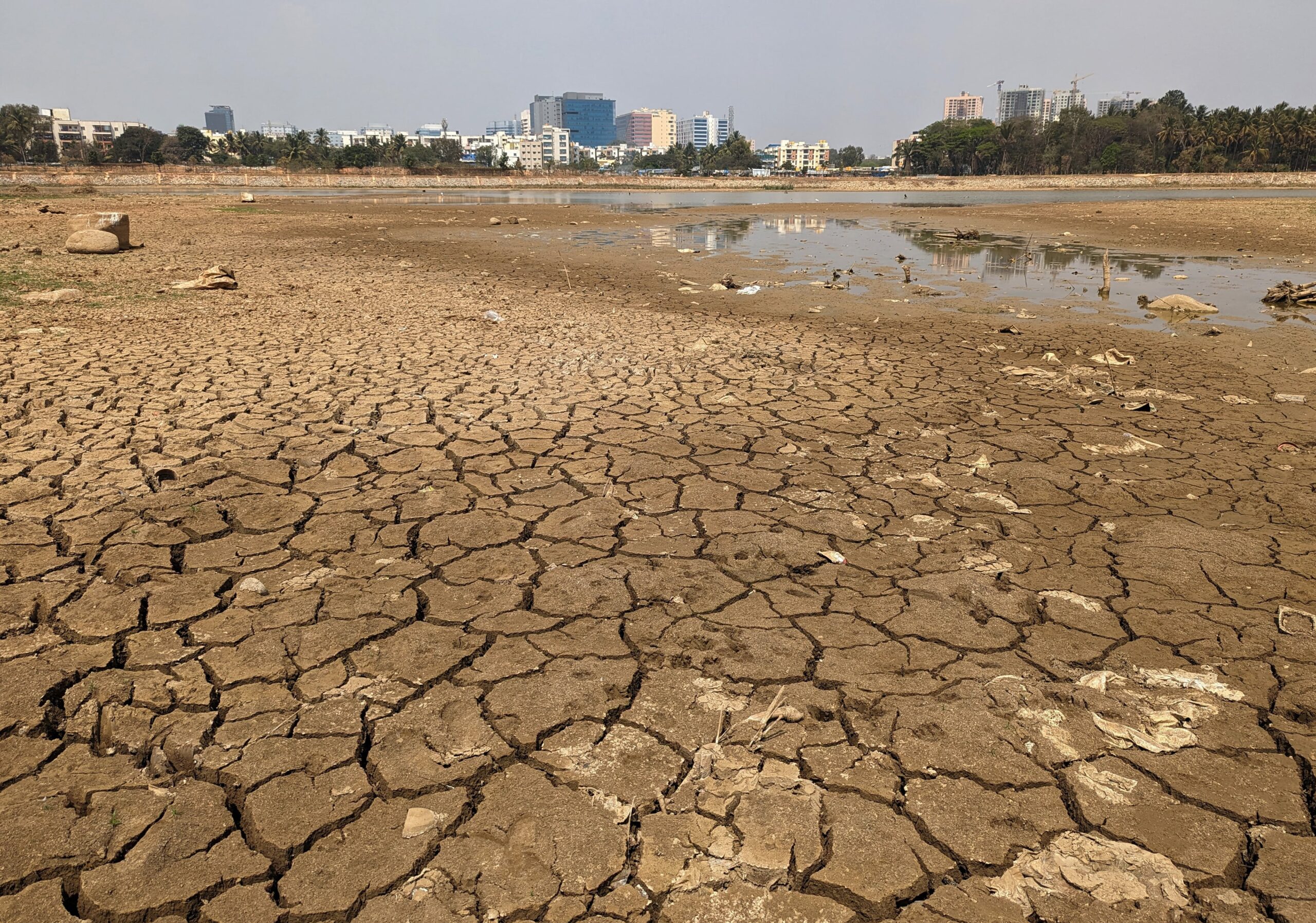
Falling water levels at Sankey Tank have triggered fresh concerns over the ecological health of Bengaluru’s urban water systems, with residents and environmental experts warning that the shrinking lake reflects deeper structural problems linked to climate stress and urbanisation.Once considered an important ecological and recreational asset in Bengaluru, the lake is now showing visible signs of depletion amid rising temperatures and changing rainfall patterns.
Environmental observers say the situation is not an isolated incident but part of a broader decline affecting urban water bodies across the city.Experts attribute the falling levels to a combination of factors including prolonged dry weather, declining groundwater recharge, silt accumulation, and increasing pressure from surrounding urban development. The reduction of green cover and natural catchment areas around lakes has further weakened the city’s ability to retain and replenish water naturally.The Bengaluru lake crisis is becoming increasingly significant as the city grapples with long-term water security concerns.Bengaluru relies heavily on distant river systems and groundwater extraction to meet rising demand from households, industries, and commercial establishments. Urban lakes historically played a key role in groundwater recharge and flood regulation, but decades of neglect and encroachment have diminished their functionality.Urban ecologists note that shrinking lakes have cascading environmental consequences.Reduced water spread affects biodiversity, increases local heat stress, and weakens natural cooling systems within dense urban areas.
Lakes also serve as important public spaces that contribute to mental well-being, recreation, and social interaction, particularly in highly built-up neighbourhoods.The economic impact of deteriorating water bodies is also becoming more visible. Falling water availability can increase dependence on private water supply systems, raising costs for residents and businesses. In the long term, water stress may influence real estate patterns and urban productivity if infrastructure systems fail to keep pace with demand.Climate experts argue that Bengaluru’s water management approach must move beyond short-term interventions. Desilting projects and emergency water transfers may offer temporary relief, but restoring lake ecosystems requires integrated planning that reconnects water bodies with stormwater networks and natural drainage channels.There is also growing emphasis on community participation in lake conservation.Citizen groups across Bengaluru have increasingly played a role in monitoring water quality, advocating restoration, and raising awareness around urban ecology.Experts suggest that sustained collaboration between civic agencies and local communities will be essential to maintaining restored water bodies.From a planning perspective, protecting urban lakes is now closely linked to climate resilience.
As extreme weather patterns become more frequent, functional water ecosystems can help cities manage both drought and flooding more effectively.The concerns surrounding Sankey Tank serve as a reminder that urban growth without ecological safeguards can undermine long-term sustainability. For Bengaluru, restoring and protecting its lakes is no longer just an environmental priority but a critical requirement for ensuring water security, liveability, and climate resilience in the years ahead.
Also Read:Bengaluru Cyber Fraud Case Raises Digital Security Concerns
