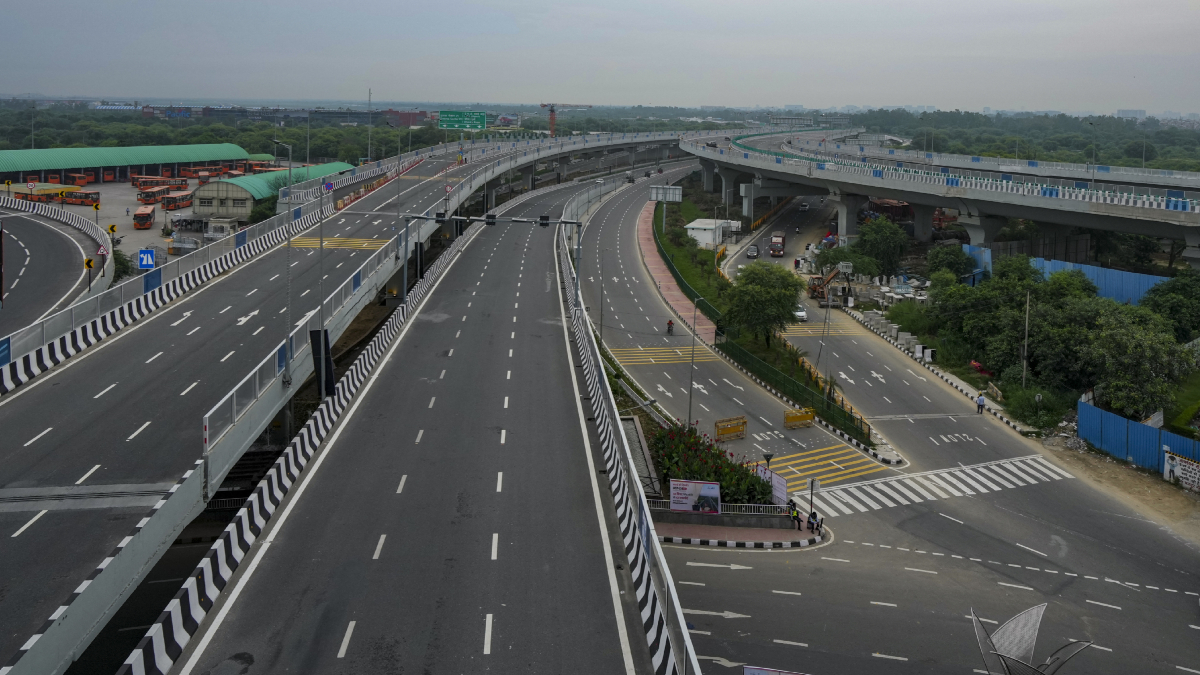
Gurugram Growth Shifts Along Dwarka Expressway Corridor
A major shift is underway in Gurugram’s urban landscape as the Dwarka Expressway corridor emerges as a dominant driver of real estate growth, reshaping how housing demand and infrastructure planning intersect in the National Capital Region. The transition reflects a broader move away from legacy neighbourhoods toward connectivity-led development, with implications for affordability, mobility, and sustainable urban expansion.
Urban planners note that Gurugram is evolving into a multi-nodal city where economic activity is no longer confined to established business districts. Improved road networks, transit proposals, and proximity to employment hubs are increasingly determining residential choices. The Dwarka Expressway, a high-capacity arterial link connecting Delhi and Gurugram, has become central to this transformation, drawing both developers and homebuyers. Recent market assessments indicate a significant concentration of new housing supply along this corridor, with a sharp rise in property values over the past few years. Analysts attribute this trend to infrastructure-led appreciation, where transport accessibility directly influences land value. The Dwarka Expressway has also attracted higher-end residential segments, reflecting changing buyer preferences driven by improved connectivity to the airport and commercial zones. However, the implications extend beyond price growth.
Urban development experts caution that such rapid expansion must be balanced with environmental safeguards and inclusive planning. High-density corridors can place pressure on water resources, waste systems, and green cover if not managed through integrated urban design. The focus, they argue, should remain on building climate-resilient neighbourhoods with adequate public transport, walkability, and access to social infrastructure. Within this corridor, emerging sectors such as 88A are gaining attention due to their strategic location at key road intersections and proximity to planned mixed-use developments. These areas are expected to benefit from job creation and commercial activity, reducing commute times and potentially supporting more self-sustained communities. This aligns with a broader planning shift where residential growth follows economic nodes rather than speculative expansion. At the same time, the Dwarka Expressway story highlights a growing preference among buyers for mid-to-premium housing segments that balance affordability with quality of life. Industry observers suggest that end-user demand, rather than purely investor-driven activity, is shaping absorption patterns in these micro-markets.
This trend could contribute to greater market stability if supported by transparent pricing and robust civic infrastructure. For policymakers, the rise of the Dwarka Expressway corridor underscores the need to align real estate growth with long-term urban resilience goals. Efficient public transit integration, equitable access to housing, and sustainable land use will be critical to ensuring that infrastructure-led development benefits a wider population. As Gurugram continues to expand, the success of corridors like the Dwarka Expressway will depend not only on connectivity but on how well they support inclusive, liveable, and environmentally responsible urban ecosystems.