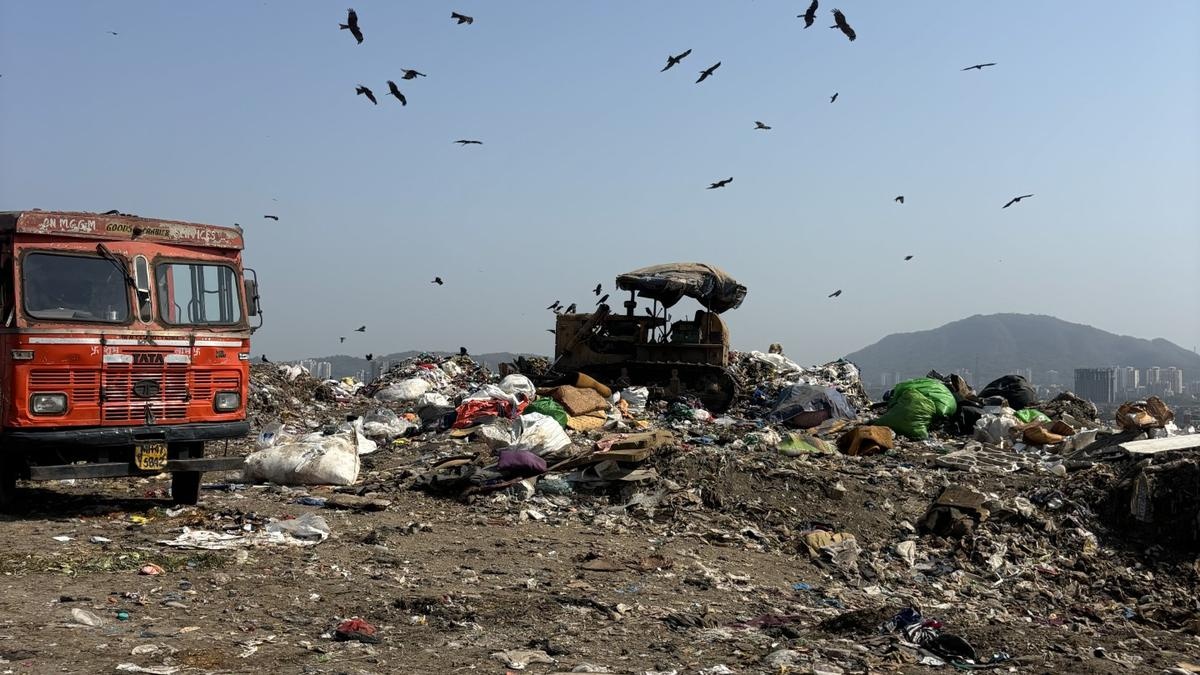
Mumbai’s solid waste management practices have come under renewed judicial scrutiny after the city’s civic body was directed to conduct scientific monitoring of emissions and odour at the Kanjurmarg landfill during early morning hours. The move signals growing institutional concern over the environmental and public health implications of landfill emissions in dense urban neighbourhoods. The directive requires the municipal administration to assess emission patterns between 1am and 6am, a period identified by stakeholders as having peak odour intensity. Authorities have also been instructed to track how pollutants disperse across surrounding residential zones. For a city grappling with limited land and rising waste volumes, this intervention highlights the urgent need to better understand landfill emissions and their cumulative impact.
Regulators have been asked to independently record and publish data on pollutants released not only from the landfill but also from nearby industrial clusters. Urban planners note that such integrated monitoring could provide a clearer picture of air quality interactions in mixed-use zones, where waste processing sites often coexist with residential and industrial activities. Municipal officials have indicated that technical experts from leading research institutions have been engaged to evaluate elevated methane levels reported at the site. Methane, a potent greenhouse gas, is a common byproduct of decomposing organic waste. While it is being partially captured for energy generation, gaps in containment systems can lead to fugitive landfill emissions, intensifying both climate risks and localised health concerns. The issue also intersects with ecological preservation. The landfill sits close to extensive mangrove ecosystems that serve as natural carbon sinks and buffers against coastal flooding.
Environmental observers have pointed out that any mismanagement of landfill emissions could undermine these fragile habitats, which also support migratory bird populations. Concerns raised by residents in adjoining neighbourhoods reflect the human cost of inadequate waste infrastructure planning. Large populations living near disposal sites continue to face persistent odour, raising questions about urban equity and land-use decisions. Experts argue that landfill emissions disproportionately affect lower- and middle-income communities, reinforcing the need for more inclusive and scientifically guided urban development. The court has also flagged the possibility of stricter action if mitigation measures fail to address risks to public health. This includes exploring alternative sites or redistributing waste processing activities to reduce pressure on a single location. Such an approach aligns with broader global shifts towards decentralised waste management and circular economy models.
For Mumbai, the episode underscores a larger structural challenge—balancing rapid urban growth with sustainable waste management systems. As cities expand, the handling of landfill emissions will remain central to climate resilience, environmental protection, and the well-being of millions. The effectiveness of current monitoring efforts may well determine how future urban infrastructure is planned and governed.