


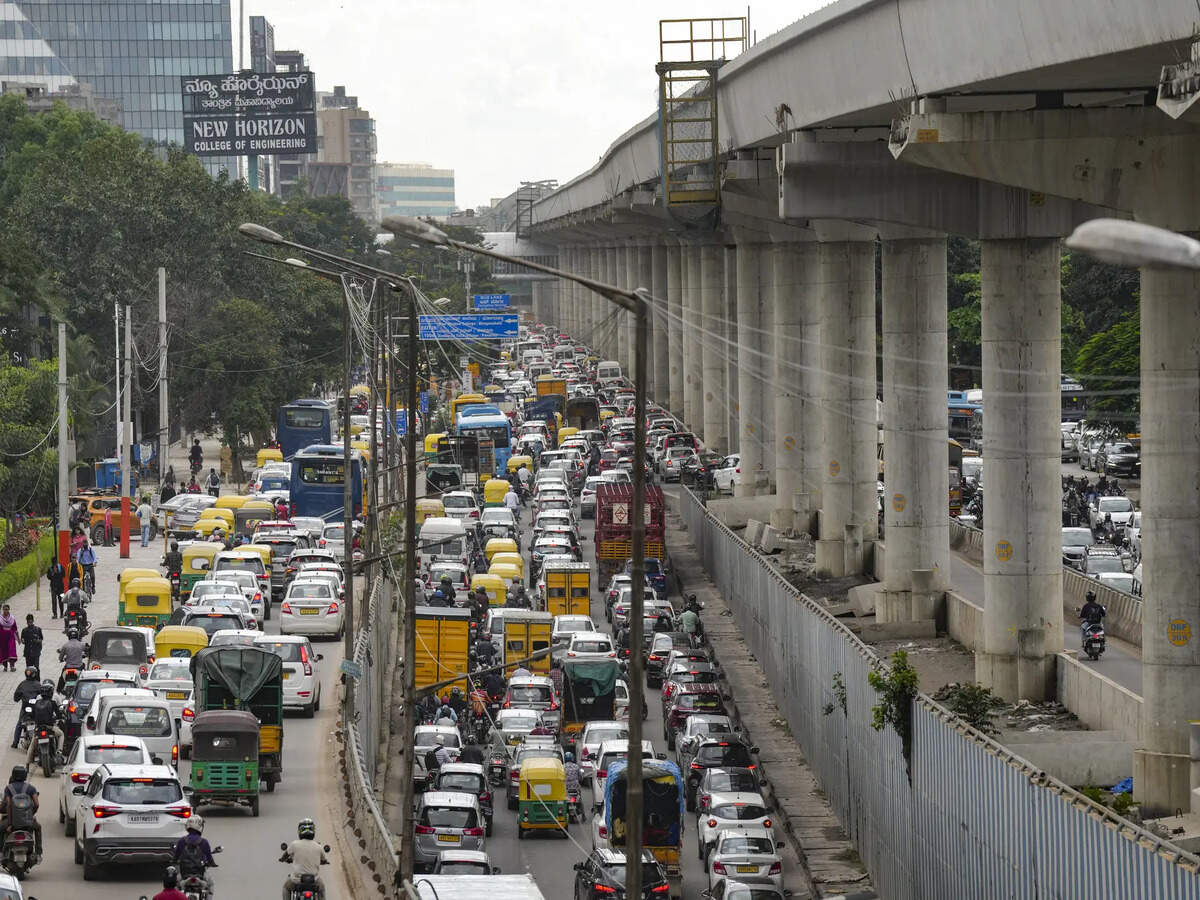
Bengaluru authorities are examining Hyderabad’s flyover network as part of efforts to address chronic traffic congestion, signalling a renewed focus on infrastructure-led mobility solutions. The move reflects growing pressure on the city to find scalable interventions as its road network struggles to keep pace with rapid urban growth.
Officials from Bengaluru have undertaken a study of elevated corridor systems developed in Hyderabad, where a series of flyovers and grade separators have been used to streamline traffic flow across key intersections. The objective is to assess whether similar approaches could be adapted to Bengaluru’s unique urban layout and congestion patterns.Urban mobility experts note that flyovers can offer short-term relief by reducing bottlenecks at busy junctions and improving travel times along major corridors.However, their long-term effectiveness depends on integration with broader transport strategies. Without complementary measures such as public transport expansion and demand management, elevated infrastructure alone may not sustainably resolve congestion.The initiative highlights a broader debate in urban planning: whether cities should prioritise road expansion or shift towards multimodal mobility systems. Bengaluru’s rapid increase in vehicle ownership has placed immense strain on its existing infrastructure, prompting authorities to explore multiple solutions, including metro expansion, bus system improvements, and now, elevated road networks.The study of Hyderabad’s model also reflects the importance of learning from peer cities.Hyderabad has implemented a network of flyovers aimed at improving traffic flow across key economic zones, and its experience offers insights into both the benefits and limitations of such infrastructure.
Experts caution that direct replication may not be feasible, given differences in geography, density, and existing road networks.From a sustainability perspective, reliance on flyovers raises important considerations. While they can reduce idling time and improve traffic flow in the short term, they may also encourage increased vehicle use over time, potentially leading to higher emissions. Balancing infrastructure expansion with policies that promote public transport and non-motorised mobility is therefore critical.The discussion also underscores the need for integrated urban planning. Traffic congestion in Bengaluru is not solely a function of road capacity but also of land use patterns, public transport availability, and last-mile connectivity. Addressing these interconnected factors requires a coordinated approach that goes beyond isolated infrastructure projects.For residents, the prospect of new flyovers may offer hope for reduced travel times, but expectations remain tempered by past experiences where infrastructure additions have not fully resolved congestion issues.Transparency in planning, clear timelines, and public consultation will be important in building trust and ensuring that proposed solutions meet actual needs.
As Bengaluru evaluates its options, the focus will likely remain on finding a balanced approach that combines infrastructure upgrades with sustainable mobility strategies.The outcome of this exercise could shape how the city navigates its ongoing traffic challenges while aligning with long-term goals of liveability and environmental responsibility.
Also Read:Bengaluru Weather Shift Brings Heat And Rain Showers
