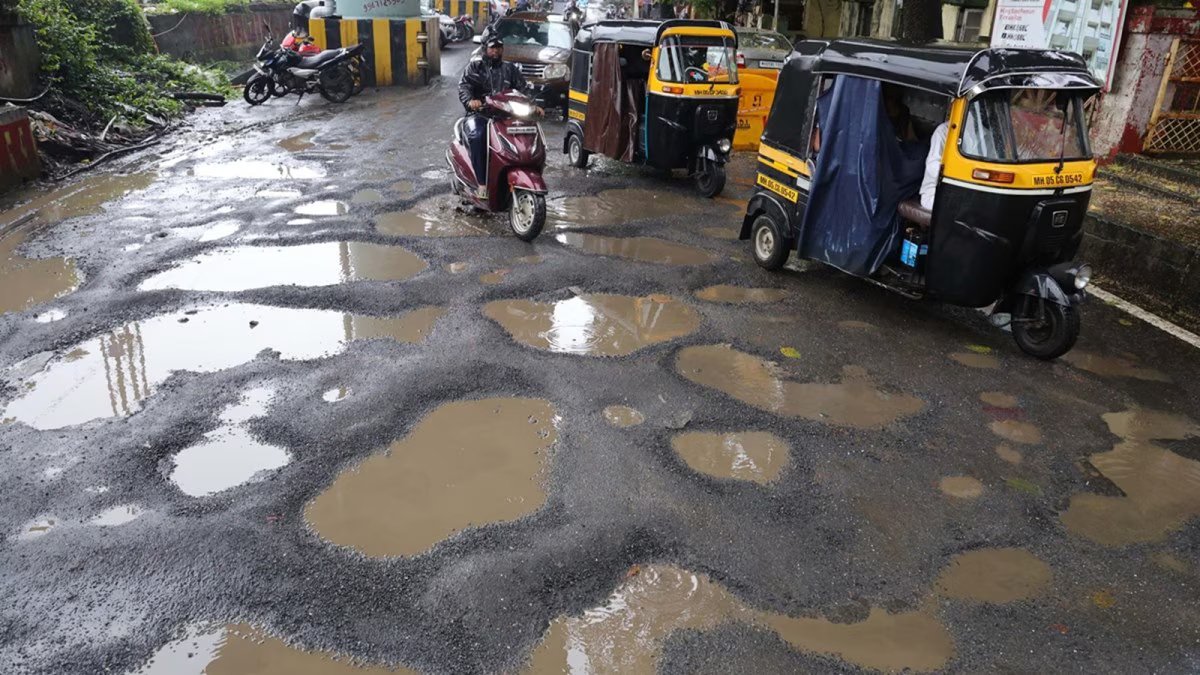
Mumbai Pothole Repair Costs Drop Across City Roads
Mumbai’s ongoing shift towards more durable road infrastructure is beginning to reflect in its maintenance budgets, with civic data indicating a steep reduction in annual allocations for pothole repairs. The development signals both progress in road engineering and renewed scrutiny over how public funds are deployed in managing urban assets. According to recent municipal disclosures, the city has earmarked significantly lower funds for pothole-related works this year compared to previous cycles. The overall outlay for Mumbai pothole repair has been scaled down, particularly on non-highway roads, where allocations have dropped by more than half year-on-year.
This decline is being linked to the gradual replacement of asphalt surfaces with concrete roads, which are designed to withstand heavy rainfall and traffic loads more effectively. The city’s arterial express corridors continue to account for a substantial share of maintenance expenditure, reflecting their high usage and exposure to wear. However, within internal road networks, officials point to a steady downward trend in repair spending over the past three years. Urban planners interpret this as an early outcome of capital-intensive road upgrades that aim to reduce recurring maintenance costs over time. Yet, the reduced Mumbai pothole repair budget has also reignited debate around accountability and efficiency. Civic watchdog groups have questioned whether past spending levels were justified, particularly when repeated repairs failed to deliver long-term durability. The scrutiny highlights a broader governance issue—how cities balance reactive maintenance with proactive infrastructure investment.
From an economic perspective, potholes represent more than a surface-level inconvenience. Poor road conditions increase vehicle operating costs, contribute to congestion, and elevate safety risks for pedestrians and motorists alike. In a dense urban economy like Mumbai, these factors collectively impact productivity and logistics efficiency. A reduction in repair frequency, if sustained through better construction quality, could therefore yield both financial and social dividends. However, experts caution that concrete roads are not a universal solution. While they offer longer lifespans and reduced maintenance cycles, they also come with higher upfront costs and environmental considerations, including heat retention and runoff management. Without complementary drainage systems and climate-sensitive design, even upgraded roads may face stress during extreme rainfall events. The evolving spending pattern also reflects a larger transition in urban infrastructure planning—moving away from repetitive, short-term fixes towards lifecycle-based asset management. For a city grappling with monsoon-driven wear and tear, this shift is critical to building resilience against increasingly unpredictable weather patterns.
Looking ahead, the effectiveness of reduced repair budgets will depend on consistent execution, quality control, and transparent monitoring. If the current trajectory holds, Mumbai could gradually move towards a more sustainable road network—one that minimises recurring disruptions while optimising the use of public resources.