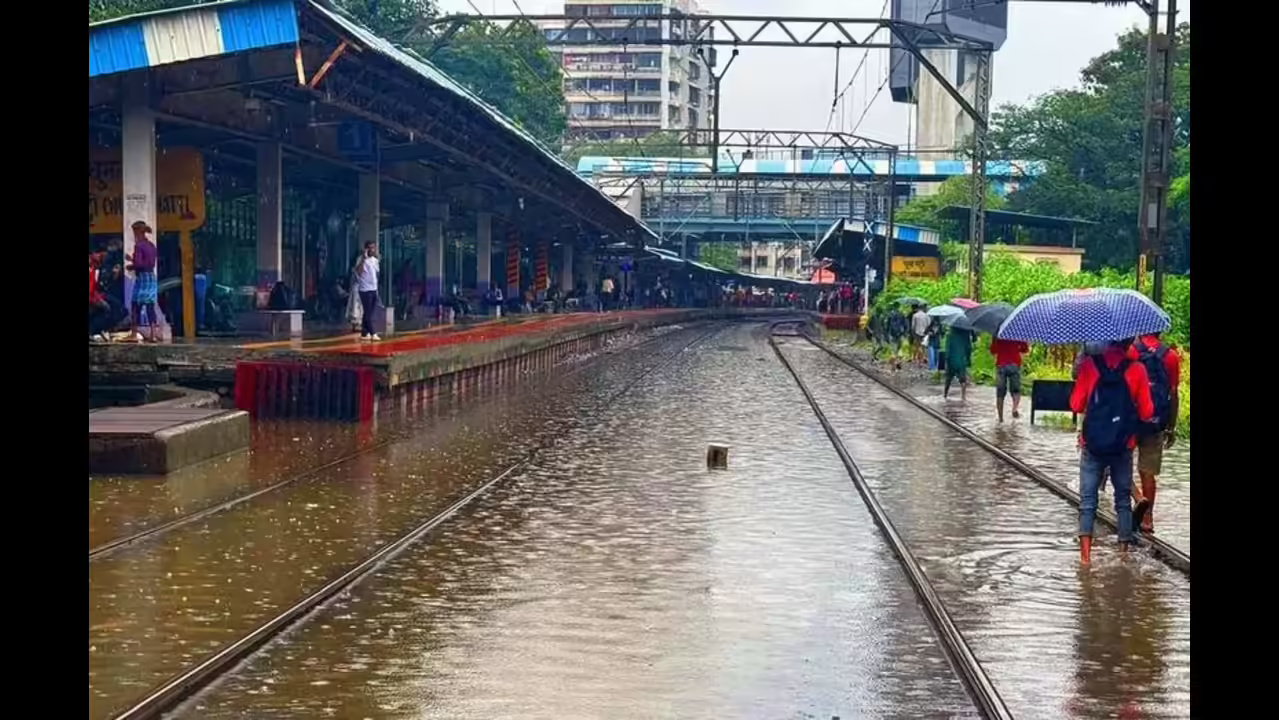
A coordinated field review across key suburban rail corridors in Mumbai has brought renewed focus to the city’s persistent monsoon vulnerabilities, particularly the risk of waterlogging on tracks that disrupt millions of daily commutes. Officials from civic and railway authorities recently assessed flood-prone stretches between the city’s primary terminus and Thane, identifying recurring drainage bottlenecks ahead of the rainy season. The inspection targeted five locations where past monsoons have exposed weaknesses in stormwater management systems. These areas, largely adjoining natural drains or ‘nullahs’, are susceptible to overflow when intense rainfall coincides with high tides.
The exercise forms part of a broader Mumbai rail waterlogging mitigation strategy, which has increasingly become a critical urban priority as extreme weather events grow more frequent. Urban planners note that the city’s suburban railway network is both an economic lifeline and a climate risk hotspot. Even brief disruptions ripple across productivity, labour mobility, and essential services. With Mumbai witnessing more erratic rainfall patterns, infrastructure designed decades ago is struggling to cope with current hydrological pressures. The latest review reportedly explored the deployment of high-capacity pumping systems and faster drainage clearance protocols to prevent water accumulation on tracks. Beyond immediate fixes, experts highlight that Mumbai rail waterlogging is closely linked to larger issues of land use, encroachments along drainage channels, and reduced natural water absorption zones. Rapid urbanisation has altered catchment areas, increasing runoff into already stressed drainage systems. Without structural reforms, seasonal inspections alone may offer only temporary relief.
Officials involved in the assessment are understood to be working on improved coordination mechanisms, particularly during peak rainfall alerts. Real-time data sharing between agencies, predictive flood modelling, and decentralised response systems are being discussed as part of preparedness measures. Such integration is crucial in a city where multiple authorities manage overlapping infrastructure networks. From a sustainability lens, the challenge extends beyond operational readiness. Climate-resilient urban planning calls for restoring natural drainage paths, investing in green infrastructure, and rethinking how transport corridors intersect with ecological systems. In dense cities like Mumbai, railway resilience is not just about engineering upgrades but about aligning infrastructure with environmental realities. For commuters, the stakes remain immediate. Waterlogged tracks can halt services, crowd stations, and raise safety concerns. For businesses, repeated disruptions translate into economic losses and logistical uncertainty. As pre-monsoon preparations continue, the effectiveness of these interventions will likely be tested in the coming months.
The inspection signals intent, but the long-term solution will depend on whether Mumbai can transition from reactive flood control to proactive, climate-adaptive infrastructure planning—where transport reliability and environmental sustainability are addressed together.