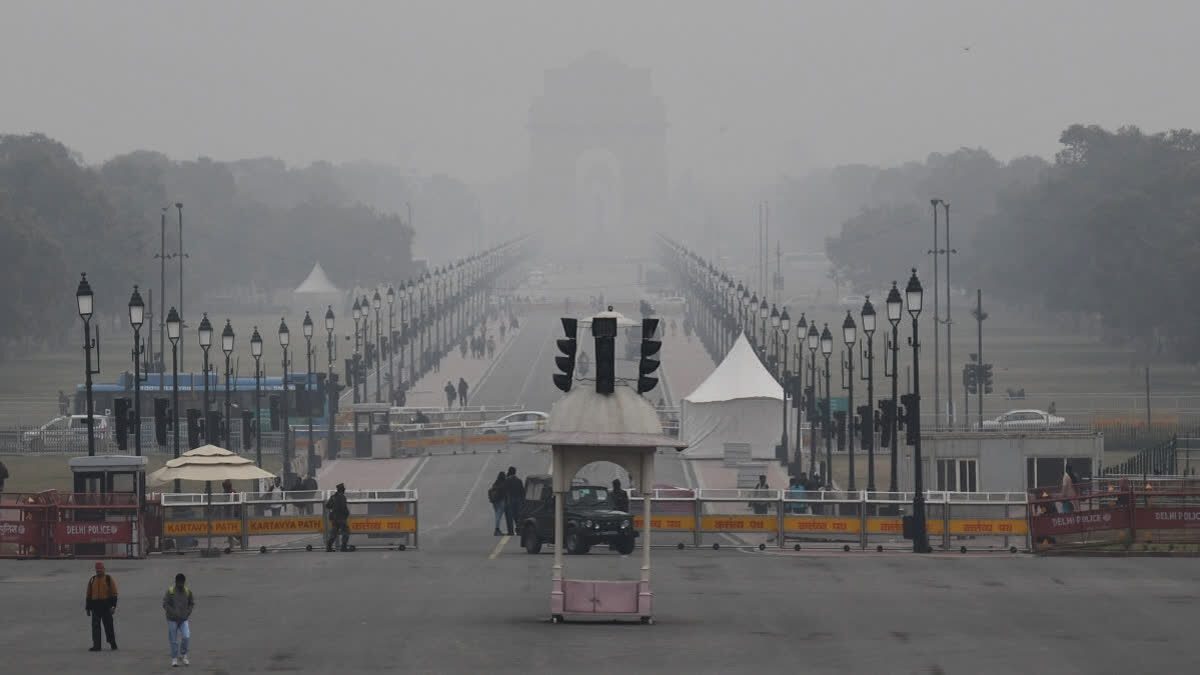
A brief spell of cooler weather across Delhi-NCR has offered respite from rising early-summer temperatures, as gusty winds and intermittent rainfall disrupted the region’s typical March heat trajectory. The shift, driven by active western disturbances, highlights the growing unpredictability of urban climate patterns and their implications for infrastructure, public health, and city planning. According to meteorological assessments, recent weather systems brought cloud cover, light rain, and wind speeds of up to 40–50 kmph, temporarily suppressing temperatures across the capital region.
These conditions delayed the onset of peak summer heat, with forecasters noting that such disturbances can significantly alter short-term temperature trends in northern India. The cooling effect is largely attributed to a western disturbance—a weather system originating outside the Indian subcontinent that carries moisture and triggers rainfall. In recent weeks, repeated disturbances have resulted in unseasonal precipitation, reducing daytime temperatures and improving air quality levels in parts of the region. While the immediate relief has been welcomed by residents, urban experts caution that such fluctuations underscore deeper structural challenges. Cities like Delhi, already grappling with extreme heat episodes and urban heat island effects, are increasingly experiencing sharp temperature swings. These shifts complicate infrastructure planning, particularly in areas such as water supply, energy demand, and public health preparedness.
For instance, sudden drops in temperature followed by rapid heat escalation can strain electricity grids, as cooling demand fluctuates unpredictably. Similarly, water management systems—already under pressure during peak summer—must now adapt to irregular rainfall patterns that do not necessarily translate into long-term water availability. Public health implications are equally significant. Early heatwaves in March have already raised concerns, with temperatures in recent weeks crossing seasonal norms before the cooling phase set in. Such variability increases vulnerability, especially among outdoor workers, elderly populations, and low-income communities lacking access to climate-resilient housing. From a sustainability perspective, these weather patterns reinforce the urgency of climate-responsive urban design. Increasing green cover, adopting reflective building materials, and integrating decentralised water systems are among the strategies experts suggest to buffer cities against both heat extremes and sudden cooling events.
The phenomenon also raises broader questions about climate change and its local manifestations. While individual weather events cannot be attributed solely to global warming, the frequency and intensity of such anomalies are consistent with wider climate variability trends observed across regions. As Delhi-NCR transitions into peak summer, forecasts suggest that the relief may be short-lived, with temperatures expected to rise again in the coming weeks. The episode serves as a reminder that urban resilience must account not only for extreme heat but also for increasing climatic volatility—requiring cities to plan for a wider spectrum of weather disruptions.