


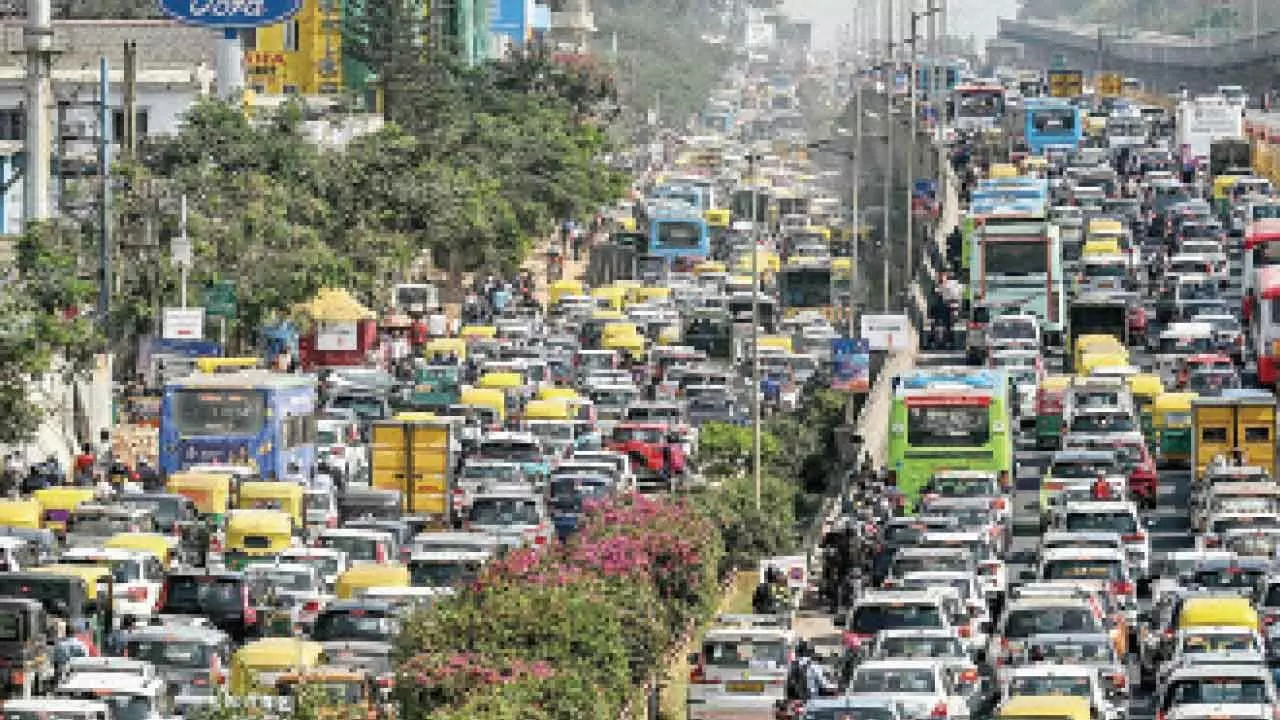
In Bengaluru, traffic authorities have reinstated vehicle towing operations after a four-year hiatus, marking a renewed push to address illegal parking and congestion across key city corridors.
The move is aimed at improving traffic flow in a city where rising vehicle ownership and limited road space continue to strain mobility systems.The resumption of towing reflects a broader enforcement strategy targeting roadside parking violations, which experts identify as a major contributor to bottlenecks.In several parts of Bengaluru, encroached lanes reduce effective road width, slowing movement and increasing travel times. Urban mobility specialists note that consistent enforcement is critical to maintaining order, particularly in high-density areas.The earlier suspension of towing operations had led to a gradual increase in non-compliant parking behaviour, according to officials. With the revival of the drive, authorities are seeking to restore discipline on roads while signalling stricter adherence to traffic regulations.However, experts caution that enforcement alone may not be sufficient without complementary infrastructure measures.From a planning perspective, the issue highlights the persistent mismatch between vehicle growth and parking infrastructure.Bengaluru’s urban expansion has not been matched by adequate off-street parking facilities, leading to spillover onto public roads.
Analysts suggest that developing structured parking solutions and integrating them into land-use planning could reduce dependence on roadside parking.The towing drive also raises questions about equity and accessibility. While enforcement is necessary, planners emphasise the importance of providing viable alternatives, such as improved public transport and last-mile connectivity. Without these options, restrictions on parking may disproportionately affect commuters who rely on private vehicles due to limited transit choices.There are environmental implications as well.Congestion caused by illegal parking contributes to higher fuel consumption and emissions, worsening air quality. By improving traffic flow, enforcement measures can support more efficient movement and reduce the city’s carbon footprint. However, long-term sustainability will depend on shifting travel behaviour towards public and non-motorised transport.Public response to the renewed towing operations is likely to vary, with some residents welcoming stricter enforcement and others expressing concerns over implementation and transparency. Experts highlight the need for clear communication, digital monitoring, and grievance redressal mechanisms to ensure fairness and accountability.
As Bengaluru continues to grapple with mobility challenges, the return of towing operations signals a shift towards more assertive traffic management. The effectiveness of this approach will depend on how well it is integrated with broader urban mobility strategies, including infrastructure upgrades and policy reforms aimed at creating a more efficient and sustainable transport system.
Also Read:Bengaluru disaster training boosts urban preparedness
Bengaluru towing drive returns to tackle traffic violations
