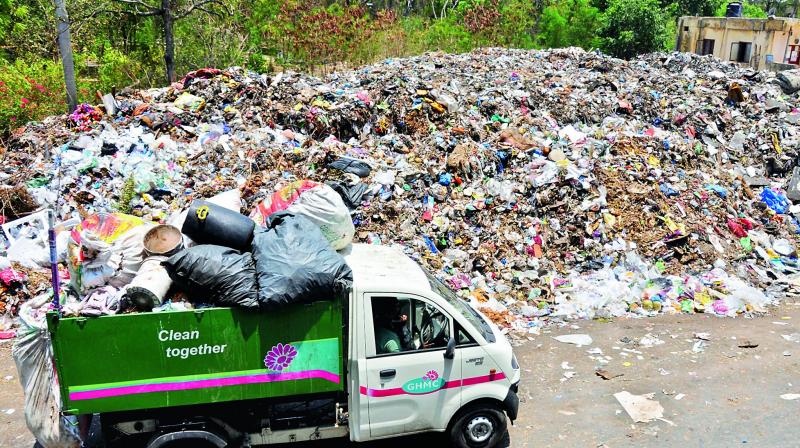
A used phone charger tossed into a kitchen bin. A dead battery buried under vegetable peels. An outdated gadget lost somewhere between wet waste and recyclables. This everyday scene across thousands of Hyderabad households is exactly what the Greater Hyderabad Municipal Corporation is now trying to undo—one labelled container at a time.
The civic body has issued an advisory urging residents to stop mixing electronic waste with regular household garbage. Instead, it wants every home to designate a small box, bag, or container—placed somewhere visible like near a television unit, study table, or kitchen shelf—clearly marked “e-waste.” Non-functional chargers, used batteries, obsolete gadgets, and small electrical equipment belong there, not in the bin that goes out to the curb every morning. The request appears simple. But urban waste management experts say it exposes a deeper failure: India’s cities have never built a reliable, citizen-friendly system for handling the toxic debris of digital life. Hyderabad generates an estimated 15,000 to 20,000 tonnes of e-waste annually, according to industry estimates, but only a fraction reaches authorised recyclers. The rest ends up in landfills, informal scrap yards, or is burned—releasing lead, mercury, and cadmium into air and groundwater.
A municipal official familiar with the advisory told Urban Acres that the current push is about habit formation. “Most residents do not intentionally dump e-waste irresponsibly. They simply do not know what else to do with it,” the official said. The corporation has asked households to clear their e-waste containers periodically—once a month or at a convenient interval—and to contact its helpline or participate in special collection drives. The timing matters. India is now one of the world’s fastest-growing generators of e-waste, driven by falling gadget prices, shorter replacement cycles, and the expansion of high-speed internet into smaller towns. Hyderabad, as a major tech and services hub, has a disproportionately large volume of discarded electronics from both homes and offices.
What the advisory does not address is equally important. There is no mention of door-to-door e-waste collection, no clarity on how often special drives will be held, and no discussion of whether bulk generators—apartment complexes and commercial buildings—face any compliance requirements. For now, the burden rests entirely on individual households to store toxic waste in their living rooms until the corporation decides to pick it up. The helpline number (040 21111111) is now active for those seeking disposal assistance. But the larger question remains: whether Indian cities will move from advisory-based segregation to mandatory, infrastructure-backed e-waste management—before the problem outgrows the solution.
GHMC Launches E Waste Bin Campaign For Citizens