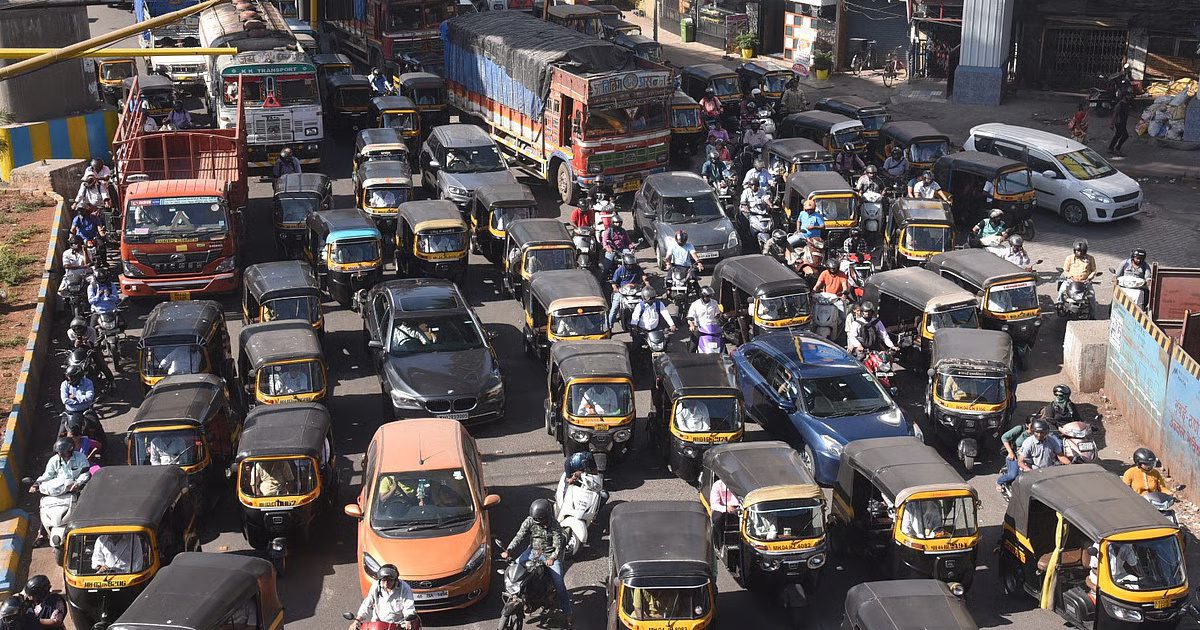
Mumbai Gateway Roadworks Trigger Major Traffic Changes
Mumbai’s ongoing push to upgrade public spaces has triggered temporary traffic restrictions near the Gateway of India, with diversions, bus stop relocations and taxi stand shifts now in effect around Adam Street. While the works are aimed at improving the city’s iconic waterfront precinct, the short-term disruptions highlight the balancing act between urban beautification and maintaining smooth mobility in one of Mumbai’s busiest tourist and heritage zones. Authorities have introduced the temporary traffic measures as part of streetscape enhancement works near Adam Street, where granite paving is being laid to improve pedestrian infrastructure around the historic Gateway of India area. The restrictions, which will remain in place until April 29, include closure of the southbound carriageway and rerouting of vehicles through adjacent roads.
The changes also affect public transport access in the precinct. A major BEST bus stop serving the area has been moved closer to the Yacht Club on Chhatrapati Shivaji Maharaj Marg, while the local taxi stand has been relocated to Mahakavi Bhushan Marg. These temporary shifts are expected to affect both tourists and office commuters who depend on the Gateway district’s transit connectivity. Urban mobility experts say the situation underlines a recurring challenge in Indian cities: how to modernise legacy public spaces without undermining daily movement patterns. High-footfall civic upgrades often improve long-term walkability and public realm quality, but without integrated traffic planning they can create bottlenecks that reduce commuter efficiency and raise travel costs. The Adam Street works are part of a broader wave of transport and utility-related diversions across Mumbai. Temporary road restrictions are also in force in Kurla, Ghatkopar, Mahim and Sakinaka due to sewage upgrades, road repairs and cement concrete resurfacing.
Together, these parallel interventions point to a city attempting to renew its ageing infrastructure while managing the pressures of uninterrupted urban movement. For Mumbai’s civic planners, the broader implication goes beyond short-term inconvenience. Every diversion impacts commuting time, fuel use and emissions. In a dense urban environment, poorly coordinated road closures can lead to congestion spillovers, affecting air quality and reducing the efficiency of public transport systems. Experts argue that infrastructure upgrades must therefore be supported by real-time commuter information, better traffic integration and pedestrian-first design principles.
The works near the Gateway of India may ultimately deliver a more accessible and attractive public space, but the transition period exposes the need for stronger coordination between urban design ambitions and transport planning. As Mumbai invests in beautification and mobility upgrades, the success of these projects will increasingly depend on whether public convenience remains central to execution. For a city already grappling with congestion, infrastructure renewal must not only improve the urban landscape—it must also preserve the everyday ease of moving through it.