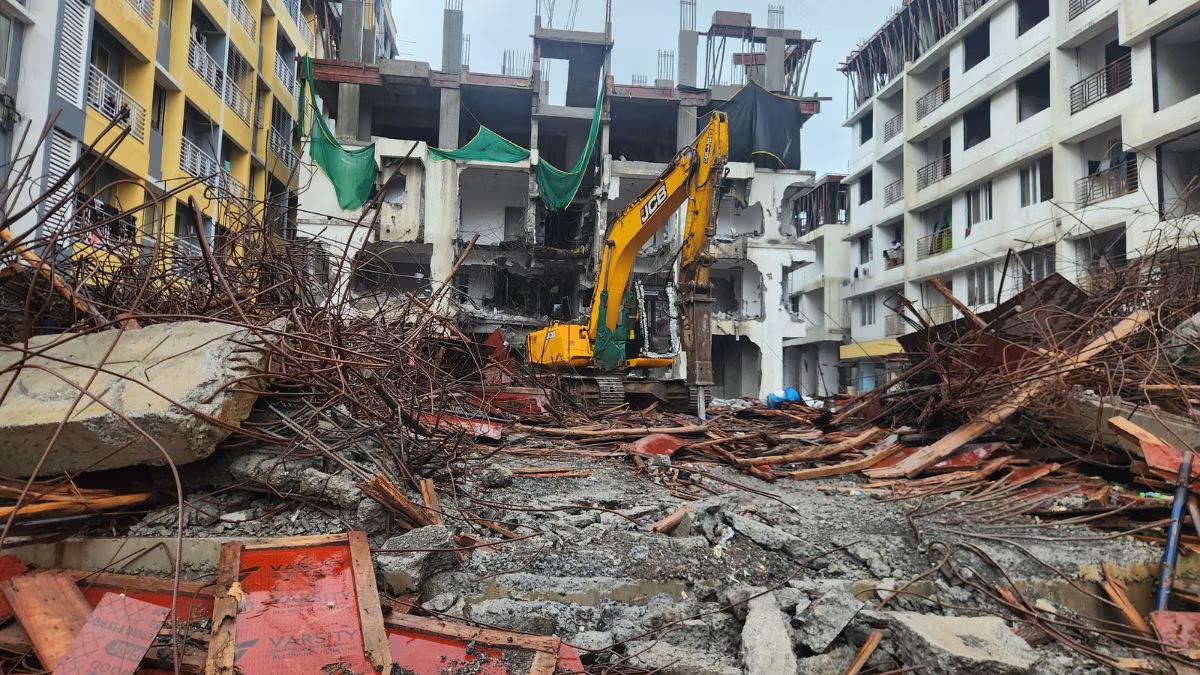
Mumbai Construction Waste System Expands Recycling Reach
Mumbai’s municipal administration has begun tightening oversight of construction and demolition waste through a technology-led monitoring framework, marking an important shift in how India’s financial capital manages one of its fastest-growing urban pollution challenges. Civic officials say more than 14,000 tonnes of debris were channelled to authorised recycling facilities within the first month of the new system becoming operational. The initiative forms part of Mumbai’s broader effort to reduce illegal dumping linked to rapid redevelopment, transport infrastructure expansion and large-scale excavation projects across the metropolitan region. Urban planners believe improved construction waste management is becoming increasingly critical for flood mitigation, air quality improvement and land-use efficiency in dense cities.
According to civic data reviewed by Urban Acres, over 32,000 tonnes of construction and demolition debris were formally collected during April after the Brihanmumbai Municipal Corporation introduced a revised compliance mechanism tied to its digital building approval platform. Nearly half of that material was directed to authorised recycling facilities instead of entering informal disposal channels. Municipal officials indicated that the new framework requires developers and contractors to submit detailed waste handling plans before receiving project clearances. The system digitally tracks debris generation, transportation and disposal, aiming to reduce unauthorised dumping in mangroves, open plots, roadside spaces and drainage channels. Environmental experts have repeatedly warned that unmanaged debris disposal contributes significantly to urban flooding risks during the monsoon by choking stormwater networks and natural water flows. Construction dust has also emerged as a growing contributor to deteriorating air quality in several high-growth corridors of Mumbai. The city currently generates an estimated 8,000 tonnes of construction-related waste every day, driven by redevelopment schemes, Metro rail expansion, road concretisation and real estate construction. However, only a fraction of that volume has historically entered formal recycling systems due to fragmented enforcement and limited monitoring capacity.
Mumbai presently operates two recycling facilities for construction waste at Dahisar and Shilphata, each capable of processing around 600 tonnes daily. Civic authorities are also preparing an additional large-scale processing facility in Deonar as redevelopment activity accelerates across eastern and suburban districts. Urban infrastructure analysts say construction waste management is emerging as a major policy issue for Indian cities pursuing climate resilience goals. Recycled debris can be reused in road sub-base layers, paving materials and non-structural construction products, reducing pressure on natural resources while limiting landfill dependence. Officials familiar with the matter said the municipality is now preparing a dedicated digital portal that will allow residents, contractors and transport operators to schedule pickups, register vehicles and monitor waste movement in real time. The platform is expected to create an auditable chain for debris transportation and disposal. The expansion of Mumbai construction waste monitoring also reflects a wider transition toward data-driven urban governance, where digital compliance systems are increasingly being used to manage environmental risks linked to fast-paced infrastructure growth.
As redevelopment activity continues to intensify across the city, experts note that the long-term success of the initiative will depend on stronger enforcement, public participation and scaling up recycling infrastructure to match the volume of waste generated daily.