


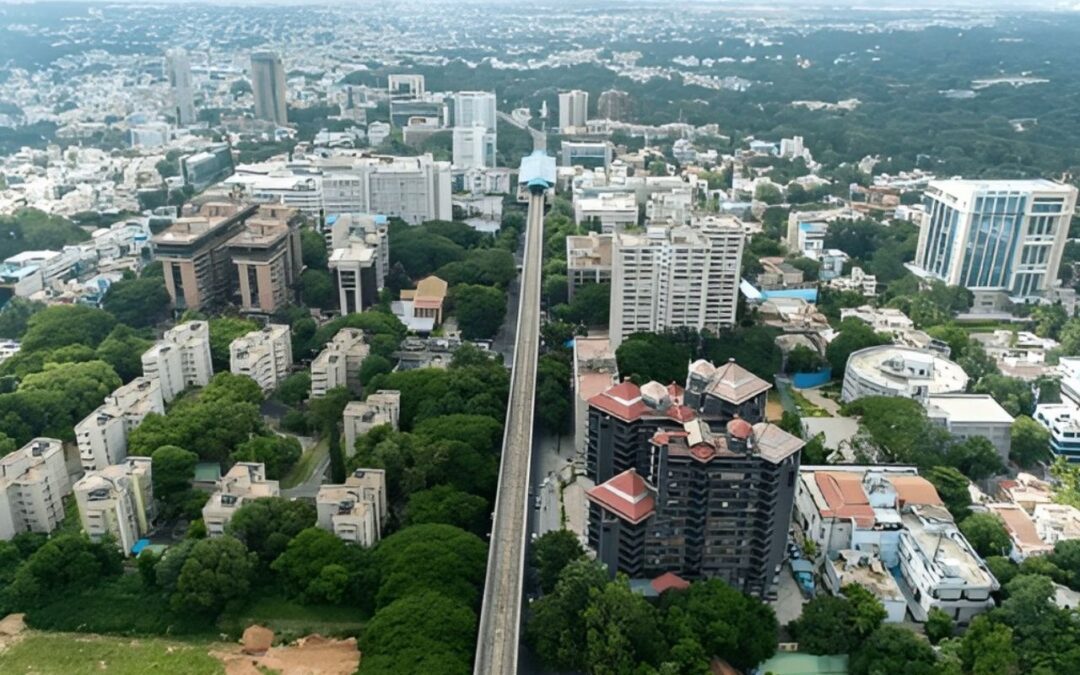
Bengaluru’s real estate market is witnessing a notable shift as demand for plotted developments rises sharply, with more homebuyers opting for land parcels over apartments.
The trend reflects changing preferences in urban living, where flexibility, long-term investment potential, and lower density environments are becoming increasingly attractive.The surge in registrations of plotted projects signals momentum in the Bengaluru plotted development demand, driven by a combination of affordability considerations and evolving lifestyle choices. Buyers are increasingly drawn to the idea of owning land, which allows for customised construction and phased investment, compared to ready-built apartments.Industry analysts suggest that the shift is also influenced by post-pandemic priorities.Greater emphasis on space, privacy, and independent living has encouraged buyers to move away from high-density housing formats. In a city where congestion and vertical expansion have become defining features, plotted developments offer an alternative that aligns with these preferences.The Bengaluru plotted development demand is further supported by infrastructure expansion in peripheral areas.Improved road connectivity and upcoming transit projects are making outlying regions more accessible, enabling developers to launch plotted communities beyond traditional urban cores.This is reshaping the city’s growth pattern, extending development into new corridors.From an economic perspective, the rise in land purchases reflects confidence in long-term asset appreciation.
Plots are often seen as stable investments, with the potential for higher returns over time. This perception is attracting both end-users and investors, contributing to increased transaction volumes.However, the trend raises important questions for urban planning and sustainability. Low-density developments can lead to urban sprawl, increasing reliance on private vehicles and putting pressure on infrastructure and natural resources. Without careful planning, such expansion may undermine efforts to create compact, efficient, and climate-resilient cities.Urban planners emphasise the need for integrated development frameworks that ensure plotted projects are supported by adequate infrastructure, including water supply, waste management, and public transport. Aligning these developments with sustainability goals will be critical to managing their long-term impact.There are also regulatory considerations. Ensuring transparency in land transactions, clear titles, and compliance with planning norms is essential to protect buyers and maintain market stability. Strengthening governance mechanisms can help address these challenges as demand continues to grow.The shift towards plotted developments also has implications for the housing market.While it offers greater choice, it may affect the demand dynamics for apartments, particularly in certain segments. Developers may need to recalibrate their strategies to respond to changing consumer preferences.
As Bengaluru continues to expand, the rise in land-based investments highlights a transformation in how residents perceive housing and urban living. Balancing this demand with sustainable planning and infrastructure development will be key to ensuring that growth remains inclusive and resilient.
Also Read:Bengaluru Electric Auto Adoption Gains Momentum

