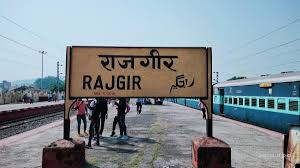
Patna Rajgir Train Service Strengthens Regional Mobility
Bihar’s regional mobility network is set for a significant upgrade with the regularisation of train services between Patna and Rajgir, a move expected to benefit both daily commuters and the state’s growing tourism economy. The decision signals a shift towards more predictable and reliable rail connectivity along one of the region’s key travel corridors.
Railway officials indicate that services operating earlier as special trains will now run on a regular schedule, improving frequency and dependability. The Patna–Rajgir corridor, spanning roughly 90–100 kilometres, currently supports a mix of express and MEMU services with travel times ranging from about two to three hours depending on the service type. The regularisation is particularly relevant for daily commuters who rely on rail connectivity between smaller towns and the state capital. Cities such as Bihar Sharif and surrounding peri-urban areas have seen rising population and employment linkages with Patna, increasing demand for dependable transit options. A consistent train service is expected to reduce uncertainty in travel planning and support workforce mobility across the region. Beyond commuting, the development carries implications for Bihar’s tourism economy.
Rajgir, known for its religious and historical significance, attracts visitors throughout the year. Improved rail reliability can enhance access for domestic tourists, particularly those travelling from Patna, which serves as a major entry point into the state. With tourism increasingly linked to regional infrastructure quality, consistent rail services are seen as a key enabler for local economic activity. Urban development experts note that strengthening such regional corridors can influence settlement patterns and reduce pressure on core city infrastructure. Improved rail access allows for more distributed growth, enabling smaller towns to integrate economically with larger urban centres. This, in turn, can ease congestion in Patna while supporting balanced regional development. The move also reflects a broader trend within Indian Railways to convert temporary or seasonal services into permanent operations based on demand patterns. In recent months, several routes across the country have seen similar transitions, indicating a data-driven approach to capacity planning and service optimisation. However, the long-term success of the Patna Rajgir train service will depend on service quality, punctuality, and last-mile connectivity. Experts emphasise the need for integrated transport planning, including feeder services and station area improvements, to maximise the benefits of enhanced rail connectivity.
From a sustainability perspective, strengthening rail-based mobility offers a lower-emission alternative to road transport, particularly for short-distance intercity travel. As cities like Patna expand, such investments can contribute to reducing vehicular congestion and improving air quality. The regularisation of the Patna Rajgir train service thus represents more than a scheduling change—it reflects a broader effort to align transport infrastructure with economic growth, tourism potential, and evolving urban dynamics. The coming period will reveal how effectively this corridor can support Bihar’s transition towards more connected and resilient regional development.