

The Koregaon Bhima Commission of Inquiry has concluded recording witness evidence nearly eight and a half years after violence broke out in Pune district on January 1, 2018. Its latest extension, taking the deadline for submission of the final report to October 31, 2026, brings the inquiry closer to an institutional conclusion while also highlighting the extraordinary time required to examine a public-order breakdown involving a large commemorative gathering, several villages and competing political narratives.
The commission’s secretary, V V Palnitkar, told The Indian Express that the Maharashtra government had granted an extension of two more months and that the panel would now prepare its final report. Advocate Ashish Satpute, the commission’s lawyer, said the commission had provided “full opportunity and hearing to every witness and party concerned” and was proceeding to finalise its report.
The distinction between concluding hearings and completing the inquiry is important. The commission has finished the stage at which witnesses are examined and cross-examined, but the final report has not yet been submitted to the state government. The remaining work involves organising the evidence, considering the final arguments already submitted by lawyers and recording the commission’s findings and recommendations.
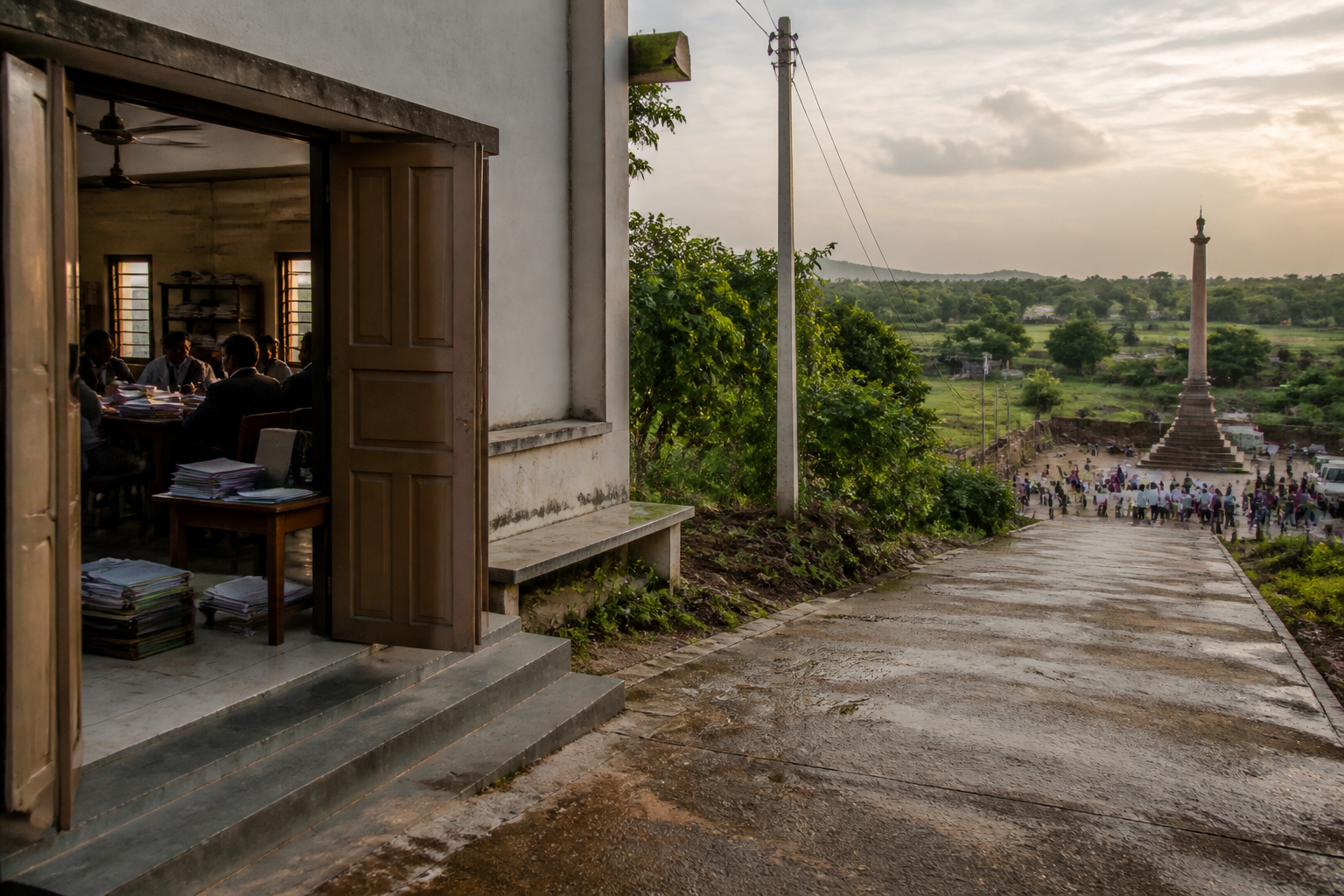
The commission was established by the Maharashtra government on February 9, 2018, following violence in Koregaon Bhima and adjoining villages on January 1 that year. One person died and several others were injured at a time when lakhs of Ambedkarites had gathered to commemorate the 200th battle of Koregaon Bhima. The two-member panel was headed by retired high court justice J N Patel, with former chief secretary Sumit Malik as its other member.
The original mandate was to inquire into the “exact sequence” of events that led to the violence. The commission was initially given four months to submit its report. Its tenure was extended repeatedly, including because it could not function during the Covid-19 outbreak. The latest extension is the 23rd granted to the commission, following an earlier deadline of August 31, 2026.
That chronology makes the inquiry more than a record of one episode of violence. It is also a case study in how commissions of inquiry operate when the event under examination involves a large public gathering, multiple jurisdictions, political mobilisation, disputed historical claims and a substantial evidentiary record. The commission received more than 400 affidavits from police personnel, government officials and civilians before selecting witnesses for examination.
According to the report, 58 witnesses have been examined. They include senior politicians such as NCP(SP) chief Sharad Pawar and VBA president Prakash Ambedkar; police and administrative officials including Rashmi Shukla, then commissioner of Pune city police, Suvez Haque, then superintendent of Pune rural police, and Saurabh Rao, then Pune district collector; as well as activists, villagers and former bureaucrat and author Vishwas Patil.
The composition of the witness pool reflects the administrative complexity of the incident. Koregaon Bhima is located in Pune district, while the gathering drew visitors from across the state. Responsibility for crowd management, policing, local administration and the protection of sensitive sites therefore intersected across city, rural and district institutions. The inclusion of police officials, civil servants and residents indicates that the commission has examined the event through both an official and a ground-level lens.
The inquiry has also been structured as an adversarial process. Lawyers representing different parties were allowed to cross-examine witnesses, while lawyers for the Vadhu Budruk gram panchayat and the special public prosecutor, Shishir Hiray, participated in the proceedings. The commission also summoned various political parties to seek their suggestions on improving the management of law-and-order situations.
The two broad positions before the commission show why the evidence has been difficult to consolidate. One side blamed Hindutva leaders Milind Ekbote and Sambhaji Bhide. The other alleged that organisers of the Elgaar Parishad, held at Pune’s Shaniwar Wada on December 31, 2017, had played a role in instigating the violence. These are competing claims recorded in the inquiry and should not be treated as findings. The commission’s final report will determine how the evidence is assessed.
The location also carries a layer of historical and community significance. Koregaon Bhima became the site of a major annual commemoration connected to the 1818 battle, while nearby Vadhu Budruk is associated with the samadhi of Chhatrapati Sambhaji Maharaj. The village also contains a disputed tomb-like structure that the Dalit Mahar community identifies as the samadhi of Govind Gopal Dhegoji Meghoji, a 17th-century figure. The dispute over the site forms part of the wider social and historical context in which the 2018 gathering took place.
For public administration, the case raises a practical question: how should the state plan for recurring mass gatherings when the event is simultaneously a religious, historical, political and community occasion? The commission’s original purpose included understanding the steps needed to prevent a similar incident in the future. Its decision to seek suggestions from political parties indicates that the inquiry was not confined to assigning responsibility for the past; it also considered institutional responses to law-and-order risks.
Yet the long duration of the process complicates the preventive function of such an inquiry. The violence occurred in 2018, while the final report is now expected only by October 31, 2026. During that period, administrative personnel changed, public narratives hardened and the event continued to carry political and social significance. A commission can provide a detailed evidentiary record, but its usefulness for immediate institutional learning depends on how quickly its findings are translated into administrative practice.
The supplied record does not establish whether the commission’s final report will be made public immediately after submission, what findings it will reach or whether the state government will accept and implement its recommendations. It also does not establish how responsibility will ultimately be apportioned among the individuals, organisers or institutions whose conduct has been examined. Those questions remain open until the report is submitted and its contents are officially known.
What is established is that the commission has completed the witness-hearing phase after examining 58 witnesses and receiving more than 400 affidavits. Lawyers have submitted their final arguments, and the panel has received another two months to complete its work. The next institutional milestone is therefore not another round of hearings but the preparation and submission of the final report to the Maharashtra government by October 31, 2026.
The Koregaon Bhima inquiry now moves from evidence collection to adjudication of the record. Its significance will depend on whether the final report can clarify the sequence of events, distinguish allegation from established fact and identify practical lessons for managing large public gatherings in Pune district and elsewhere in Maharashtra.
