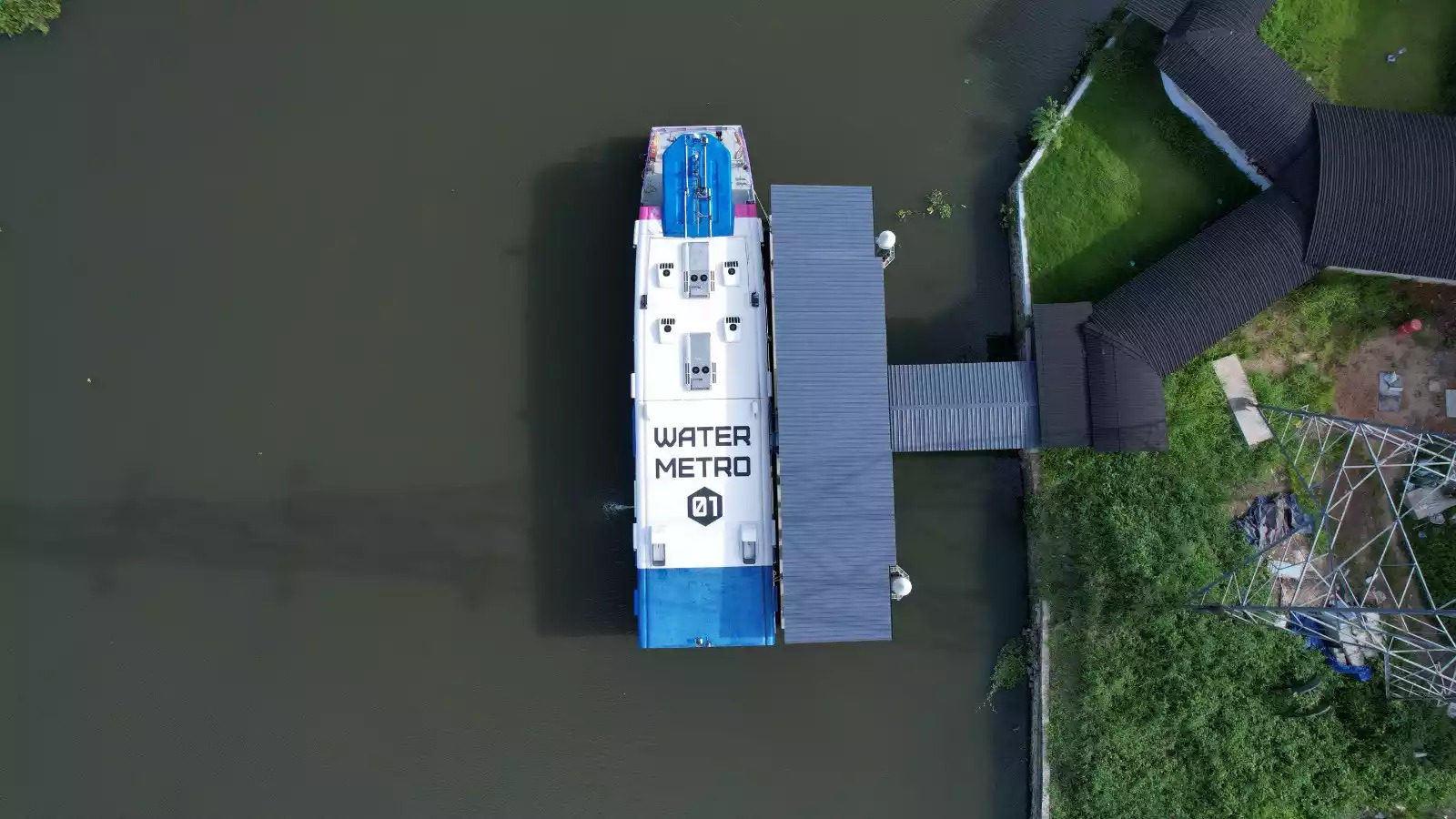
Patna Water Metro Plan Advances Clean River Mobility
Construction activity has begun on the first operational infrastructure for the Patna Water Metro, marking a significant step in the city’s plan to introduce electric ferry services along the Ganga river. The initial work focuses on developing a charging station at Gandhi Ghat, which will support battery-powered vessels operating on the first planned river corridor connecting Digha Ghat and Kangan Ghat. The project forms part of a broader effort to introduce low-emission water-based transport systems in Indian cities with major riverfronts. Transport planners say the proposed route, extending about 10.5 kilometres along the Ganga, is expected to provide an alternative commuting option while easing pressure on Patna’s congested road network.
Authorities involved in the initiative indicated that the charging facility at Gandhi Ghat will serve as a key operational node for electric ferries. Similar energy infrastructure is expected to be installed at other terminals along the corridor as the project progresses. Additional charging stations are planned at Digha Ghat and Kangan Ghat to support continuous vessel operations across the route. Under the current plan, the Patna Water Metro corridor will link several riverfront ghats that serve as important cultural, residential and mobility points across the city and neighbouring areas. The network is expected to begin from Kangan Ghat and move through multiple stops including Gayghat, Gandhi Ghat and Digha Ghat before extending further towards locations along the riverfront in later stages. Urban mobility experts say water-based transit systems can play a valuable role in cities located along major rivers. By shifting a portion of short-distance travel to waterways, such systems can reduce road congestion, improve travel reliability and lower transport emissions. Electric ferries in particular are increasingly viewed as a sustainable alternative to diesel-powered river transport.
The project is being implemented through a collaboration between a national inland waterways authority and the state government, with shipbuilding and technical support provided by a major public sector shipyard. Engineers associated with the project are working on designing vessels capable of operating efficiently in river conditions while maintaining low environmental impact. Transport planners emphasise that river-based transit can also support urban riverfront development. As cities invest in waterfront revitalisation, integrating passenger ferry networks can help improve accessibility to public spaces, markets and cultural sites located along riverbanks. For Patna, where rapid population growth has increased pressure on urban transport infrastructure, the Patna Water Metro initiative could offer a complementary mobility layer alongside road and rail systems. By using existing waterways, the city may be able to expand transport capacity without requiring extensive land acquisition or road expansion. Officials involved in planning say the current construction phase will focus on establishing the operational backbone required for electric ferry services. Once charging infrastructure and docking facilities are completed, trial runs and route testing are expected to follow before passenger services begin.
If successful, the project could demonstrate how river-based mobility solutions contribute to cleaner, more resilient urban transport networks while strengthening connections between riverfront communities and the city’s evolving urban landscape.
Patna Water Metro Plan Advances Clean River Mobility