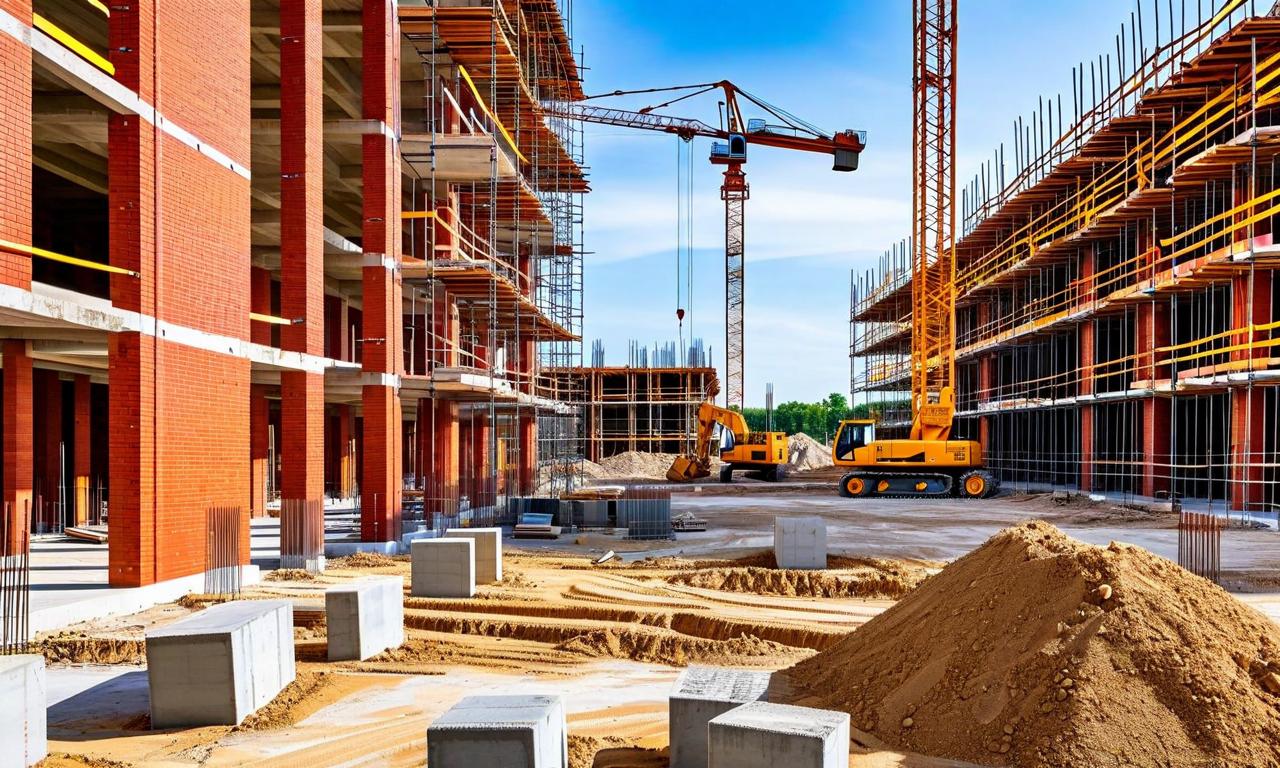
Delhi is set to add a new piece of green social infrastructure in its northeast corridor as construction begins on a green school campus at Khajuri Khas, a project designed to combine education expansion with sustainable building standards.
The upcoming Kendriya Vidyalaya campus will be developed at an estimated cost of about ₹47.8 crore and is expected to accommodate more than 1,500 students once completed. The project forms part of broader efforts to expand educational access in densely populated parts of northeast Delhi where demand for central government schools has grown steadily in recent years.
Planned on a site of roughly 1.8 acres, the campus will include a multi-storey academic building with a built-up area of around 8,700 square metres. The structure is being designed as a green school campus with sustainability integrated into both its architecture and operations. Project planners say the building is targeting a four-star rating under the national Green Rating for Integrated Habitat Assessment (GRIHA), a certification framework that evaluates energy efficiency, water conservation, building materials and environmental performance in construction.
To meet those standards, the campus blueprint incorporates solar power provisions, energy-efficient lighting systems and rainwater harvesting infrastructure. The design also includes an on-site sewage treatment facility and landscaped areas that are expected to provide roughly a quarter of the total plot area as green cover. Beyond sustainability features, the academic complex will house dozens of classrooms along with shared facilities aimed at improving the learning environment. Plans include dedicated spaces for early-years students, sports infrastructure and a multipurpose court for senior classes. Accessibility provisions such as lift access have also been included to support inclusive campus design.
Urban education planners say projects like this illustrate how school infrastructure is increasingly being integrated into wider urban sustainability strategies. Public buildings—especially schools—are being used as demonstration projects for energy-efficient architecture and low-carbon construction practices. The Khajuri Khas campus is also expected to address a long-standing educational gap in the Yamuna floodplain region and surrounding neighbourhoods. Residents in parts of northeast Delhi have historically relied on limited schooling infrastructure, often requiring students to travel considerable distances for admission in central government schools.
Construction of the campus is scheduled over an estimated two-year timeline. Once operational, the school will join Delhi’s network of Kendriya Vidyalayas, which collectively serve more than a lakh students across the capital. Urban planners note that integrating sustainability into public education infrastructure can create long-term benefits beyond classrooms. Energy-efficient school buildings reduce operational costs for governments, while green campus design can improve thermal comfort and air quality for students.
As Indian cities expand their social infrastructure, projects such as the Khajuri Khas green school campus highlight how educational development, environmental performance and urban planning are increasingly being linked in the design of future public institutions.