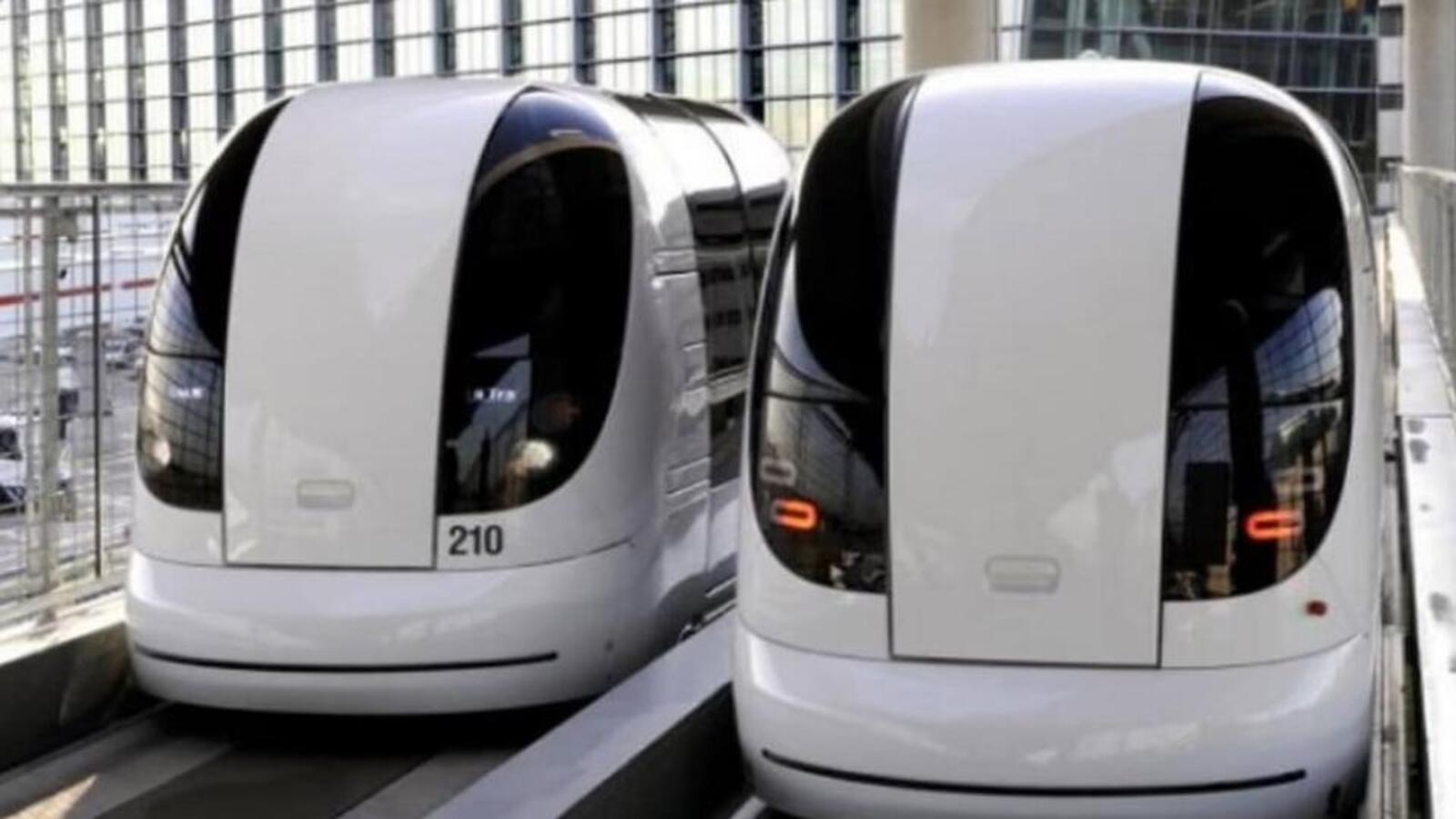
Mumbai’s central business district of Bandra Kurla Complex is set to become a testing ground for a new form of urban mobility, as the Mumbai Metropolitan Region Development Authority (MMRDA) confirms that its proposed pod taxi system will be implemented without any operating subsidy. Instead, the project will follow a revenue-sharing concession model, placing commercial risk firmly on the private operator while generating steady non-fare income for the public authority.
The project, planned as a pilot for last-mile connectivity, is aimed at addressing one of BKC’s most persistent challenges: moving large volumes of daily commuters efficiently between suburban railway stations and office districts. Despite being one of India’s most prominent commercial hubs, BKC remains heavily dependent on road-based transport for short-distance access, resulting in congestion, high emissions, and unreliable travel times. Under the approved framework, the concessionaire will pay an annual fixed fee to MMRDA and share just over one-fifth of gross revenue with the authority. Officials familiar with the project structure say the zero-subsidy approach is intended to test whether emerging transit technologies can be financially viable in dense urban settings without recurring public support.
The proposed pod taxi network is planned along an elevated corridor of roughly eight kilometres, dotted with more than 30 stations. Small automated vehicles, designed to carry a handful of passengers at a time, are expected to operate at short intervals, allowing for continuous flow rather than fixed schedules. Urban transport specialists note that such systems are particularly suited to business districts where trip lengths are short but demand is intense and time-sensitive. Land assembly remains a critical step before construction can begin. Parcels in Kurla and Bandra East are in the process of being transferred from other public agencies, with MMRDA using its role as the special planning authority for BKC to align land use permissions with transport objectives. Planning experts say this reflects a broader shift towards integrating mobility infrastructure into land development decisions rather than treating it as an afterthought.
From a policy perspective, the project is notable for its concession design. The private operator will finance, build, and operate the system over a long-term period, while fare levels are expected to remain competitive with existing options such as autorickshaws, taxis, and app-based cabs. A built-in escalation mechanism is intended to balance affordability with rising operating costs over time. MMRDA estimates that several lakh commuters travel to and from BKC daily, a figure expected to rise with upcoming rail, high-speed rail, and commercial developments in the precinct. Urban economists argue that if the pod taxi system succeeds, it could reduce dependence on private vehicles, cut short-trip emissions, and improve productivity by lowering commute uncertainty.
As cities across India search for scalable, low-carbon transport solutions, the BKC pod taxi experiment will be closely watched. Its success or failure is likely to shape how future last-mile projects are financed, regulated, and integrated into dense business districts.
Mumbai BKC Pod Taxi Moves Without Public Subsidy