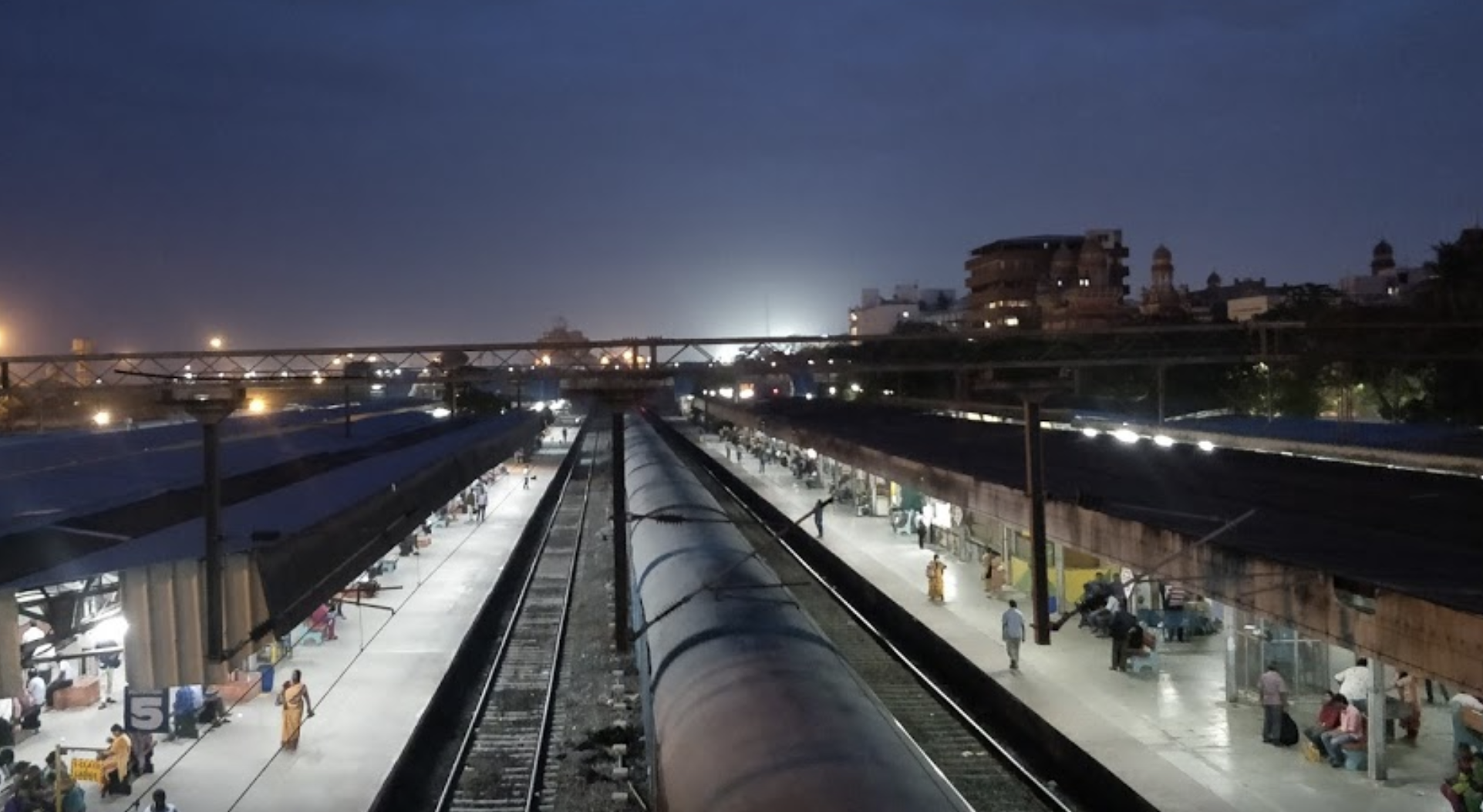
Chennai’s suburban and intercity rail network is witnessing a significant expansion of commuter infrastructure, with Southern Railway’s Chennai Division adding 20 new authorised parking facilities across key stations during the 2025–26 financial year. The move is expected to ease congestion around station entrances, improve last-mile connectivity and support growing passenger volumes across the metropolitan region and adjoining districts.
The latest additions increase the division’s total parking locations from 106 to 126, covering stations that serve both dense urban corridors and rapidly expanding suburban settlements. Facilities have been introduced at transit-heavy locations including Tambaram, Chengalpattu, Guindy, St Thomas Mount, Avadi, Ennore and Arakkonam areas where rail ridership has steadily increased alongside residential and commercial growth. Urban mobility experts note that parking infrastructure at railway stations is increasingly becoming part of a broader city transport strategy rather than a standalone passenger amenity. With Chennai continuing to expand outward, suburban rail systems are carrying a larger share of daily commuters, making organised vehicle management around stations essential for reducing road congestion and improving pedestrian access.
A senior railway official indicated that the expanded network aims to streamline circulation around station precincts while discouraging informal roadside parking that often obstructs traffic and emergency access routes. Several stations under the parking expansion plan are also undergoing redevelopment through the Amrit Station Scheme, which focuses on modernising passenger infrastructure and improving station accessibility. Among the notable additions is a multilevel parking structure at Chengalpattu Junction, developed to accommodate rising demand at one of the region’s busiest interchange points. Urban planners say such facilities can help integrate private mobility with public transport systems if designed alongside safe pedestrian movement, cycling access and feeder services.
The Chennai Division has also incorporated digital ticketing, UPI-enabled payments and CCTV surveillance across the new parking facilities. Transport analysts view these systems as part of a gradual shift towards smarter station management practices that improve commuter convenience while enhancing operational monitoring.However, mobility researchers caution that expanding parking alone cannot solve access challenges around transit hubs. They argue that Indian cities must balance parking growth with investments in non-motorised transport infrastructure, shaded walkways and reliable feeder connectivity to prevent excessive dependence on private vehicles.
The expansion comes at a time when Chennai’s rail-based transit network is expected to play a larger role in lowering transport emissions and supporting climate-resilient urban growth. Improved station access could encourage more residents to shift from road-based commuting to public transport, particularly in peripheral growth corridors where daily travel distances continue to rise.As Chennai advances multiple transport infrastructure projects simultaneously, the effectiveness of such station-level upgrades will depend on how well they integrate with wider urban planning, land use patterns and commuter-centric mobility policies in the years ahead.