


Adani Group’s reported exploration of a potential €3 billion acquisition of Dutch energy-storage company VTTI is more than a possible overseas purchase: it is a sign of how India’s infrastructure conglomerates are seeking control over the physical systems that move and store energy. The transaction remains uncertain, but if completed, it would extend Adani’s reach from ports, power and transport infrastructure into a global network of fuel and chemical terminals.
People familiar with the matter told Bloomberg that Adani Group is among the parties evaluating VTTI, a Rotterdam-based company whose owners are considering selling their stakes. The potential transaction could value VTTI at about €3 billion, or approximately $3.4 billion. The discussions are continuing and may not result in a deal.
That uncertainty matters. This is not a completed acquisition, a signed agreement or an announced strategic partnership. It is an exploratory process involving several potential bidders. But the reported valuation and the identity of the company under consideration make the development significant for understanding the next phase of Adani’s expansion: the pursuit of infrastructure assets that sit at the junction of energy, trade and industrial logistics.
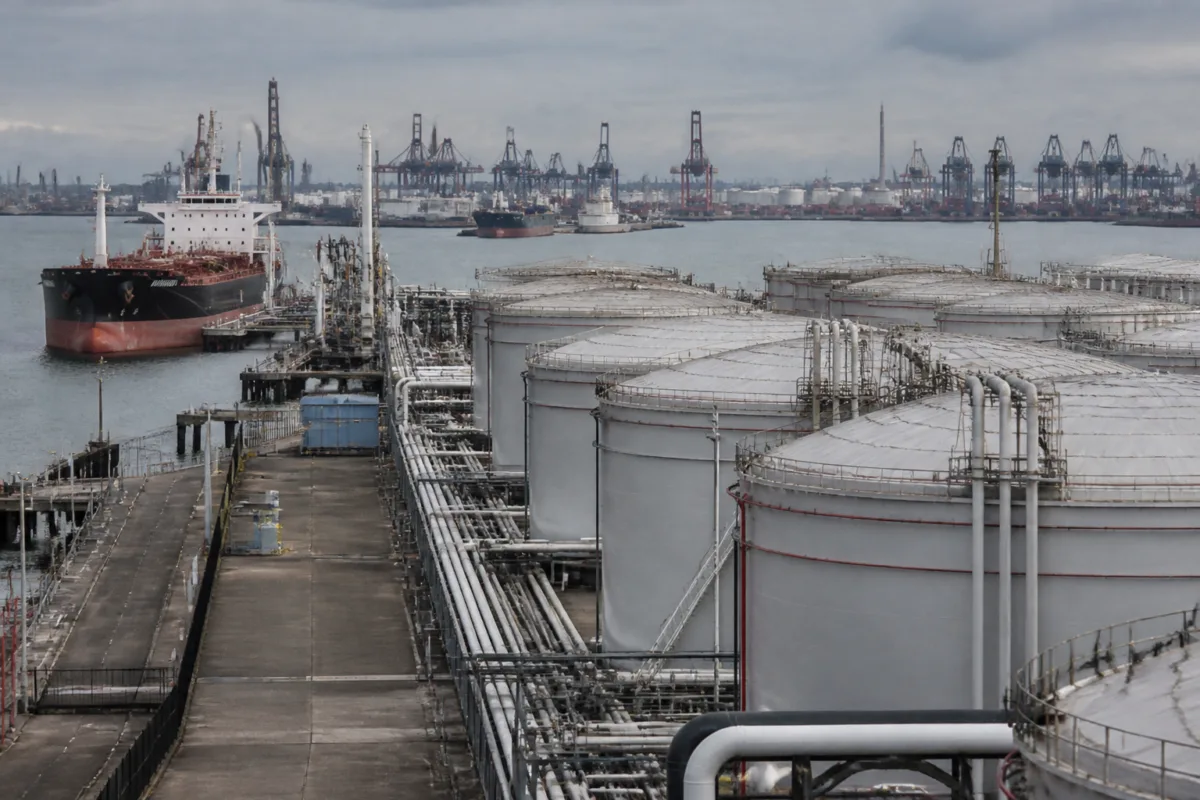
VTTI operates terminals used to store fuels and chemicals, including fossil fuels, biofuels and solvents. Its global presence gives the company a role in the infrastructure between production and consumption. Storage terminals are not merely warehouses. They provide the capacity needed to hold, blend, transfer and distribute energy products as they move through international supply chains.
That function becomes more valuable when supply chains are disrupted. The report said supply disruptions have increased the value of storage facilities for energy trading. When the movement of fuels and industrial chemicals becomes less predictable, physical storage can give traders and suppliers more flexibility over timing, routing and inventory. The value of a terminal therefore depends not only on its land, tanks and handling equipment, but also on its location, connectivity and access to markets.
VTTI’s ownership structure also shows why the company could become the subject of a large infrastructure transaction. Australian infrastructure manager IFM Investors and energy and commodities group Vitol each own about 45%, while Abu Dhabi National Oil Company holds the remaining 10%. Adnoc is considering selling its entire stake, according to the people familiar with the matter, while the other co-owners may also reduce their positions in a deal.
The possible sale is therefore not simply a strategic acquisition by one buyer. It is also an ownership reorganisation involving infrastructure investment, commodities trading and a national oil company. The different interests of these shareholders could shape the eventual structure of any transaction, including whether one buyer acquires the entire company or takes a significant stake alongside other investors.
For Adani, VTTI would fit an existing pattern of building a portfolio around large-scale infrastructure assets. The group’s businesses include airports, roads and data centres, alongside mining and defence assets. Its founder, Gautam Adani, is described in the report as India’s wealthiest person, with an estimated net worth of about $105.7 billion according to the Bloomberg Billionaires Index.
The common thread across these assets is not ownership of a single commodity or service. It is control of networks through which goods, people, data and energy move. Ports connect ships to inland markets. Roads connect production centres to consumers. Airports provide passenger and freight capacity. Data centres support digital services. Energy-storage terminals add another form of strategic infrastructure: the capacity to hold and manage essential industrial inputs.
This is the institutional significance of the reported VTTI interest. Infrastructure companies increasingly operate across sectors that were once treated separately. A port operator can be exposed to energy cargoes. A power company can depend on fuel logistics. A storage-terminal owner can be connected to global commodity markets. The boundaries between transport infrastructure, energy infrastructure and industrial real estate are consequently becoming less distinct.
The report does not establish that Adani has secured financing for the transaction or that VTTI’s owners have selected a preferred bidder. It also does not provide details on the proposed ownership structure, financing mix, regulatory approvals or the assets that would be included in a completed deal. These gaps are material because a terminal network’s strategic value depends on its geography, capacity, utilisation, commodity mix and contractual relationships.
The available information does, however, place the potential purchase within a broader overseas expansion strategy. Adani Group has been looking at international acquisitions to accelerate growth. It recently explored the acquisition of a stake in Associated British Ports, the United Kingdom’s largest port operator, according to people with knowledge of that matter. IFM eventually prevailed in a deal this month that valued AB Ports at about £10 billion.
The comparison is relevant because ports and storage terminals are closely connected within the global movement of energy and goods. Yet the two assets also present different operating models. Ports depend on vessel traffic, cargo volumes, concessions and hinterland connections. Storage terminals depend more directly on tank capacity, product flows, handling infrastructure, customer contracts and commodity-market conditions. A potential VTTI acquisition would therefore broaden, rather than simply replicate, Adani’s infrastructure exposure.
The group’s funding capacity is another part of the story. Adani Enterprises, the listed flagship, raised 150 billion rupees, or about $1.6 billion, from institutional investors in July. The funds were intended to support capital expenditure and possible debt repayment. The report does not say how much of that capital, if any, could be used for a VTTI transaction. Nor does it establish whether Adani Enterprises or another group entity would lead a bid.
That distinction is important for assessing the eventual financial and governance implications. A large cross-border acquisition would involve questions about leverage, currency exposure, asset-level debt, regulatory review and integration. None of those outcomes can be determined from an exploratory approach. The only established point is that Adani is among the parties evaluating VTTI, according to the people cited in the report.
The company’s recent corporate history also forms part of the context. The report said Gautam Adani won dismissal in August of US securities fraud charges, which had threatened the conglomerate’s expansion. The legal development was described as a victory for the group, but the report does not link it directly to the VTTI discussions or state that it changed the company’s financing plans.
The response from the parties underscores the preliminary status of the process. An Adani Group representative did not immediately respond to queries. Spokespeople for IFM Investors, Adnoc and VTTI declined to comment, while a representative for Vitol did not immediately comment. These responses do not confirm or deny the reported talks.
For cities and industrial regions, the significance of a transaction such as this would ultimately be measured through physical infrastructure. Storage terminals occupy strategically located industrial land, connect to ports, pipelines, roads and sometimes railways, and influence how reliably energy products reach downstream users. Any change in ownership could affect investment priorities, operating partnerships and the future role of these facilities in regional supply chains. The supplied report does not provide enough detail to assess those effects at specific locations.
The larger urban question is who controls the infrastructure that keeps metropolitan economies functioning when energy markets are volatile. Modern cities depend on systems that are often outside their administrative boundaries: fuel terminals, ports, transmission networks, logistics parks and data centres. Ownership of these systems can be geographically distant from the people and businesses that depend on them, while decisions about capacity and investment can have local consequences.
The VTTI case also shows why energy storage should be treated as part of the built infrastructure of trade. The public debate around energy often focuses on generation and consumption, but storage determines how supply can be timed and routed between the two. As supply disruptions increase the value of physical capacity, terminals can become strategic assets in their own right.
At this stage, the evidence confirms only a potential acquisition under consideration by multiple bidders. It does not confirm a transaction, a final price, a buyer or a timetable. The developments to monitor are whether VTTI’s owners formally begin a sale process, whether Adani makes a binding offer, how any purchase would be financed and which regulatory or competition approvals would be required. Until those steps occur, the reported interest remains a signal of Adani Group’s overseas infrastructure ambitions rather than a completed change in ownership.

