


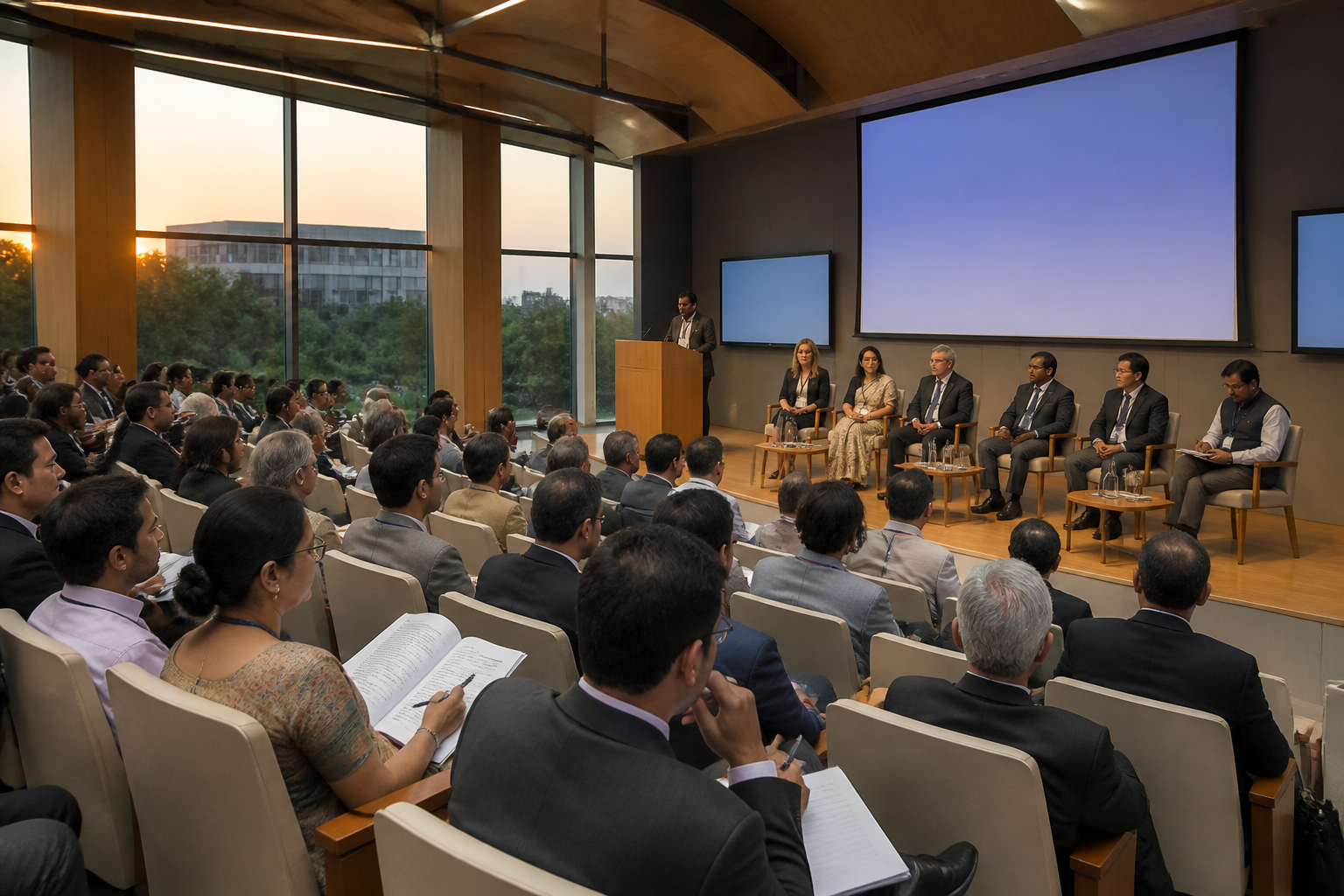
The opening of the 17th International Conference on Mercury as a Global Pollutant at IIT Hyderabad places India at the centre of a policy question that is larger than a scientific gathering: how can evidence about a persistent and dangerous pollutant be converted into enforceable action across industries, ecosystems and communities?
The conference, which opened on Sunday and will conclude on October 9, is the first conference linked to the Minamata Convention to be hosted in India. Scientists, policymakers and environmental specialists are discussing progress in controlling mercury pollution and the scientific priorities that should guide the next phase of global action.
That setting matters because mercury does not remain confined to the site where it is released. The conference programme covers mercury in the atmosphere, oceans, freshwater ecosystems and terrestrial environments, as well as bioaccumulation, human health, environmental health, modelling and the relationship between science and policy. The range of subjects shows why mercury governance cannot be treated as a single-industry or single-department problem.
The Minamata Convention was adopted in Kumamoto, Japan, in 2013 and entered into force on August 16, 2017. It is designed to protect human health and the environment from human-caused emissions and releases of mercury and mercury compounds. The convention now has 154 parties, while India ratified it in June 2018.
The Hyderabad conference is being held under the theme “Reaching Ten Years of Enforcement of the Minamata Convention: Achievements, Challenges and Road Map for the Future”. That theme shifts the discussion from the creation of an international treaty to the more difficult question of implementation. A convention can establish shared obligations and priorities, but the results depend on monitoring, institutional coordination, technical capacity and the ability to act on evidence.
For cities, this is a significant governance issue even when pollution sources are not located inside a municipal boundary. Urban administrations are responsible for several functions that shape environmental exposure, including public health coordination, waste management and local regulation. At the same time, mercury can move through atmospheric, aquatic and terrestrial systems. The conference’s decision to examine all three environmental domains underlines the need for governance that follows the pollutant rather than administrative boundaries.
The programme also shows the number of sectors involved. Specialised discussions will cover mercury monitoring, artisanal and small-scale gold mining, cosmetics, biodiversity, the oil and gas industry, wetlands and mercury and lead in traditional Indian medicine. These subjects have different supply chains, regulatory structures and exposure pathways. A single enforcement model is therefore unlikely to address the entire problem.
The most prominent focus is artisanal and small-scale gold mining. According to the United Nations Environment Programme, the sector is the largest source of human-caused mercury pollution and accounts for almost 40 per cent of anthropogenic mercury entering the atmosphere. The figure gives the conference a clear policy direction: reducing mercury pollution requires attention not only to laboratories and monitoring systems, but also to economic activities in which mercury use is embedded.
That connection between livelihoods and pollution complicates enforcement. The conference material does not establish a specific Indian intervention or implementation outcome for artisanal and small-scale gold mining. It does, however, identify the sector as a major international target for action. This distinction is important. Recognising a source of pollution is the first step; changing the practices, incentives and regulatory systems around it is a separate institutional task.
The public-health implications explain the treaty’s urban relevance. The World Health Organisation identifies mercury as one of the chemicals of major public-health concern and says exposure can damage the nervous, digestive and immune systems, as well as the lungs, kidneys, skin and eyes. Fetuses and young children are particularly vulnerable.
These risks make monitoring more than a technical exercise. Data on mercury in air, water, soil, food chains and human populations can determine whether an exposure pathway is visible to regulators and health authorities. The conference sessions on bioaccumulation, modelling and the science-policy interface point to the need for evidence that can be translated into decisions, not merely collected as isolated measurements.
The institutional challenge is reflected in the conference leadership. The event is chaired by Prof. Asif Qureshi, a professor at IIT Hyderabad. The United Nations Environment Programme will co-chair discussions on reducing mercury use in gold mining and cosmetics. Monika Stankiewicz, executive secretary of the Minamata Convention on Mercury, will lead the convention-focused plenary programme. Dr Elena Jardan of the World Health Organisation and Dr Lynwill Martin of the South African Weather Service are among the other plenary leads.
This mix of scientific, intergovernmental and public-health institutions indicates how mercury governance operates across levels. International bodies define shared priorities and support cooperation. Researchers develop monitoring methods and interpret environmental evidence. Health institutions assess exposure and harm. National and local authorities must then convert that knowledge into regulation, surveillance and enforcement.
Prof. Qureshi said hosting the conference in India offered an opportunity to increase participation from Asia and the Global South and to build collaborations across countries and disciplines. That emphasis is relevant because environmental policy is not shaped only by the treaty text. It is also shaped by who participates in scientific networks, whose exposure is measured and which regional conditions inform the policy agenda.
Dr Jagannath Biswakarma, conference chair and adjunct faculty at IIT Hyderabad, said scientists now had to ask “what should happen because of what we have learned” and examine how evidence could translate into policy and action. The statement captures the central implementation problem: knowledge has public value only when institutions can use it to reduce exposure and prevent further releases.
The conference’s inclusion of cosmetics, traditional Indian medicine, wetlands, biodiversity and the oil and gas industry also broadens the understanding of urban environmental risk. Mercury can be connected to products, industrial activity, ecological systems and health practices. This means that environmental protection cannot depend only on end-of-pipe controls or on one ministry’s enforcement programme.
The presence of a delegation from Kumamoto prefecture, home to Minamata, adds historical context to the discussions. The conference will also hear first-hand testimony from a Minamata disease survivor. The reference to Minamata connects current policy debates to the human consequences that led to the development of the international convention. It keeps the focus on affected communities rather than treating mercury as an abstract chemical or solely a regulatory category.
The awards being presented at the conference further illustrate the structure of the scientific community involved. Prof. Mae S. Gustin will receive the Kathryn R. Mahaffey Lifetime Achievement Award, while Dr Qingru Wu will receive the ICMGP Emerging Researcher Award. Alongside the plenary sessions and sector-specific discussions, these recognitions place established and emerging research within the same policy conversation.
What the supplied evidence confirms is that the conference is designed to address the full chain from pollution sources to environmental movement, biological accumulation, health effects and policy response. It also confirms that India’s role is not limited to hosting an international event. India is a party to the Minamata Convention, and the first India-hosted conference linked to the treaty creates a platform for stronger participation from Asia and the Global South.
What remains unclear from the available material is how the conference’s discussions will affect specific Indian regulations, monitoring networks, municipal systems or sectoral enforcement measures. No new rule, target, funding commitment or implementation schedule is announced in the report. The significance of the meeting therefore rests on the evidence and collaborations it brings together, while concrete policy outcomes will depend on subsequent decisions by the relevant authorities and institutions.
The larger urban question is whether cities and governments can build environmental systems that detect pollutants across jurisdictions and respond before exposure becomes a public-health crisis. Hyderabad’s conference brings that question into view by linking an international treaty to monitoring, livelihoods, ecosystems and vulnerable populations. Its next test will be whether scientific priorities discussed between October 4 and October 9 translate into measurable policy and action after the delegates leave IIT Hyderabad.
