


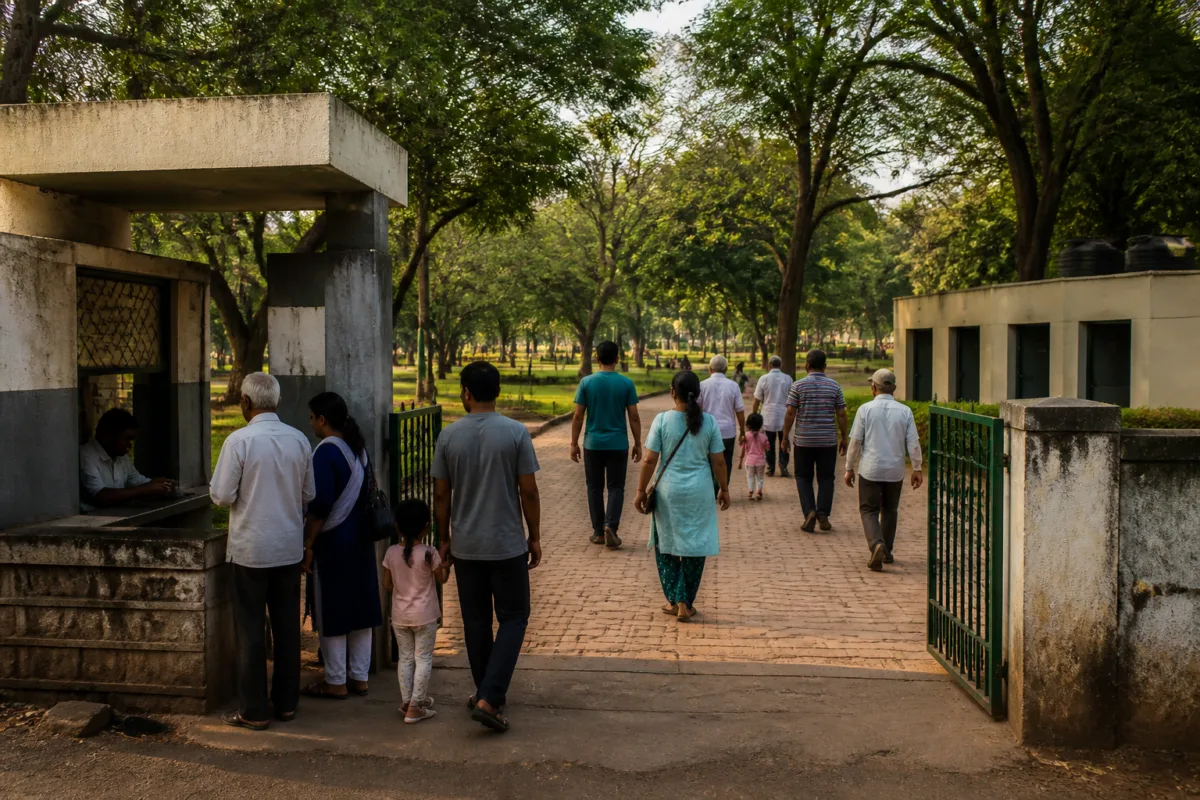
Hyderabad’s reported decision to double entry fees at municipal parks has put the affordability of urban green space under scrutiny, particularly for daily visitors, senior citizens and economically weaker households.
According to a report by Siasat, adult entry fees at parks managed by the Greater Hyderabad Municipal Corporation (GHMC) have increased from Rs 10 to Rs 20. The stated reason is maintenance. The report argues that the higher charge could discourage regular visits to parks that function as walking, recreation and respite spaces for residents across income groups.
The affordability question is linked in the report to the finances of individual parks. It cites GHMC figures showing that Indira Park generates approximately Rs 4 lakh a month in entry revenue, while its annual maintenance bill is about Rs 1.5 crore. The report uses this comparison to question whether higher visitor charges can, by themselves, resolve the maintenance problems affecting public parks.
The article also records concerns from park users. A coaching-centre faculty member from Ashoknagar said that a daily walk would become more expensive under the revised fee. Another visitor, identified as K. Prasanna, said higher charges could discourage families from visiting, especially senior citizens and economically weaker sections.
For frequent users, the increase is more significant than the individual ticket suggests. A person entering a park every day would pay Rs 600 a month at the revised adult rate, compared with Rs 300 under the earlier charge, if the fee is applied on every visit. The report does not state whether GHMC has introduced concessions, monthly passes or exemptions for particular groups.
The debate also reflects a wider question about how cities fund and manage public green spaces. Entry fees can provide a revenue stream, but they can also make access dependent on a resident’s ability to pay. The Siasat report refers to studies on Hyderabad that identify park fees as barriers for low-income groups and links this concern to unequal access to recreation and ecosystem services.
Maintenance remains central to the issue. The report describes dry leaves on walking tracks, damaged toilet fittings and polluted water bodies, while arguing that visitors are being asked to pay more despite deteriorating conditions. These observations are presented in the article as part of the case against the fee increase; the source does not provide an independent inspection or a GHMC response on the specific conditions.
The fee decision has also been placed against other GHMC spending and environmental controversies. Siasat refers to allocated expenditure running into hundreds of crores, including a reported Rs 300 crore for peripheral development. It also cites reports that nearly 3,000 trees were officially removed around the KBR Park area and notes the scrapping of a proposed Rs 1,100-crore corridor project around the park. These figures and decisions are part of the source’s broader argument about the corporation’s priorities and should be read as claims reported by the publication.
The central public-interest issue is whether municipal parks are being treated primarily as revenue-generating facilities or as essential public infrastructure. Parks provide walking space, informal recreation and access to greenery in a dense city. When charges rise, the effect is likely to be felt most by residents who rely on nearby parks for low-cost daily exercise rather than occasional leisure. The report cites constitutional arguments linking urban green spaces with dignity and the right to life, but it does not identify the Supreme Court judgment on which that interpretation is based.
A transparent response from GHMC would need to clarify the revised fee structure, the date of implementation, the treatment of children and senior citizens, any concession or pass system, and how additional revenue will be used. It would also need to publish park-level maintenance costs and service standards so residents can assess whether higher charges are producing better facilities.
Until those details are made public, the fee hike leaves an important urban-governance question unresolved: how can Hyderabad maintain its parks without turning routine access to public green space into a financial burden for the residents who depend on it most?

