


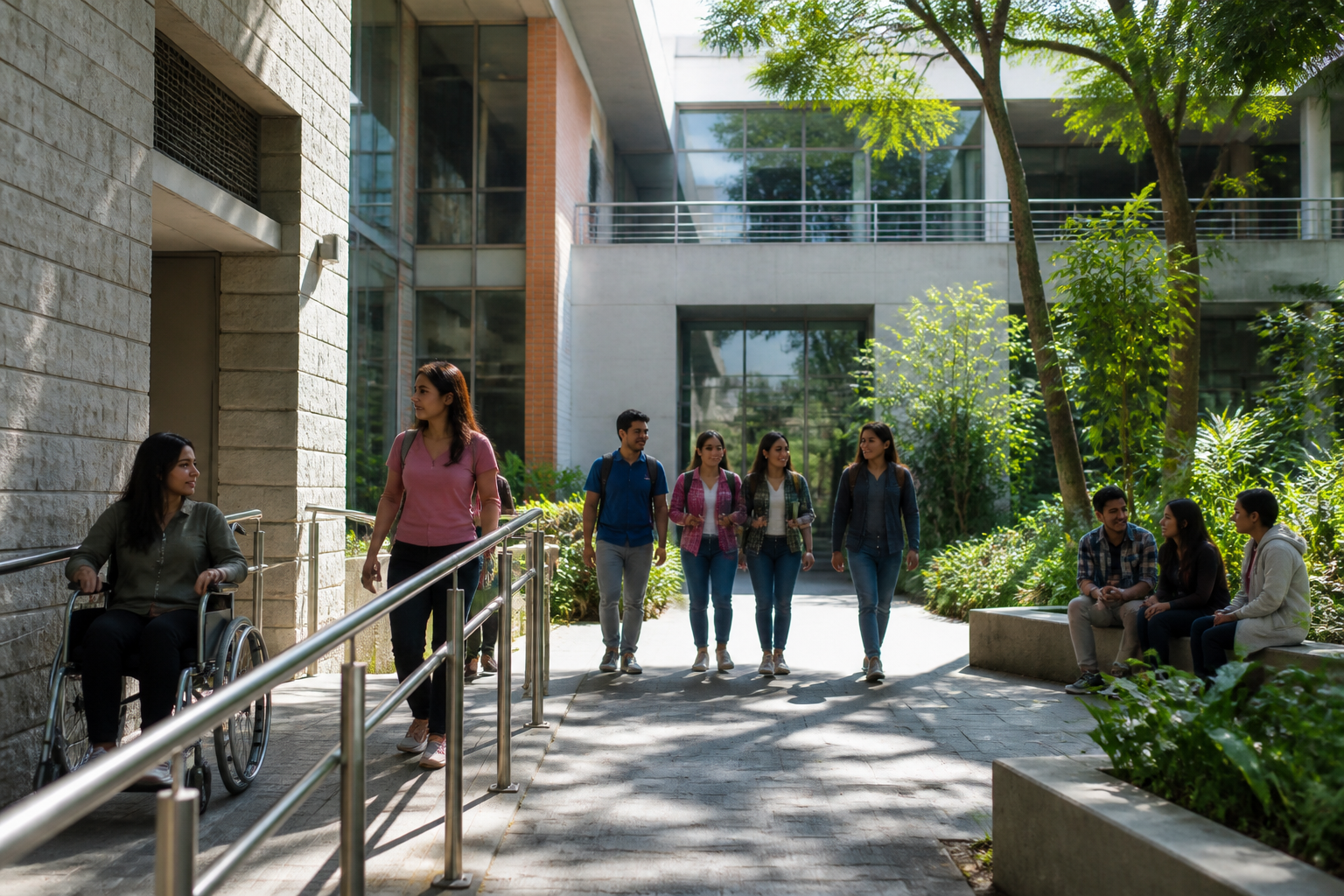
Educational campuses are often discussed as places that need stronger physical safeguards when student suicides bring mental health into public focus. But experts consulted by The Times of India in Bengaluru argue that campus suicide prevention cannot be reduced to infrastructure alone. It also depends on who students can approach, how institutions identify distress, whether counselling is independent and accessible, and how campuses respond after a death.
The discussion, published around World Suicide Prevention Day, places educational institutions within a broader systems question. A campus may have physical safety measures, but those measures form only one layer of protection during a crisis. The larger challenge is whether the institution has a functioning support network that connects everyday interactions, professional counselling, crisis response and post-incident care.
That distinction matters because students do not experience distress through a single cause. Data shared by Cadabams Hospitals shows that more than 58,000 students had contacted the organisation seeking information about mental health intervention. The organisation recorded 3,569 documented counselling sessions. Among the concerns raised, anxiety accounted for 29%, family conflict for 14% and academic stress for about 10%.
The figures do not establish a complete picture of student mental health across Bengaluru or India. They are based on the organisation’s own contacts and counselling records, and cannot be treated as a representative survey of all students. They do, however, indicate the range of issues that may reach a mental health service. Academic pressure is one part of that picture, but the reported concerns also include family circumstances and anxiety that may not be visible through academic performance alone.
Suhas Chandran, associate professor and head of the Child and Adolescent Psychiatry Unit at St John’s Medical College, said colleges should train wardens and other staff members with whom students regularly interact. He also called for non-grading mentors, independent counselling, student participation in decisions and planning for the aftermath of a death.
These suggestions shift attention from a campus’s formal welfare structure to its everyday points of contact. Wardens, faculty members and other staff may be among the adults students encounter most frequently. Their role, as described by the experts, is not to replace mental health professionals. It is to recognise changes, make support easier to access and ensure that a student is not left to navigate a crisis without a trusted institutional pathway.
The recommendation for non-grading mentors is significant within that framework. A student may be reluctant to discuss personal distress with someone who evaluates academic performance or controls an important institutional decision. A mentor who does not grade the student could provide a more independent channel, although the supplied material does not establish how such a system should be designed or implemented.
Independence is also central to counselling. The experts’ emphasis on independent counselling points to the possibility that students may hesitate to seek help if they fear that personal information could affect their academic standing, relationships with faculty or place within the institution. The report does not provide details of existing counselling arrangements across Bengaluru’s educational campuses, so it cannot establish how widespread that problem is. It does show why the question of trust is part of the infrastructure of support, even when it is not a physical asset.
Neha Cadabam, senior psychologist and executive director at Cadabams Hospitals, said physical safety measures were an important part of suicide prevention because they created an additional layer of protection during a crisis. She cautioned, however, that they should be combined with accessible counselling, early identification, crisis-response systems and an environment in which students can seek help without fear.
Her comments place campus safety within a layered model. Physical design can reduce immediate risk, but it cannot identify distress, provide a conversation, connect a student to professional support or coordinate a response. Those functions require people, protocols and institutional accountability. Treating physical safety as a complete solution risks leaving the other parts of the system undefined.
The emphasis on early identification also raises a governance issue. Faculty members and other staff may notice changes because they interact with students regularly, but noticing a change is not the same as knowing what to do next. A functioning campus system would need clear routes for escalation, professional support and emergency response. The source material records the call for such systems but does not provide details about their current availability, staffing or performance.
The same gap applies to the period after a death. Chandran urged colleges to plan for the aftermath, suggesting that institutional responsibility does not end with the immediate crisis. A death can affect students, staff, families and the wider campus community. Yet the report does not describe existing postvention protocols, making it impossible to assess whether campuses have consistent procedures for communication, support and continuity.
This absence of information is itself relevant to the policy landscape. The discussion identifies several responsibilities that sit across different parts of an institution: administrators must create systems; faculty and wardens may serve as first points of contact; counsellors must offer professional assistance; students should be involved in decisions affecting them; and crisis-response arrangements must connect these roles. The supplied material does not identify a single authority responsible for coordinating all of them.
That institutional distribution can make accountability difficult. A campus may have a counsellor but no clear referral system. It may train staff but lack a crisis protocol. It may install physical safeguards but offer no independent support. It may hold awareness campaigns without ensuring that students know where to seek confidential help. The report does not claim that these failures exist at every campus, but the experts’ recommendations show the range of functions that prevention requires.
The available numbers also caution against reducing student distress to examination pressure. Anxiety was the largest category in the counselling information provided by Cadabams Hospitals, at 29%. Family conflict accounted for 14%, while academic stress accounted for about 10%. These figures cannot explain the causes of individual crises, and they do not measure the prevalence of distress among the full student population. They do show that a campus support system designed only around exam-related stress would address an incomplete set of needs.
The broader urban question is how educational institutions operate as social systems. Campuses are not only collections of classrooms, hostels and other facilities. They are environments where students live, study, form relationships and encounter authority. Their safety therefore depends on the interaction between the built environment and institutional culture. The experts quoted in the report connect those two dimensions by arguing for both physical safeguards and conditions in which students can ask for help without fear.
Deepika Appaiah, founder and trustee of the non-profit organisation Mind and Matter, pointed to public initiatives, campaigns and community conversations as ways to begin discussions, reduce stigma and encourage people to seek help. Her comments add a community dimension to the institutional response. Awareness activity may make the issue more visible, but the report does not establish whether campaigns alone change help-seeking behaviour or improve crisis outcomes. Its value, as described by Appaiah, lies in opening conversations and making support-seeking more acceptable.
For campuses, the evidence in the report supports a broader definition of prevention. It includes the physical environment, but also staff training, independent counselling, non-grading mentors, student participation, early identification, crisis response and post-incident planning. Each element addresses a different point at which a student may need support. None is presented by the experts as a substitute for the others.
What the available material confirms is that student distress has multiple reported dimensions and that experts see gaps extending beyond campus infrastructure. What remains uncertain is the scale of those gaps across Bengaluru, the availability of independent counselling, the number of trained staff, the existence of formal crisis protocols and the outcomes of current interventions. Those are the areas that educational institutions, regulators and researchers would need to document before the quality of campus suicide prevention could be assessed systematically.
Students who need immediate mental health support can contact Tele-MANAS at 14416 or 1800-891-4416. The next step for campuses is not limited to installing physical safeguards; it is establishing whether students can reach a trusted person, professional counselling and a coordinated response when they need help.
