


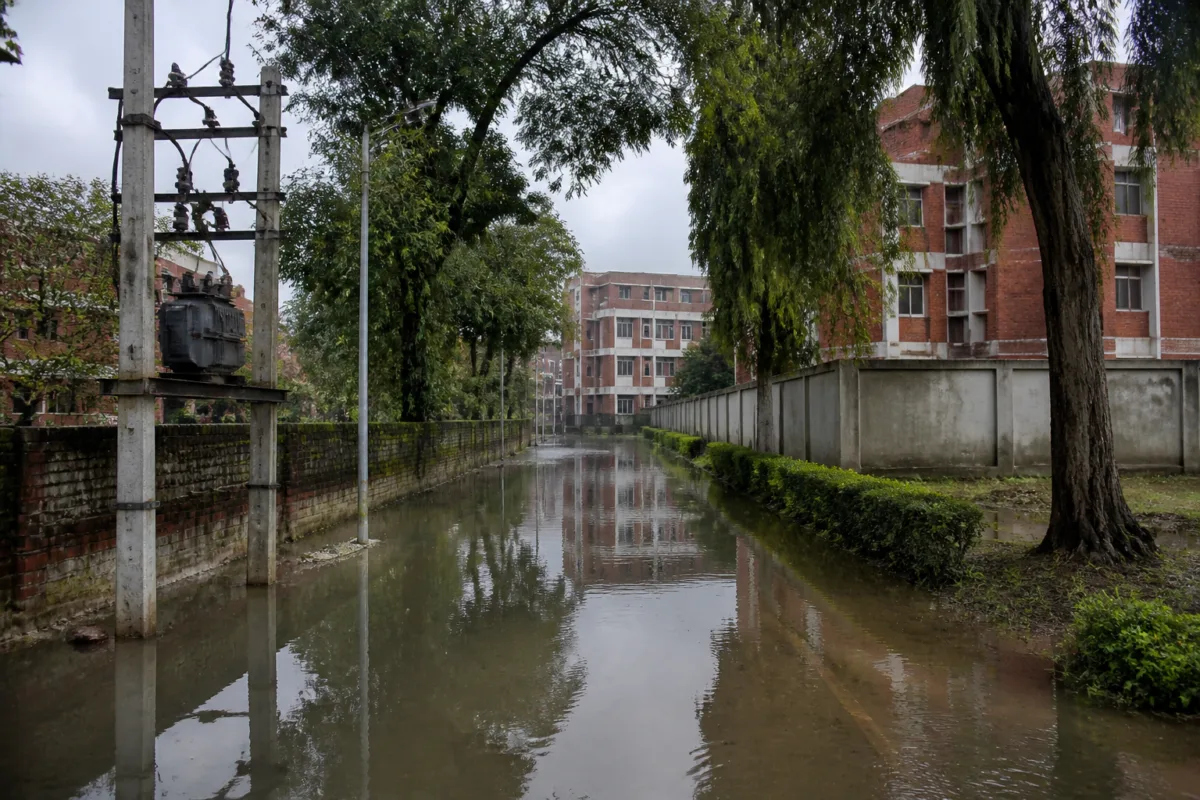
The Punjab Governor’s decision to sanction Rs 5 lakh for the family of Panjab University research scholar Jyoti does more than provide financial assistance after a fatal accident. The formal order records that the 28-year-old PhD scholar lost her life due to electrocution in the university’s waterlogged South Campus on July 28, 2026. That wording places the circumstances of the death within an official administrative record while a separate magisterial enquiry has recommended fixing individual responsibility for electrical safety lapses.
Jyoti died near Girls Hostel No. 8 while proceeding to her department. She was pursuing a PhD in Microbiology. According to the report, the incident occurred in a campus environment where waterlogging and electrical infrastructure combined to create a fatal public-safety hazard. The case therefore sits at the intersection of drainage, electrical maintenance, campus design and institutional accountability rather than being only a question of ex-gratia relief.
The Governor’s order, dated November 4 and forwarded to concerned offices on November 11, sanctions a one-time payment from the Governor’s Discretionary Grant Fund under Rule 4(1)(a) of the Punjab Discretionary Grant (Regulation of Expenditure) Rules, 1953. It names Jyoti’s father, Ravinder Kumar, a resident of Kakrala village in Haryana’s Mahendragarh district, as the beneficiary. The family has received the sanction order, but the amount had not yet been credited to its bank account when the report was published.
The administrative mechanics matter because a sanction is not the same as a completed payment. The order directs that the grant be utilised at the earliest and requires a utilisation certificate to be submitted to the Governor’s secretariat. It also states that no recurring expenditure can be made from the fund. Copies were sent to the Accountant General, Punjab, the District Treasury Officer, the Punjab Treasury, Chandigarh, and the Deputy Commissioner of Chandigarh, indicating the chain through which the one-time assistance is to be processed and accounted for.
This grant is separate from assistance announced by Panjab University. The university approved Rs 5 lakh from the Vice-Chancellor’s discretionary fund and Rs 11 lakh through the office of the dean, student welfare. It also assured employment to Jyoti’s younger brother, Pawan Kumar. He has since received an appointment letter for the post of junior technician (electrician) at the university’s Extension Library in Ludhiana.
Taken together, the measures show how institutions often respond to a fatal infrastructure failure through multiple discretionary channels: a Governor’s grant, university funds and an employment assurance. These interventions can provide immediate support to a bereaved family, but they do not by themselves establish whether the systems responsible for preventing the incident were functioning, who was responsible for them or whether the same risk remains elsewhere on the campus.
That question is addressed more directly by the magisterial enquiry report. The Chandigarh administration forwarded the report to Panjab University on October 27. It recommended fixing individual responsibility for electrical safety lapses and initiating or continuing departmental proceedings against officials concerned. It also called for an immediate electrical safety audit of the South Campus.
The distinction between these recommendations is important. An electrical safety audit is a preventive and technical response: it can identify exposed wiring, unsafe equipment, inadequate isolation, faulty earthing or other hazards. Fixing individual responsibility is an accountability response: it asks which officials or institutional units were expected to maintain safe conditions and whether their actions or omissions contributed to the failure. The supplied report does not state whether the recommended audit has been completed or whether departmental proceedings have concluded.
The case also illustrates why waterlogging on institutional campuses cannot be treated solely as a drainage problem. Standing water changes the risk profile of electrical installations, pathways and buildings. Where students, staff and visitors move through a campus during or after heavy rainfall, the safety of those routes depends on the interaction of stormwater management, electrical maintenance, access control and timely warnings. A campus may have separate departments responsible for each function, but the hazard is experienced by users as one connected system.
The official wording recorded in the Governor’s order is significant because it identifies electrocution in a waterlogged part of the campus as the cause and setting of death. It does not, by itself, determine liability. That determination belongs to the relevant enquiry and disciplinary or legal processes. However, it gives the public a formal account against which subsequent safety action can be assessed.
The financial assistance also reveals the different institutional roles involved. The Governor’s secretariat authorised expenditure under a state discretionary grant framework. Panjab University approved assistance from its own discretionary and student-welfare channels. The Chandigarh administration handled the magisterial enquiry and forwarded its findings to the university. Treasury and audit authorities were included in the payment order. The response therefore spans the Punjab Governor’s office, Panjab University, Chandigarh administration and financial-control authorities.
Such distributed responsibility can make follow-up difficult unless a clear action record is maintained. The available report identifies several next steps—the release and utilisation of the grant, the safety audit, and accountability proceedings—but does not provide a consolidated status of each. For families, students and campus users, the difference between an announcement and an implemented measure is crucial. A sanctioned amount must reach the beneficiary; an audit must lead to rectification; and a recommendation to fix responsibility must move through a documented process.
The case also raises a broader governance issue concerning the treatment of institutional safety failures. Compensation is visible and immediate, while maintenance records, inspection schedules and departmental proceedings are less visible. Yet those administrative records determine whether a dangerous condition was known, whether it was reported, whether corrective work was ordered and whether the responsible authority acted. The supplied material does not establish the condition of those records, but the enquiry’s recommendation for individual responsibility indicates that the matter extends beyond unavoidable weather conditions.
The numbers in the response should therefore be read in their proper order. The Governor’s grant is Rs 5 lakh. The university’s separate assistance totals Rs 16 lakh—Rs 5 lakh from the Vice-Chancellor’s discretionary fund and Rs 11 lakh through the dean, student welfare. The family has also received an employment-related intervention through the appointment of Jyoti’s younger brother. These measures may address immediate economic consequences, but they do not substitute for the safety audit or accountability process identified by the enquiry.
For Panjab University, the immediate institutional test is whether the South Campus audit becomes a documented safety review rather than a one-time administrative response. The report specifically calls for an immediate audit, but the source material does not say whether it has been conducted, what hazards were found or what repairs were ordered. Those details are central to determining whether the incident has produced a change in campus operations.
The public-interest significance of the case lies in this gap between relief and prevention. Jyoti’s family has received a formal sanction and the university has announced assistance, but the central urban-infrastructure question remains whether waterlogged public spaces are being managed with adequate electrical safeguards. The enquiry’s recommendations provide a framework for answering that question: identify responsibility, complete the electrical safety audit and track the implementation of corrective measures.
The available evidence confirms the financial assistance, the official recording of electrocution in a waterlogged South Campus, and the recommendations of the magisterial enquiry. It does not establish the final outcome of departmental proceedings, the date of payment to the family or the results of any safety audit. Those remain the next developments to monitor as the university and concerned authorities respond to a fatal failure of campus safety.

