


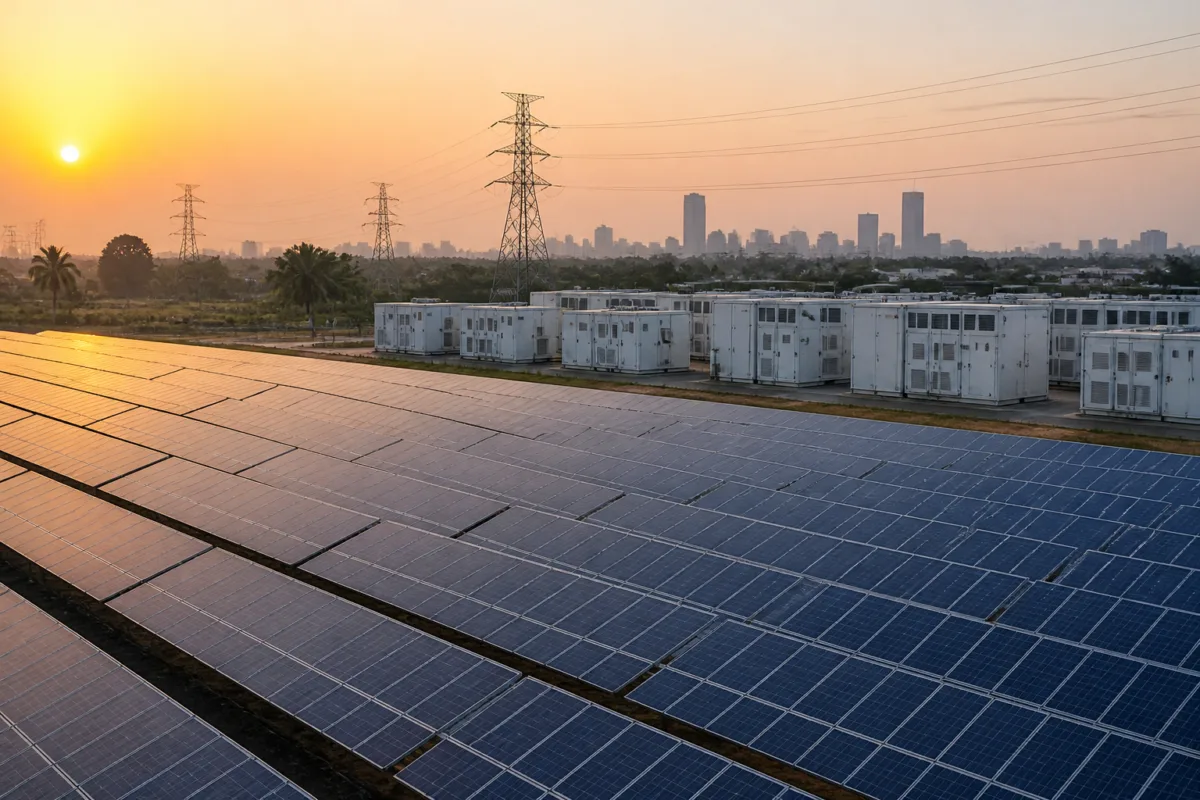
West Bengal has unveiled a roadmap to raise renewable sources to 85% of its installed power capacity by 2047, requiring a sharp expansion in solar generation, battery storage and overall electricity infrastructure across the state.
The roadmap, presented at the Bharat Renewable Energy Summit, proposes increasing West Bengal’s total installed power capacity from 17 GW to 145 GW by 2047. Solar capacity is projected to rise from the current 1.25 GW to 120 GW, an increase of nearly 96 times. The figures were reported with reference to the Energy and Resources Institute, or TERI.
The plan indicates that solar and nuclear power together would account for 82% of electricity generation under the proposed long-term capacity mix. The target places renewable energy at the centre of West Bengal’s future power system, while also requiring substantial changes to the way electricity is stored and supplied during periods of high demand.
According to the roadmap, the transition will require an estimated investment of Rs 5.8 lakh crore. The scale of the proposed spending reflects the infrastructure required not only to add generation capacity, but also to connect new power sources to the wider electricity network.
Battery storage has been identified as a critical part of the plan. Storage capacity is expected to increase from 1 GW to 22 GW by 2047. This expansion would help the power system manage the variability of solar generation and maintain supply when renewable generation is lower or demand is higher.
The roadmap also projects peak electricity demand of nearly 46 GW. Meeting that level of demand while increasing the renewable share to 85% would require the state to expand generation, transmission and storage capacity in parallel. The figures suggest that the transition is being framed as a broader power-system expansion rather than only a shift in the source of electricity.
For West Bengal’s cities, the proposed changes would affect the infrastructure that supports homes, offices, industry, transport systems and public services. However, the supplied report does not provide details on the locations of planned solar projects, the proposed financing structure, the distribution of investment between public and private institutions, or the timeline for individual projects.
The roadmap also does not specify how the state intends to acquire land, strengthen transmission networks or integrate the projected storage capacity. Those details will determine how the long-term target is implemented and how quickly new electricity capacity can reach consumers.
The next milestones will depend on the formalisation of the roadmap, the identification of projects and the development of financing and implementation arrangements. The state’s stated targets are for renewable power capacity to reach 85% of installed capacity, solar capacity to reach 120 GW, battery storage to reach 22 GW and total installed capacity to reach 145 GW by 2047.

