


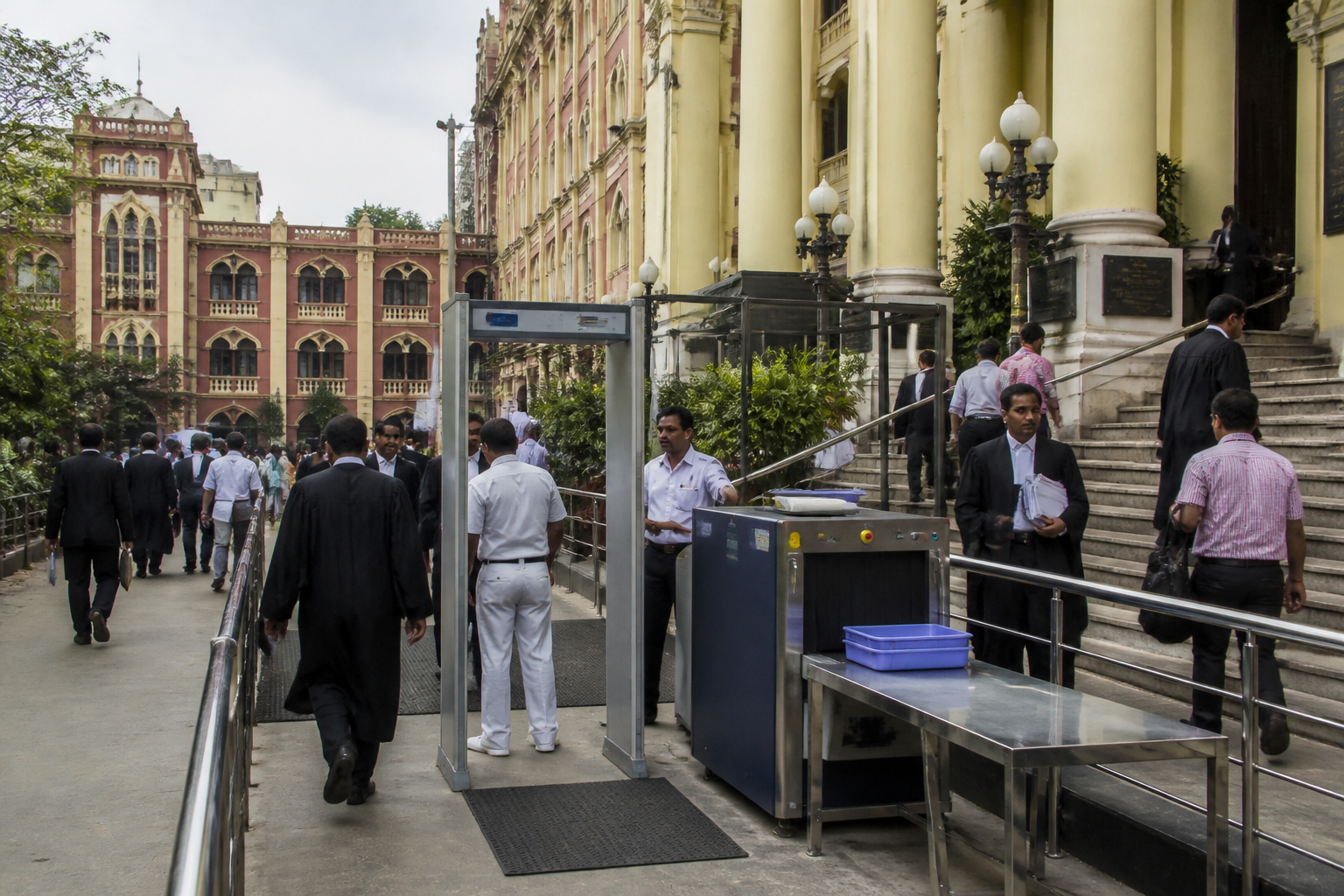
The Calcutta High Court has proposed restricting paan, gutkha and cigarettes across courts in West Bengal, while also considering mandatory metal-detector checks for everyone entering court premises.
Calcutta High Court Chief Justice Ravindra V Ghughe has written to judges of district courts outlining the proposals, according to Sangbad Pratidin. The initiative covers the High Court as well as district court premises and is aimed at keeping court complexes free of intoxicating and tobacco-related substances.
The proposal comes with a consultation process. The Chief Justice has asked the Bar Council and bar associations to discuss the measures and communicate their decisions in writing. The views of district courts will also be given priority before final instructions are issued, the report said.
One proposal concerns the use of metal detectors at court entrances. Under the plan described in the letter, every person entering a court complex could be screened through a metal detector. However, the implementation guidelines would be issued only after the relevant bar bodies complete their meetings and submit their written views.
The proposal has also triggered a practical question about smoking areas. A section of lawyers has suggested creating designated smoking zones within court premises. The suggestion reflects the difference between a complete prohibition and a regulated arrangement, but no final decision on such a facility has been announced.
The reported move places court complexes within a wider debate about how public institutions manage tobacco use, restricted substances and entry protocols. The report said the Chief Justice referred to the legal prohibition on smoking, paan and gutkha in government premises and sought to enforce those rules within courts.
Court premises are not only workplaces for judges, lawyers and staff but also public-facing spaces where litigants and visitors gather. Any change to entry procedures would therefore affect the daily movement of multiple groups, including people attending hearings, legal professionals and court employees. The proposal, as reported, does not yet specify the number of security points, the operating procedure for screening or the timeline for implementation.
The initiative follows the state government’s stated campaign for a substance-free West Bengal. Sangbad Pratidin reported that the administration has previously carried out action against banned cough syrups in places including Balurghat and New Town. The court proposal would extend the focus on prohibited substances to the management of judicial premises.
For now, the measures remain proposals rather than enforceable directions. The next stage is the consultation involving the Bar Council, bar associations and district courts. A final decision on tobacco and gutkha restrictions, smoking zones and metal-detector screening will depend on the written responses and subsequent instructions from the Calcutta High Court.

