


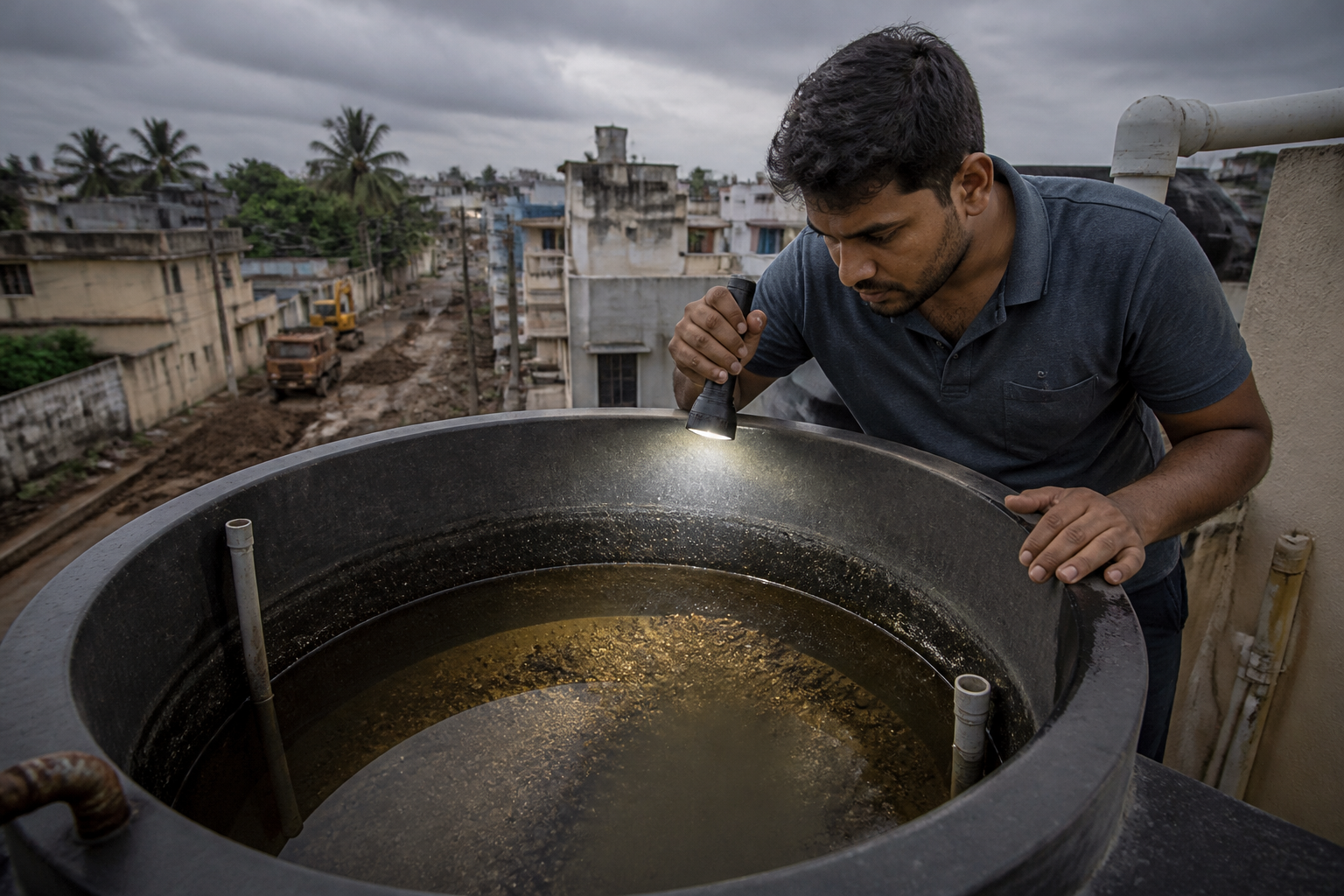
Residents of Sri Ayyappa Nagar in Chennai’s Virugambakkam have reported recurring black silt in household water tanks and an altered taste in the water supply, prompting Metrowater to inspect the affected area and link the problem to damage to an internal pipeline chamber during stormwater drain work.
Residents said the sediment returns within days of their tanks being cleaned. K Inbarajan, who lives on Sri Ayyappa Nagar 2nd Main Road, said he had cleaned his tank twice in two months, but found another thick layer of black silt within 10 days of the latest cleaning.
The deposits have also led some households to replace water filters repeatedly, residents said. They have raised concerns about the possible health implications of the sediment mixing with the water and said the problem has continued despite complaints to Metrowater and emails sent to officials.
Residents suspect that silt began entering the supply lines after recent civic work in the locality. They have asked Metrowater to identify the source, inspect the affected pipelines and flush them to prevent further deposits from reaching household tanks.
A Metrowater zonal official said incidental damage caused by external agencies, including Chennai Metro Rail Ltd and the Greater Chennai Corporation, had led to the issue. “We found that an internal chamber was damaged during stormwater drain work. It will be rectified,” the official said.
Metrowater officials inspected the area on Thursday evening and checked total dissolved solids levels in the water, according to the report. Officials also took measures to address the problem, although the supplied report did not specify the results of the tests or provide a completion timeline for the repairs.
The episode highlights the operational vulnerability of buried water infrastructure when road and drainage works are carried out in built-up neighbourhoods. Damage to an internal chamber can allow sediment to enter or disturb nearby supply infrastructure, but the source material does not establish whether the black material originated from the damaged chamber, surrounding soil or another part of the network.
For residents, the immediate concern remains the recurrence of the deposits after tank cleaning. Until the affected infrastructure is repaired and the lines are inspected or flushed, households in the locality may continue to face uncertainty about the quality of the water reaching their tanks.
Metrowater’s stated next step is to rectify the damaged internal chamber after its inspection and TDS checks. The authority has not disclosed a specific deadline for completing the repair or details of any further water-quality testing in the area.
