


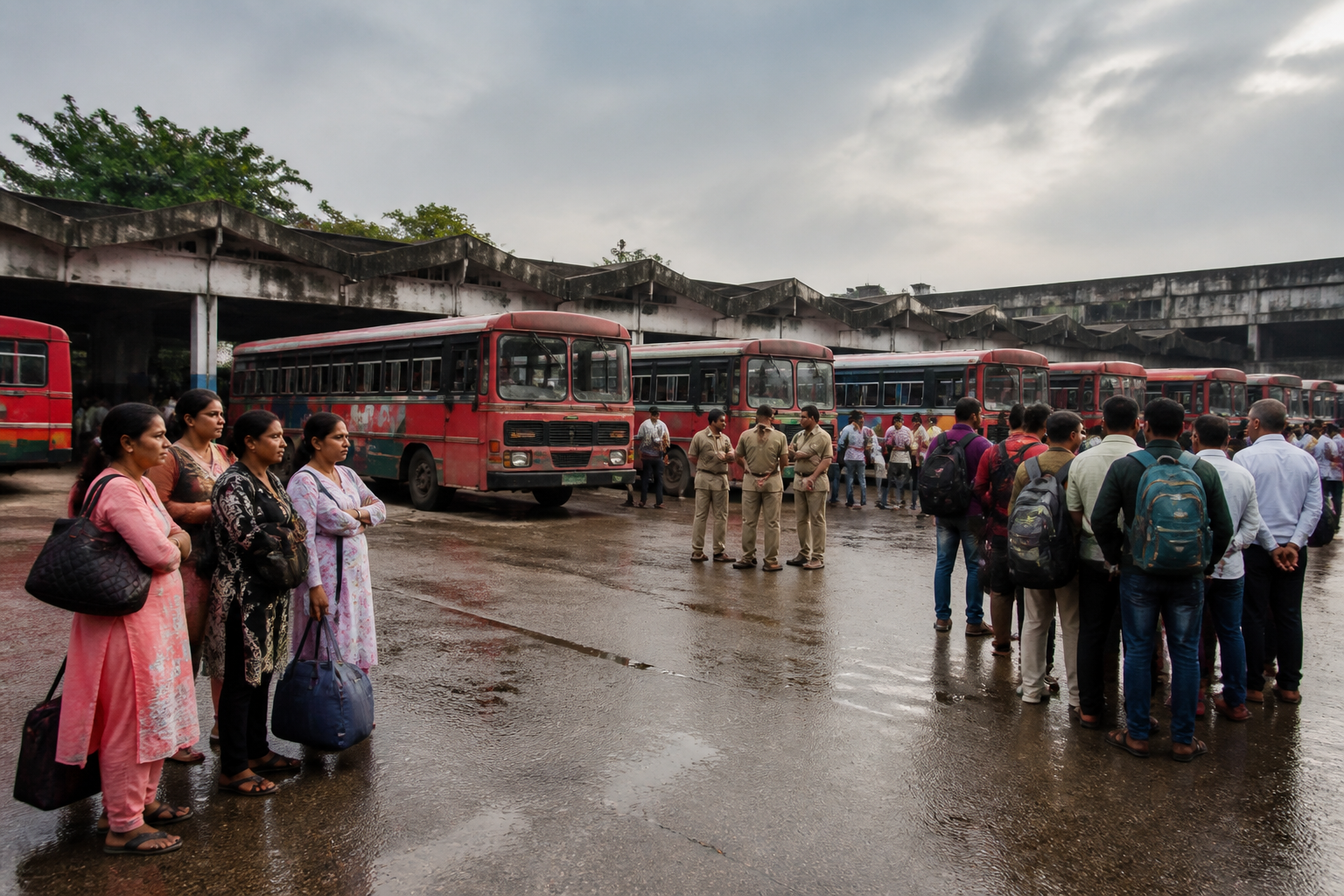
The Vasai Virar bus strike has disrupted the municipal transport service during Ganeshotsav after drivers and conductors stopped work on Saturday, alleging that the contractor paid them only half of their monthly wages. The stoppage has affected a service carrying about 60,000 to 65,000 passengers a day across Vasai-Virar.
The Vasai Virar Municipal Corporation’s transport department operates 120 buses on 38 routes in the city, according to a report by Loksatta – Vasai-Virar. The fleet includes 40 electric buses and runs approximately 2,200 trips every day. With employees withdrawing their services during the festival period, regular passengers have faced disruption in a city where municipal buses are a key part of daily travel.
Workers said the contractor had not paid the full salary for the month despite employees completing their duties. “The contractor has paid us only half the salary instead of the full month’s wages,” workers were quoted as saying. They also said that the festival period had increased household expenses and questioned how they could manage their families when full wages were not paid for a full month of work.
The latest action follows an earlier strike by drivers and conductors on August 11 over several demands, including a wage increase. That agitation was withdrawn after the workers’ demands, including the wage-related issue, were accepted and a settlement was reached, according to the report. The renewed stoppage indicates that the earlier resolution did not prevent a fresh dispute over the payment of wages.
The disruption places pressure on the transport system at a time when passenger demand is likely to be high because of Ganeshotsav-related travel and local movement. The service’s scale means that even a temporary stoppage can affect thousands of journeys across the municipal area. The 38-route network connects different parts of Vasai-Virar through a combination of conventional buses and electric buses, making the availability of municipal transport important for passengers who depend on public services for routine travel.
The dispute also highlights the administrative structure behind a municipal bus service. Although the transport operation is provided through the municipal corporation, workers have raised their wage complaint against the contractor responsible for their employment. This places the immediate issue at the intersection of municipal oversight, outsourced operations and the timely payment of wages.
The report did not include a response from the contractor or the Vasai Virar Municipal Corporation on the work stoppage, the alleged partial payment or the steps being taken to restore services. It also did not specify how long the strike would continue. The next development will depend on discussions between the workers, the contractor and the municipal transport administration over payment of the outstanding wages and the resumption of bus operations.
