


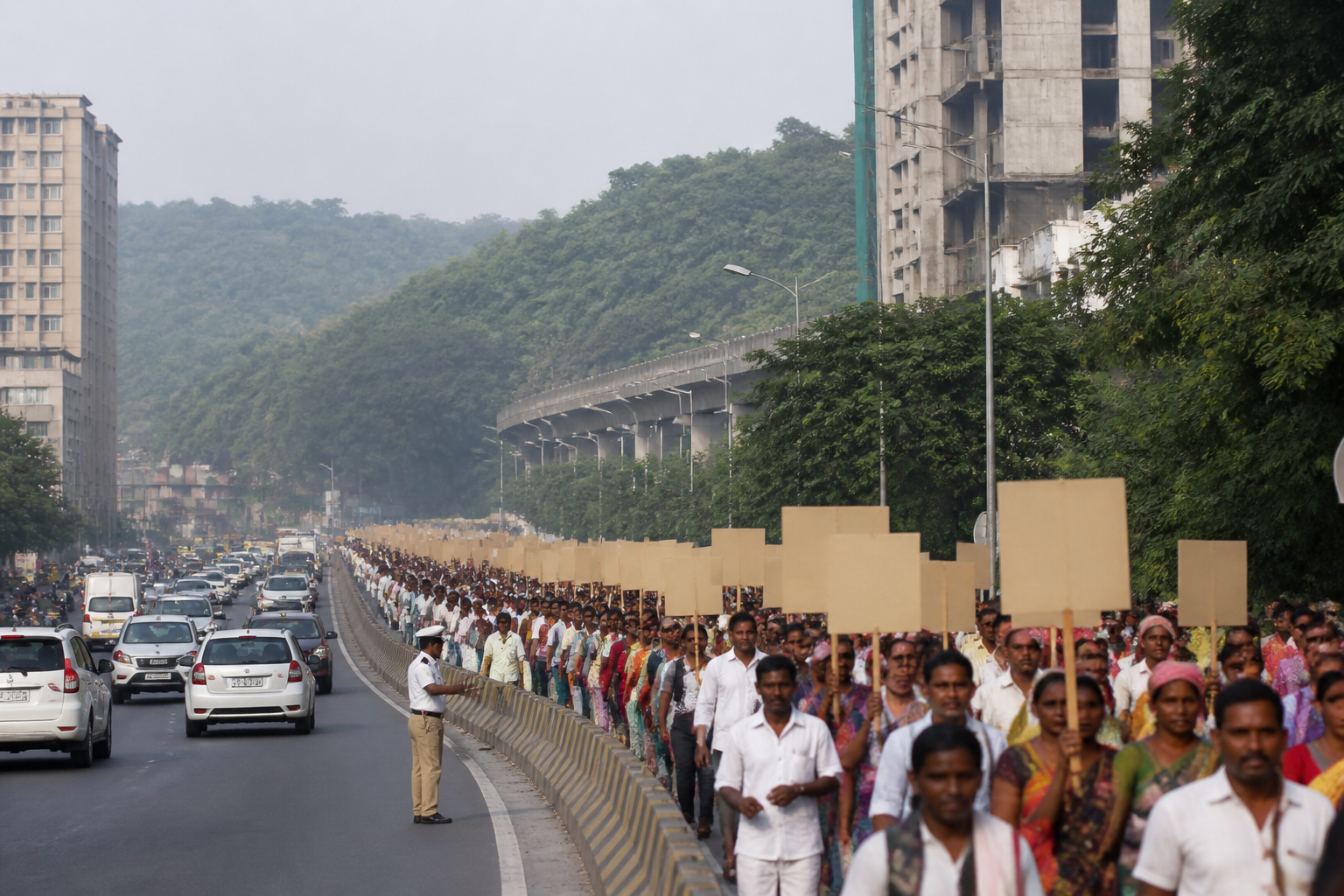
A Mumbai tribal protest demanding implementation of the Forest Rights Act, 2006 and the Panchayats (Extension to Scheduled Areas) Act, 1996 slowed traffic on the Western Express Highway on Friday as more than 1,000 people marched from the Sanjay Gandhi National Park area towards Raj Bhavan.
The protesters assembled outside the main gate of Sanjay Gandhi National Park in Borivli East at around 10 am, according to Mid-Day. A senior traffic official told the newspaper that movement on the Western Express Highway had been affected since then. The official said the road was moving more slowly than usual, but had not been completely disrupted, and that traffic police were managing the situation on the ground.
The traffic situation remained similar at around 3.30 pm, with the official saying it would improve once the march ended. The protest created a direct mobility impact on one of Mumbai’s busiest north-south corridors, while also bringing a long-running dispute over rights, recognition and development in the city’s forest-edge settlements into a high-visibility public space.
March coordinators said protesters remained near the Sanjay Gandhi National Park entrance until about 1.30 pm because they believed the police were attempting to restrict them to the location. The march then proceeded southwards. By 2.40 pm, the protesters had reached Thakur Village in Kandivli, and by around 4.30 pm they were at the Check Naka area in Goregaon East, where they halted for the day.
A coordinator said the march would continue the following day if the government did not provide a positive response. The protesters are seeking recognition of forest rights and implementation of legal protections that they say would allow tribal communities to continue living on land occupied by their families for generations. They also want to resume what they describe as their traditional role in conserving and regenerating forests and ecologically sensitive areas, including Aarey and Yeoor.
The protest follows a larger gathering on April 15, when more than 2,400 tribal people from the Mumbai Metropolitan Region participated in a maha gram sabha at Chinchpada in Sanjay Gandhi National Park. Participants at that meeting opposed the Zonal Master Plan, which they said described tribal residents as encroachers, and demanded basic civic facilities for their settlements.
Vikas Baraf, a tribal resident of Yeoor, said the march was part of an ongoing struggle against the displacement of tribal homes. Vijay Matera, a tribal leader from Wagle Estate, said gram sabhas had submitted signed demand letters to authorities but had not received a response. Prakash Bhoir, a tribal leader from Aarey, said forest-rights claims remained pending despite the submission of documents and that several hamlets still lacked basic amenities.
The demands place two urban responsibilities alongside each other: maintaining movement on a critical highway and resolving the legal and administrative status of communities living within or near protected forest landscapes. The immediate traffic impact is expected to ease after the march, but the protesters’ next step will depend on whether the government responds to their demands, according to the march coordinator.
