


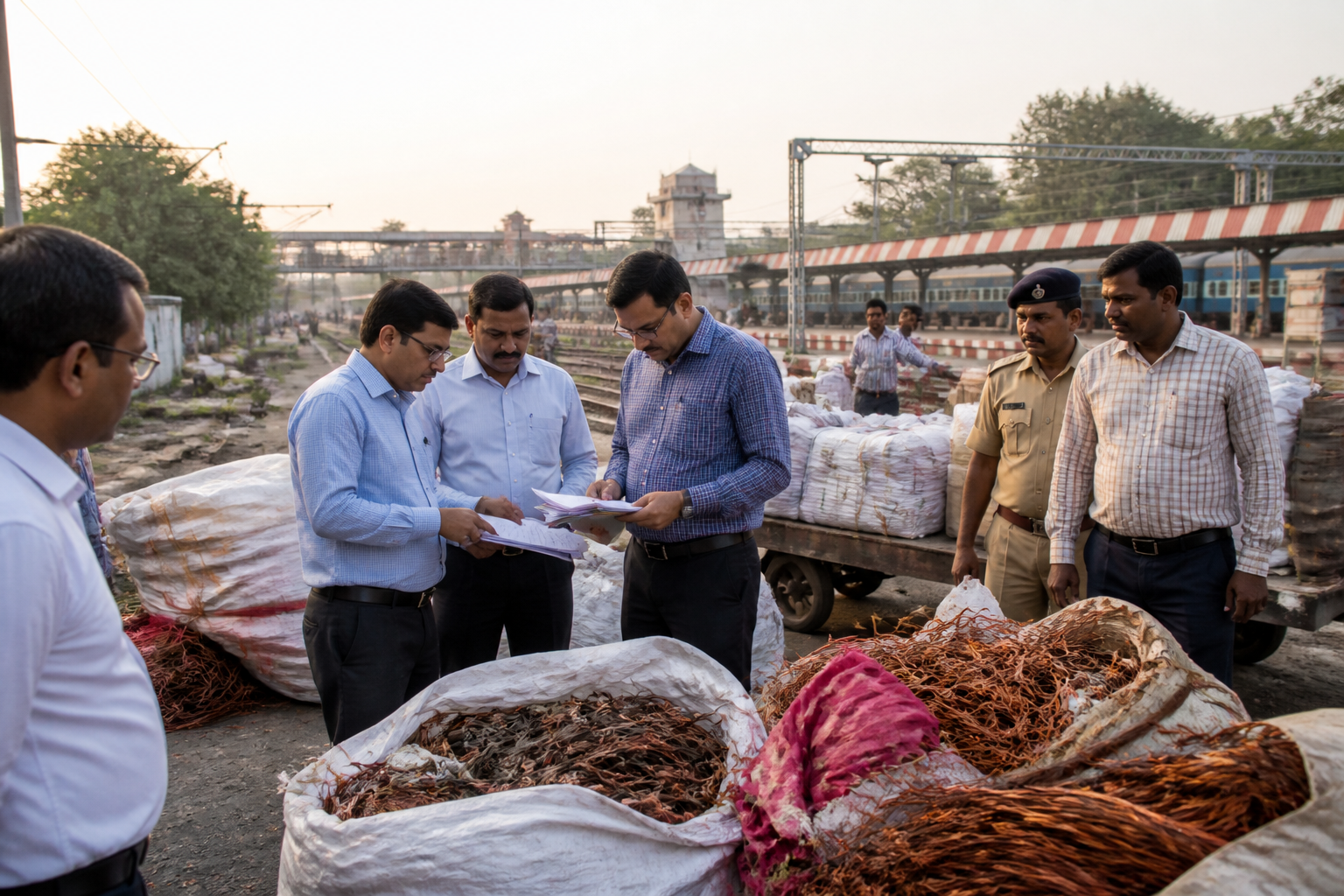
The Delhi GST department has seized a consignment of copper scrap and other goods worth around ₹5 crore at Hazrat Nizamuddin railway station after officials found that the material was being transported without mandatory invoices and e-way bills.
The action was carried out in coordination with railway authorities after the GST department received intelligence that goods were being moved through the railway network without the documents required for lawful transportation. The consignment had arrived at Hazrat Nizamuddin on a train that originated from Renigunta in Andhra Pradesh.
Officials seized approximately 50 tonnes of material during the inspection. This included around 25 tonnes of copper scrap valued at nearly ₹3 crore, according to the report. Another 25 tonnes comprising mixed scrap, clothes and other goods was estimated to be worth about ₹2 crore.
The seizure places railway freight movement at the centre of a tax-compliance operation. Rail networks are used to move large quantities of goods across states, making documentation an important part of monitoring whether consignments are being transported and traded within the GST framework. In this case, the department said the goods were being moved without invoices and e-way bills.
An e-way bill is required for the movement of goods above the prescribed value threshold under the GST system. It records key details such as the consignor, consignee, goods being transported and the vehicle or transport mode involved. Invoices establish the commercial basis of the transaction and help authorities assess the applicable tax.
The reported seizure also highlights the role of coordination between tax officials and railway authorities at major transport hubs. Hazrat Nizamuddin is one of Delhi’s principal railway stations and handles long-distance passenger and freight-linked movement, making checks at the station relevant to wider enforcement of interstate trade documentation.
Delhi Chief Minister Rekha Gupta said the government’s objective was not limited to taking action against individual consignments. According to the report, she said the administration aimed to create an effective system in which businesses operate transparently and all due taxes are collected.
The department’s action followed intelligence inputs and an inspection of the arriving consignment. The report did not provide further details on the owners of the goods, the exact tax liability assessed or the subsequent legal proceedings. The seized material remains subject to the department’s investigation and applicable GST procedures.
