


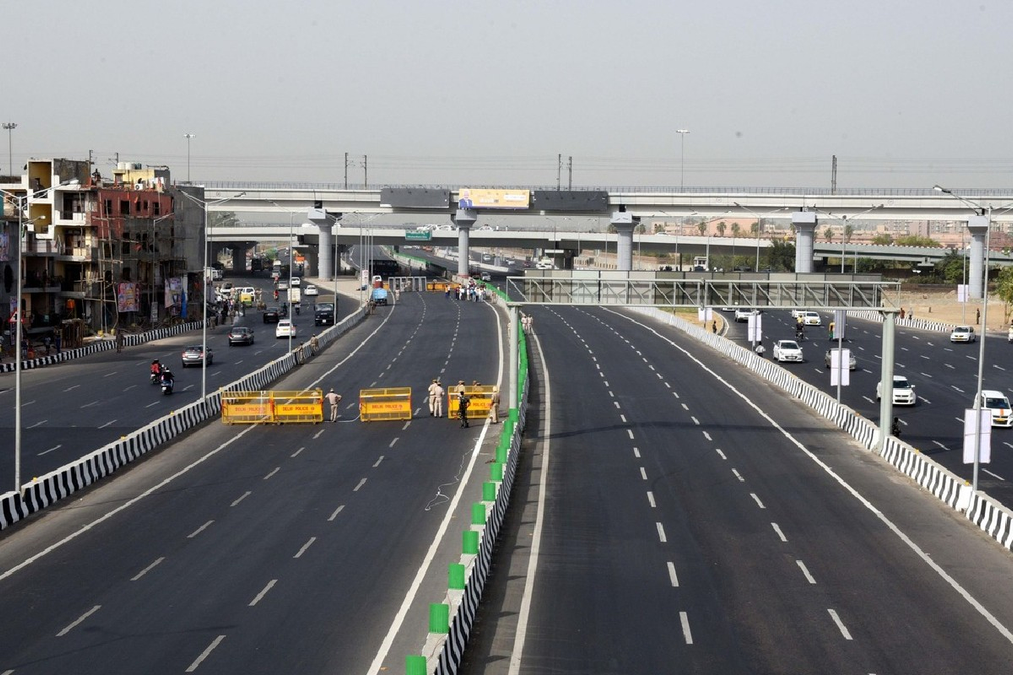
A key environmental advisory panel under the Union government has recommended forest clearance for the proposed Varanasi Kolkata Expressway, advancing one of eastern India’s largest planned road infrastructure projects. The high-speed corridor, expected to improve freight movement between Uttar Pradesh, Jharkhand, Bihar and West Bengal, could significantly reshape logistics, industrial investment and urban expansion patterns across the region.
The proposed expressway is being positioned as a strategic freight and connectivity route linking major industrial clusters and densely populated urban belts in eastern India. Infrastructure planners believe the project could reduce travel time between the two cities while easing pressure on existing national highways that currently handle heavy commercial traffic.However, the scale of the project has also intensified scrutiny over ecological impact, land acquisition pressures and long-term urbanisation risks. Officials familiar with the approval process indicated that the expert committee assessed diversion of forest land and mitigation measures before recommending clearance. The proposal is expected to move through additional statutory stages before construction activity accelerates.Urban development analysts say the Varanasi Kolkata Expressway could trigger rapid growth around peripheral districts, particularly in logistics parks, warehousing hubs and highway-oriented real estate. Similar highway-led development patterns in other regions have often resulted in fragmented urban sprawl, increased private vehicle dependence and pressure on agricultural land. Experts caution that without coordinated regional planning, such corridors can outpace civic infrastructure and strain water, waste and mobility systems in emerging settlements.
The project also reflects the government’s broader push to strengthen multimodal freight infrastructure across eastern India, where industrial connectivity has historically lagged behind western and southern economic corridors. Improved road access may benefit manufacturing, food processing and export-linked sectors by lowering transport costs and improving supply chain reliability.At the same time, environmental planners stress that large transport corridors passing through ecologically sensitive areas require robust monitoring frameworks beyond initial clearances. Compensatory afforestation, wildlife movement planning and climate-resilient road engineering are increasingly becoming central considerations in major highway projects as India faces rising heat stress, flooding and land degradation challenges.Transport economists note that the Varanasi Kolkata Expressway may also alter migration and investment flows by improving access to tier-two cities and industrial townships located along the alignment. This could create new employment clusters, but may simultaneously accelerate speculative land transactions in peri-urban areas where regulatory oversight is often limited.
With eastern India expected to witness substantial infrastructure spending over the next decade, planners argue that future expressway-led growth must integrate public transport, affordable housing and environmental safeguards rather than relying solely on automobile-driven expansion. As approvals progress, attention is likely to shift towards rehabilitation measures, ecological compliance and whether the corridor can balance economic efficiency with sustainable regional development.
Read More : Bengaluru Space Tech Firm Secures International Imagery Deal

