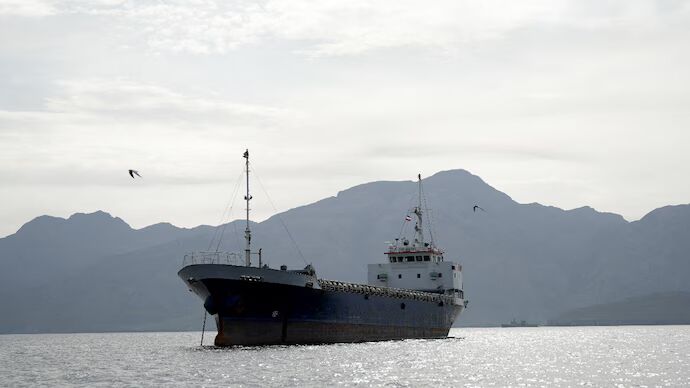
A sharp escalation in the ongoing US–Iran conflict has intensified pressure on global energy and logistics systems, with Washington initiating a naval blockade targeting Iranian ports along the strategically critical Strait of Hormuz. The move marks a significant turning point in the conflict, raising concerns over disruptions to one of the world’s most vital trade corridors.
The Strait of Hormuz, a narrow maritime passage connecting the Persian Gulf to global markets, handles nearly one-fifth of the world’s oil shipments, making it central to international energy security. Any disruption to this route has immediate ripple effects across fuel prices, supply chains and inflation trends worldwide. The latest escalation comes amid stalled diplomatic efforts, even as both Washington and Tehran signal openness to further negotiations. The United States has justified the blockade as a measure to curb Iran’s influence over shipping routes, while Iran has responded with threats of retaliation targeting regional ports and maritime infrastructure. For global cities and economies, the implications are significant. Energy price volatility has already begun to impact transport costs, industrial production and urban services. Recent trends show oil prices surging past key thresholds, reflecting market anxiety over prolonged supply disruptions.
The crisis underscores the vulnerability of global infrastructure networks to geopolitical shocks. Ports, shipping lanes and energy pipelines—often viewed as stable backbones of economic activity—are increasingly exposed to conflict-driven disruptions. In this context, the Strait of Hormuz has emerged as a critical pressure point, where military strategy intersects with global trade dependency. Urban economists highlight that the consequences extend beyond energy markets. Higher fuel costs can cascade into increased construction expenses, public transport fares and food prices, disproportionately affecting rapidly urbanising regions. Cities dependent on imported energy—particularly across Asia—face heightened exposure, with supply chain disruptions feeding into broader inflationary pressures. The situation also highlights the growing need for diversified and resilient infrastructure systems. Experts argue that over-reliance on a single chokepoint for global energy flows presents systemic risks. Investments in alternative supply routes, renewable energy transitions and decentralised logistics networks are increasingly seen as essential safeguards against such disruptions.
At the same time, the crisis is reshaping geopolitical alignments. While some nations are exploring coordinated maritime security responses, others are pushing for diplomatic de-escalation to stabilise trade flows. The balance between military action and negotiation will be critical in determining the duration and severity of the disruption. As the conflict enters a more volatile phase, the immediate focus remains on whether diplomatic channels can prevent further escalation. For cities, industries and markets worldwide, the Strait of Hormuz crisis serves as a stark reminder that infrastructure resilience is no longer just a planning goal—but a necessity in an increasingly uncertain global landscape.