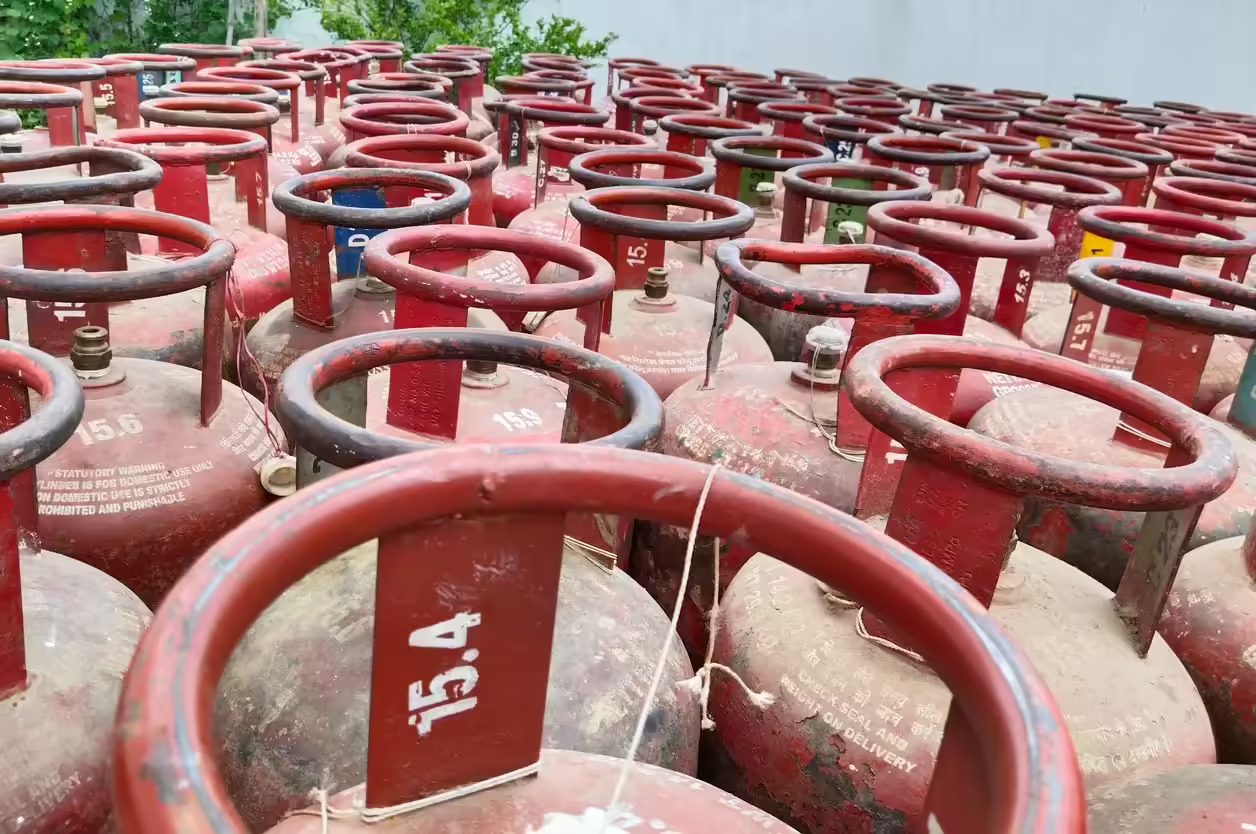
On a single day last week, more than 53.5 lakh domestic LPG cylinders reached households across India. The number — announced by the government amid rising geopolitical tensions in West Asia — is being framed as a reassurance of supply chain stability. But beneath the headline lies a more complex story about energy dependence, digital infrastructure, and the stubborn persistence of fossil fuels in Indian kitchens.
The delivery figure for April 18 is not an anomaly. Officials confirmed there have been no reports of dry-outs at distributorships, and 100 percent availability has been maintained for domestic LPG, PNG, and CNG segments. Yet the timing matters. With West Asian crude and gas routes under potential threat, any disruption to LPG imports would directly hit over 30 crore households that rely on subsidised cylinders. What has quietly transformed is how Indians book their cooking fuel. Nearly 98 percent of LPG bookings are now made online — a dramatic shift from a decade ago when queuing outside distributors was the norm. Over 93 percent of deliveries are authenticated through digital codes, reducing diversion and black-market sales. A senior energy analyst noted that this digital backbone has made the distribution system far more resilient than during previous global energy shocks.
But resilience is not the same as sustainability. LPG is a fossil fuel. Its combustion emits carbon dioxide and indoor air pollutants. While cleaner than biomass or kerosene, it is not a zero-carbon solution. The government has simultaneously made kerosene and coal available as alternatives — a worrying backtrack for climate-conscious urban policy. On commercial LPG, priority has been given to hospitals, schools, pharmaceuticals, and agriculture. Supplies to migrant labourers — in the form of 5 kg free trade cylinders — have been doubled. Auto LPG demand has also surged, with April sales rising sharply compared to February.
For urban planners and climate advocates, the data presents a paradox. Digital efficiency and supply security are achievements. But they lock in fossil fuel dependence at a moment when cities should be transitioning to electric cooking and renewable-powered alternatives. The government’s ability to deliver 53 lakh cylinders in a day is impressive. The question is how long India will need to.
India delivers 53 lakh LPG cylinders in single day