


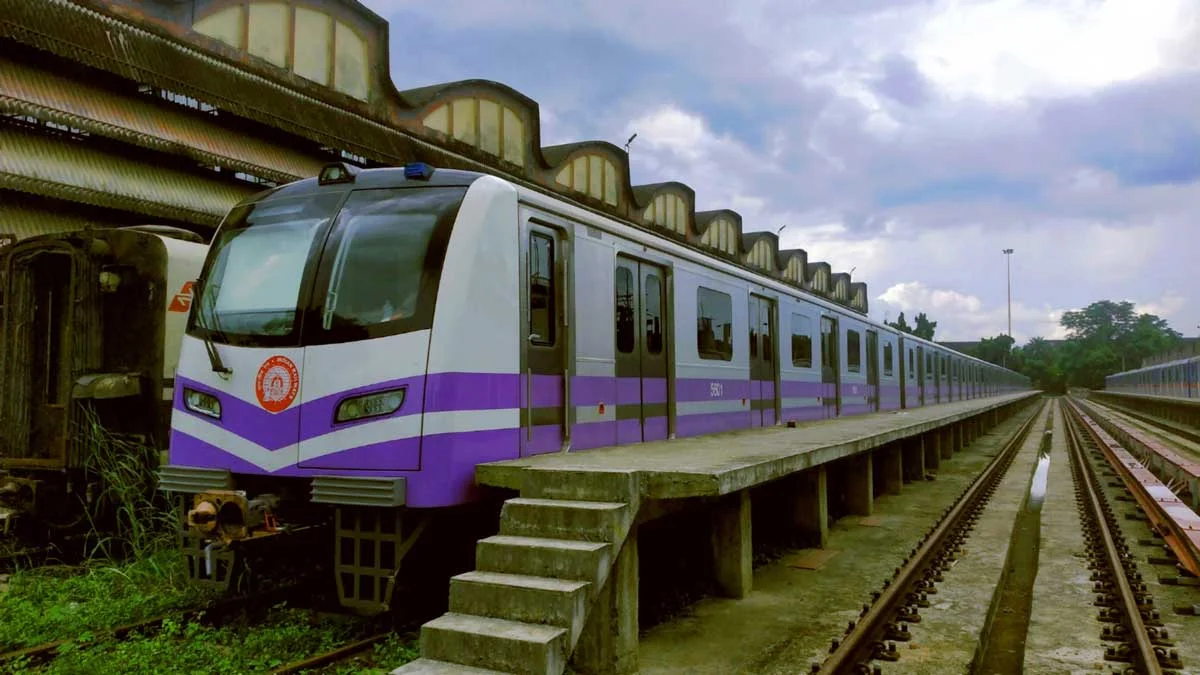
Kolkata’s oldest metro corridor is set for a major operational overhaul after fresh public funding was cleared for infrastructure improvements aimed at reducing train delays and strengthening passenger capacity across the city’s heavily used north-south route. The investment is expected to modernise critical systems on the Blue Line, a corridor that remains central to daily mobility for lakhs of commuters navigating one of India’s most densely populated urban regions.
Transport officials indicated that the approved allocation will support signalling upgrades, operational improvements, and station-level infrastructure enhancements intended to reduce waiting times and improve service frequency. Urban mobility experts say the move reflects growing pressure on legacy transit systems as Kolkata faces rising commuter volumes, expanding suburban movement, and increasing dependence on public transport to reduce road congestion and emissions.The Blue Line upgrade comes at a time when Indian cities are being forced to balance infrastructure expansion with climate and land-use concerns. Unlike road widening projects that often encourage higher private vehicle use, metro investments are increasingly viewed as low-carbon urban interventions capable of reducing fuel consumption, air pollution, and travel inefficiencies. For Kolkata, where ageing transport assets continue to serve millions daily, modernisation has become as important as expansion.Urban planners note that reliability remains one of the biggest determinants of public transport adoption. Frequent delays, uneven train intervals, and overcrowding on legacy corridors can push commuters back toward private vehicles or app-based mobility services, worsening traffic conditions and urban pollution. The Blue Line upgrade is therefore being closely watched as a test of whether older metro systems can be adapted to contemporary mobility demands without disruptive large-scale reconstruction.
The financial approval is also expected to support technology integration and operational safety measures. Industry analysts say such investments are necessary as metro systems increasingly rely on digital signalling and automated control networks to maximise carrying capacity within limited urban corridors. In high-density cities like Kolkata, where land acquisition for new infrastructure remains difficult, improving efficiency on existing lines is often considered the most viable strategy.Beyond mobility, the project carries wider economic implications. Improved metro frequency and predictable commute times tend to influence commercial activity, workforce movement, and residential demand around transit-linked neighbourhoods. Transit-oriented development has emerged as a growing urban planning focus, particularly in cities attempting to reduce car dependency while supporting inclusive economic growth.However, experts caution that infrastructure upgrades alone cannot resolve broader urban mobility challenges. Last-mile connectivity, pedestrian access, integrated ticketing, and multimodal coordination continue to remain weak points across many Indian cities. Without stronger integration between buses, suburban rail, walking infrastructure, and metro systems, the full benefits of the Blue Line upgrade may remain limited.
For Kolkata residents, the improvements could offer more immediate relief through shorter waits and smoother travel experiences. Yet the long-term success of the initiative will depend on whether investment in metro infrastructure is matched by sustained planning for accessibility, affordability, and low-emission urban transport across the metropolitan region.
Read More : Mumbai Water Security Concerns Rise Before Monsoon
