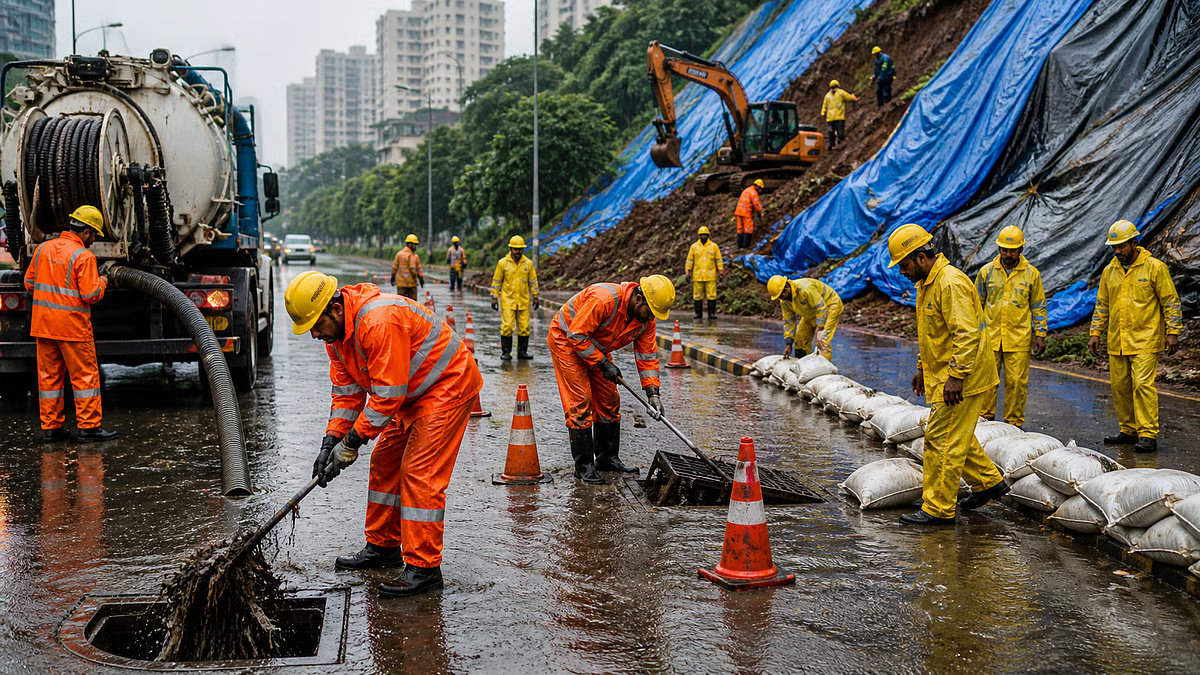
Thane Monsoon Preparedness Targets Vulnerable Hill Areas
As the monsoon season approaches, civic authorities in Thane have intensified disaster preparedness efforts by identifying multiple landslide-prone locations across the city, reflecting growing concerns over climate-linked urban vulnerability in densely populated hillside settlements. Officials have mapped 14 sensitive zones and initiated direct outreach with residents living in high-risk areas, particularly in parts of Kalwa and along the Mumbra bypass corridor. The pre-monsoon exercise comes amid increasing scrutiny of how rapidly expanding urban development, informal housing clusters, and fragile hill-cutting practices are amplifying disaster risks in the Mumbai Metropolitan Region. Urban planners have repeatedly warned that unchecked construction near slopes and natural drainage systems has weakened ecological buffers that once absorbed heavy rainfall impacts.
According to civic officials, the most vulnerable locations include stretches in Lokmanya Sawarkar Nagar, Gholai, Atkoneshwar Nagar in Kalwa East, and hillside belts adjoining the Mumbra bypass. Residents in these areas are being advised to remain alert during periods of sustained rainfall and immediately report visible land movement, soil cracks, or water seepage patterns that could indicate slope instability. The administration has also begun identifying evacuation shelters and emergency response routes in vulnerable neighbourhoods to reduce response time during extreme weather events. Disaster management teams are expected to conduct awareness drives before peak rainfall activity begins later this season. The renewed focus on landslide preparedness follows a series of monsoon-linked incidents in the region over recent years, including fatal slope collapses that exposed gaps in urban risk planning. Environmental experts note that recurring landslides in the Mumbai-Thane belt are increasingly linked to a combination of intense rainfall events, shrinking green cover, excavation activity, and pressure from unregulated settlements on unstable terrain.
While authorities have undertaken slope protection and mitigation works in several locations, rehabilitation remains a complex challenge. Many families continue to reside in vulnerable zones due to economic dependence on nearby industrial and transport hubs. Housing activists argue that relocation programmes often struggle because affordable alternative accommodation remains limited within the metropolitan region. Climate specialists say the situation underlines a broader urban governance challenge facing Indian cities, where disaster resilience must be integrated into land-use planning rather than treated as a seasonal emergency response. With forecasts indicating the possibility of erratic rainfall patterns this year, local administrations are under pressure to strengthen early warning systems, improve drainage infrastructure, and protect ecologically sensitive hill zones from further encroachment.
Officials indicated that monitoring of the identified landslide-prone areas will continue throughout the monsoon, with emergency teams placed on standby. Urban resilience experts believe long-term safety will ultimately depend on balancing infrastructure growth with ecological safeguards and inclusive rehabilitation policies for vulnerable communities.