


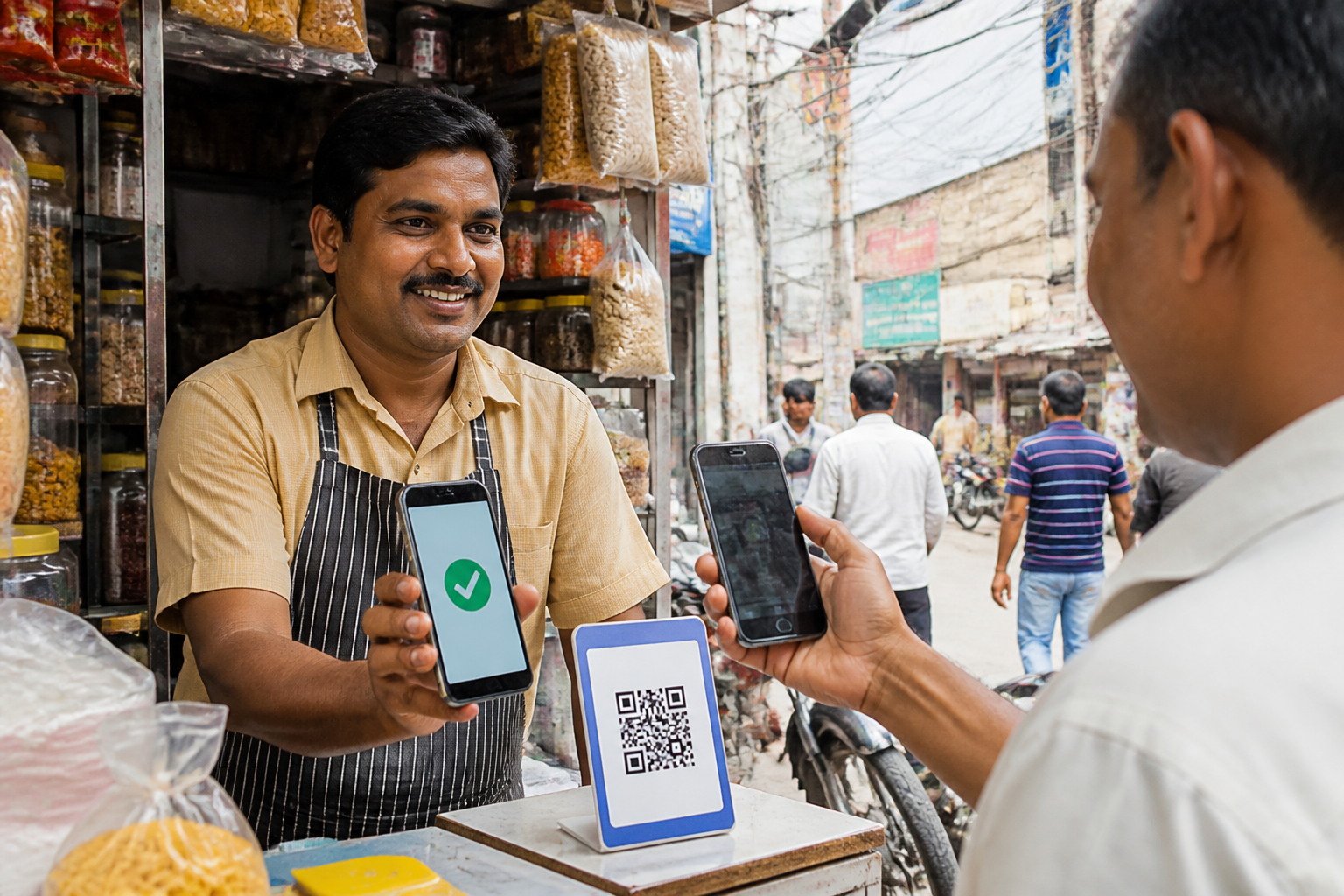
UPI MDR, or merchant discount rate, will be introduced for select person-to-merchant transactions above ₹2,000 from October 15, 2026, while customers will continue to make UPI payments without a direct charge, according to a report by Aaj Tak Business citing decisions taken at a UPI operating committee meeting on September 15.
Under the reported framework, merchants receiving eligible high-value UPI payments will pay a merchant discount rate of 40 basis points, or 0.4%. The charge will apply only to selected P2M transactions, meaning payments made by individuals to businesses. Person-to-person transfers will remain outside the new charge structure.
The framework also provides exemptions for smaller merchants. Businesses earning up to ₹1 lakh each month through QR-code payments will not have to pay MDR. Merchants receiving payments below ₹2,000 will also remain exempt. The report says these merchants account for about 95% of all merchants, leaving approximately 5% exposed to the new charge.
Special categories will have separate limits. For railway and fuel transactions above ₹2,000, merchants will pay a flat fee of ₹5. Other higher-value P2M transactions will attract a 0.4% charge, subject to a maximum cap of ₹300. For fuel purchases such as petrol and diesel, the MDR payable by merchants will be capped at ₹5.
The reported changes are aimed at creating a funding mechanism for the continued operation and expansion of UPI. The government’s stated rationale, as reported by Aaj Tak Business, is that the payments network now requires sustained investment in cybersecurity, fraud prevention and further innovation. The framework is also intended to reduce reliance on government subsidies for maintaining the system.
The distinction between customer and merchant charges is central to the proposed arrangement. Customers will not be charged for making eligible UPI payments, but the merchant receiving a payment may incur a fee if the transaction falls within the specified high-value categories. This places the immediate financial impact on a limited section of businesses rather than on everyday users making small payments.
The report also says that a dedicated fund will be created to upgrade digital payment infrastructure for small vendors and Tier-3 markets. No further details on the fund’s size, administering institution or disbursement process were provided in the supplied report.
The new framework is scheduled to take effect on October 15, 2026. Its practical impact will depend on the final list of eligible merchant categories, the operational guidelines issued to payment providers and how the exemptions and transaction caps are implemented.
