


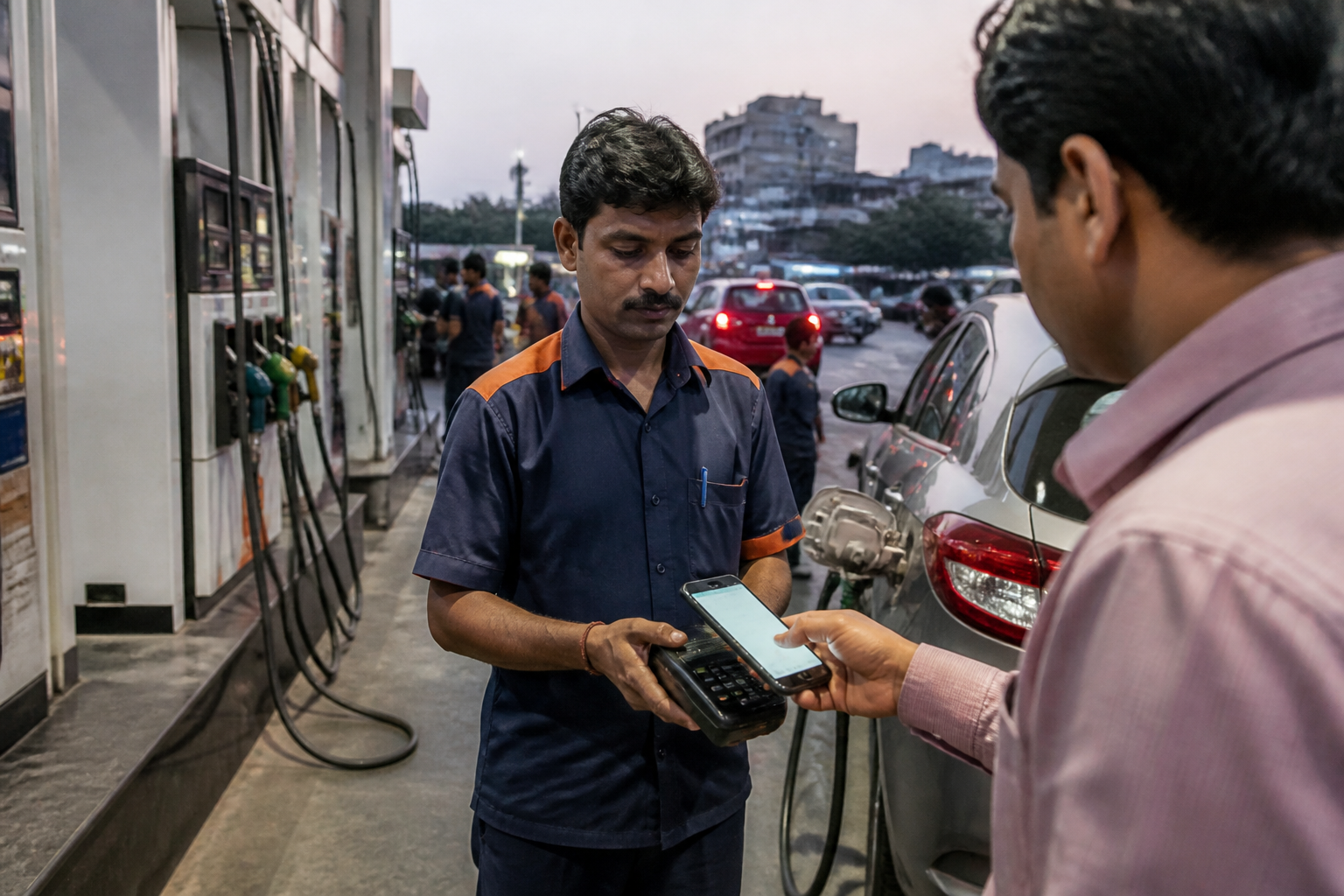
The new UPI MDR framework will cap the merchant discount rate at ₹5 for payments above ₹2,000 in five categories: petrol pumps, railway transactions, insurance premiums, telecom services, and electricity, water and piped natural gas bills. The framework, based on an NPCI circular issued on Tuesday, is scheduled to take effect from October 15.
Under the revised structure, UPI payments below ₹2,000 will continue to attract zero MDR, according to the report by Aaj Tak Business. For person-to-merchant payments above ₹2,000, the standard MDR will be 0.4%, except for transactions placed under the flat-rate model.
The flat-rate provision means that the applicable charge will remain ₹5 regardless of the transaction value. For example, a merchant receiving a ₹10,000 UPI payment under the standard 0.4% rate would pay ₹40 in MDR. Under the flat-rate model, the charge for an eligible transaction of the same value would be ₹5.
Petrol and diesel purchases are included in the reduced-rate structure. The arrangement is intended to keep digital payment acceptance more affordable for fuel retailers, where transaction values can be high and margins may be relatively limited. The circular also includes railway transactions, including payments for train tickets above ₹2,000.
The railway-related MDR will not be charged separately to passengers, according to the report. Instead, the payment service charge will be borne by Indian Railways. This distinction keeps the cost structure on the merchant or service-provider side rather than adding a separate payment fee to the customer’s ticket transaction.
Insurance premium payments made through UPI will also qualify for the ₹5 flat MDR. The same rate will apply to eligible telecom transactions, including mobile recharges and other telecom services, irrespective of the payment amount once it crosses the ₹2,000 threshold.
The fifth category covers payments for essential utility services. Electricity bills, municipal water bills and piped natural gas bills above ₹2,000 will attract the fixed ₹5 MDR when paid through UPI. This brings several routine household and civic-service payments into the flat-rate structure.
The framework creates a differentiated cost system rather than applying one MDR rate to every high-value UPI payment. Its immediate effect will vary by sector: fuel stations, insurers, telecom companies, railway services and utility providers will pay a fixed charge for qualifying transactions, while other person-to-merchant payments above ₹2,000 will fall under the 0.4% rate described in the circular.
The revised MDR structure is due to begin on October 15, with the five specified categories receiving the flat-rate treatment for high-value UPI transactions.

