


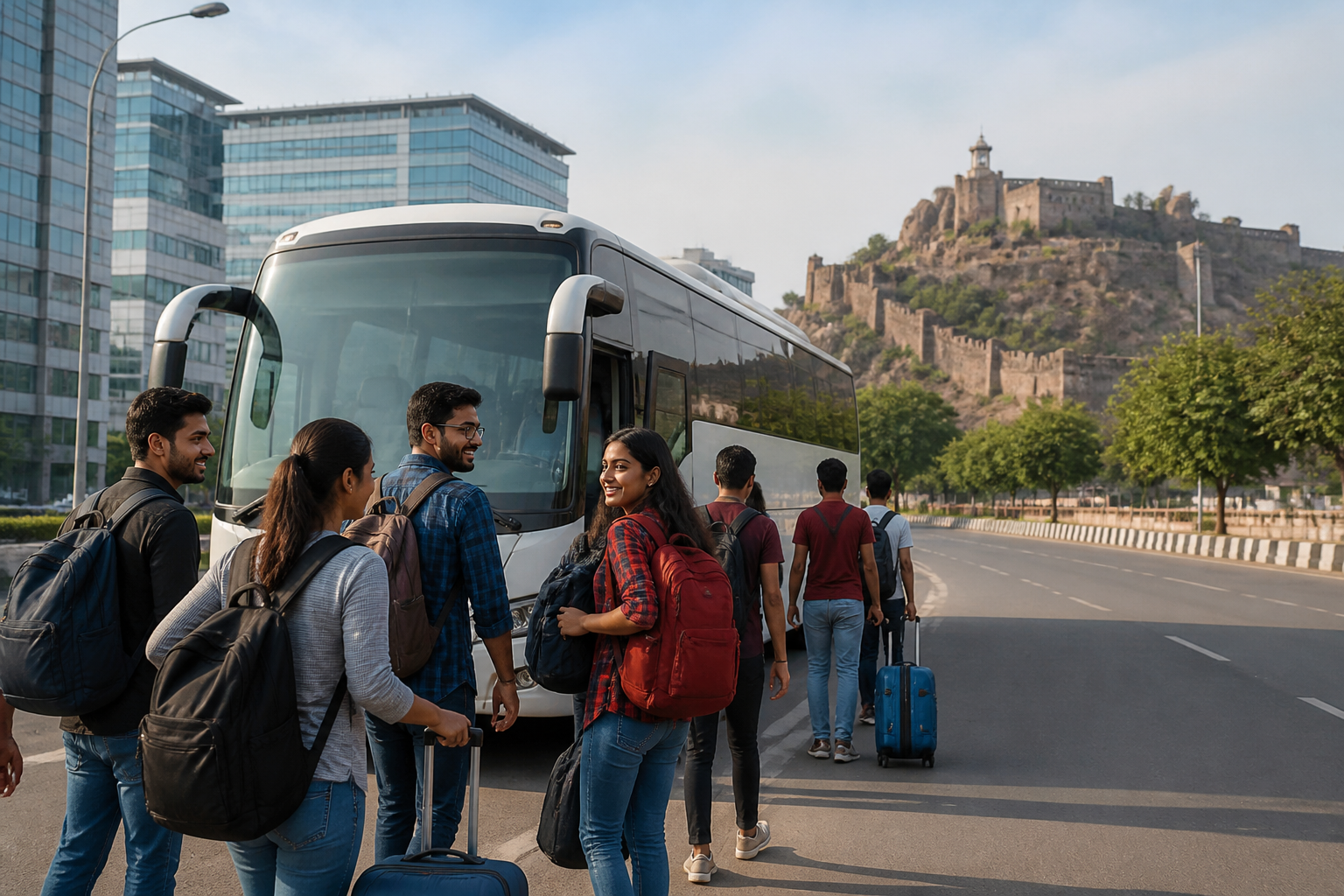
Telangana’s proposal to offer tourism coupons to Hyderabad’s IT professionals is designed to turn the city’s large, relatively affluent workforce into a regular domestic market for destinations across the State. Announced at the World Tourism Day 2026 celebrations in Hyderabad, the idea is not only a tourism promotion measure; it is also an attempt to connect the State’s most concentrated employment hub with smaller towns, heritage sites, nature destinations and tourism businesses.
Deputy Chief Minister Mallu Bhatti Vikramarka asked Tourism Minister Jupally Krishna Rao and officials to discuss the proposal with chief executives of leading IT companies and tourism project operators. The suggested programmes would encourage software employees to travel during weekends, promote lesser-known destinations and create what the government described as a new domestic tourism market within Telangana.
That framing is important because Hyderabad’s economic success has not automatically translated into evenly distributed opportunities across the State. The city concentrates technology employment, corporate offices and higher-income consumers, while tourism assets and community-based livelihoods are spread across different districts. A policy that connects these two sides would depend less on the coupon itself than on the quality, accessibility and reliability of the destinations being promoted.
The proposal therefore sits at the intersection of urban consumption and regional development. Hyderabad’s IT workforce represents a large potential customer base, but weekend travel is shaped by more than discounts. Travel time, road and transport connectivity, accommodation, safety, digital booking systems, food services and the availability of activities all influence whether residents leave the city and whether they return. The government’s own statements indicate that the tourism programme is being planned as a wider investment and infrastructure push rather than as a standalone voucher scheme.
At the World Tourism Day event at Shilparamam, Mr. Bhatti called for discussions with companies and tourism operators on special programmes and coupons for software professionals. The source report does not specify the value of the proposed coupons, who would finance them, which destinations would be covered or whether the benefit would be offered directly to employees, employers or tourism businesses. Those details will determine whether the plan becomes a meaningful demand stimulus or remains a promotional campaign.
The proposed intervention is also notable because it seeks to use an existing urban workforce instead of waiting for international tourists to drive growth. Tourism Minister Jupally Krishna Rao said the government was working to attract ₹50,000 crore in tourism investment and create five lakh employment opportunities in Telangana. Under the Telangana Tourism Policy 2025-30, the initial investment target had been ₹15,000 crore. The revised ambition represents a substantial expansion in scale, although the source does not provide a project-wise pipeline, financing structure or implementation timetable for the larger target.
The State’s plan to identify 27 Special Tourism Areas provides another institutional layer. These areas are intended to broaden the tourism map beyond a limited number of established destinations. In principle, distributing tourism activity across multiple areas can help reduce the concentration of visitors and investment in a few locations. In practice, each area would need coordinated planning for land use, transport, water, waste management, public facilities, accommodation and local employment. The supplied announcement does not establish how these responsibilities will be divided among the Tourism Department, local administrations, the Telangana Tourism Development Corporation and private operators.
That administrative question matters because tourism infrastructure is not confined to a hotel or an attraction. A destination becomes usable when the entire chain works: the road or transport connection is dependable, visitors can find accurate information, public toilets and waste services are available, local food and accommodation meet demand, and emergency and safety systems function. If any link fails, a coupon may lower the price without solving the barriers that prevent weekend travel.
Tourism Department Special Chief Secretary Vani Prasad described tourism as a development and economic engine capable of generating employment at the community level, from tourist guides to large investment projects. This places local livelihoods at the centre of the policy argument. The potential employment range is broad, but the distribution of benefits will depend on who owns and operates tourism facilities, how local workers are trained and whether smaller enterprises can participate in the visitor economy.
Ms. Prasad also stressed that Telangana’s identity cannot be defined only by monuments or structures. People, living culture and arts, she said, are an important part of the State’s heritage. That emphasis could help the policy move beyond a model based solely on constructing physical attractions. It also creates a need for careful management of cultural presentation, particularly when local traditions are packaged for visitors from the State’s largest city.
Telangana Tourism Development Corporation Managing Director P. Gouthami presented the State as “one State with many experiences”. The range cited by the corporation includes Buddhist tourism, waterfalls, rivers, wellness tourism, medical value tourism, weddings and conventions, film and cinema-related tourism, eco-tourism and adventure experiences. This diversification is commercially useful because different destinations can serve different travel purposes, but it also makes planning more complex. A convention destination, a riverfront site and an eco-tourism location require different transport, accommodation, environmental and public-service arrangements.
The corporation operates restaurants across the State and boating facilities at around 99 locations, according to Ms. Gouthami. It also runs transport services, offers tourism packages, conducts fairs and festivals, and operates sound-and-light shows. These existing functions give the government a platform through which a coupon programme could potentially be delivered. At the same time, the number of facilities alone does not reveal their capacity, utilisation, maintenance standards or financial performance. Those measures would be necessary to assess whether existing assets can support a significant increase in weekend visitors.
The corporation is seeking private partners to modernise its operations. Private players are expected to develop new projects, upgrade existing facilities and introduce floating restaurants and houseboats at selected locations, including Somasila. This proposed public-private model could bring capital and operating expertise, but it also raises questions about access, pricing and the balance between commercial facilities and public tourism assets. No details on the proposed partnership terms or safeguards were provided in the announcement.
The government’s emphasis on digital technology and artificial intelligence reflects the theme of this year’s World Tourism Day celebrations, “Digital Agenda: Reimagining Tourism with Artificial Intelligence”. Mr. Bhatti called for AI and digital tools to help take Telangana tourism to the international level and establish a distinct identity for the State. For a domestic weekend market, however, the most immediate digital value may be practical rather than promotional: discovering destinations, checking availability, planning routes, booking packages and receiving real-time information.
A digital platform can make a fragmented tourism system easier to navigate, but it cannot substitute for physical infrastructure. If a destination is difficult to reach, lacks basic services or cannot accommodate visitors at peak times, improved visibility may increase dissatisfaction rather than repeat travel. The success of a technology-led tourism strategy will therefore depend on whether digital systems are connected to verified information and functioning on-ground services.
Hyderabad’s IT employees are an attractive target because they are concentrated in identifiable workplaces and may be reachable through corporate partnerships. Yet the proposed model also needs to account for the city’s internal geography and working patterns. Employees located in large office clusters may have different travel times and preferences from those working remotely or in dispersed workplaces. Weekend travel demand may also be seasonal and concentrated around a small number of destinations. The announcement does not yet indicate whether the government has estimated potential users, destination capacity or the fiscal cost of the coupons.
Those missing details are central to evaluating the policy. A coupon funded by the government would have a direct budgetary cost. A corporate benefit would require participation from IT companies. A discount financed by operators could reduce prices but might not provide enough support to improve infrastructure. A package combining transport, accommodation and activities could be more useful to consumers, but would require coordination among multiple providers and a system for monitoring service quality.
The larger investment target of ₹50,000 crore and the employment target of five lakh jobs also require a transparent framework for measurement. The source report does not explain whether the employment figure refers to direct and indirect jobs, the time period over which they would be created, or the sectors included. Without those definitions, the target can communicate ambition but cannot yet demonstrate delivery.
The tourism coupon proposal is consequently best understood as an early signal of how Telangana wants to link Hyderabad’s urban economy to a wider regional development strategy. Its strengths are clear: it identifies a large potential market, acknowledges the need for private investment, and places destinations beyond the capital within a common State-wide tourism map. Its weaknesses are equally clear in the information currently available: the funding model, eligibility, destination selection, infrastructure readiness and employment accounting remain unspecified.
The next stage will be the proposed discussions among the Tourism Department, IT company CEOs and tourism project operators. Those talks will show whether the idea develops into a defined programme or remains a broad policy suggestion. For the plan to produce lasting economic value, the government will need to connect the coupon mechanism with transport, destination management, local participation, public amenities and reliable digital services. The announcement establishes the direction, but the institutional design will determine whether Hyderabad’s weekend spending can become a durable tourism economy across Telangana.
