


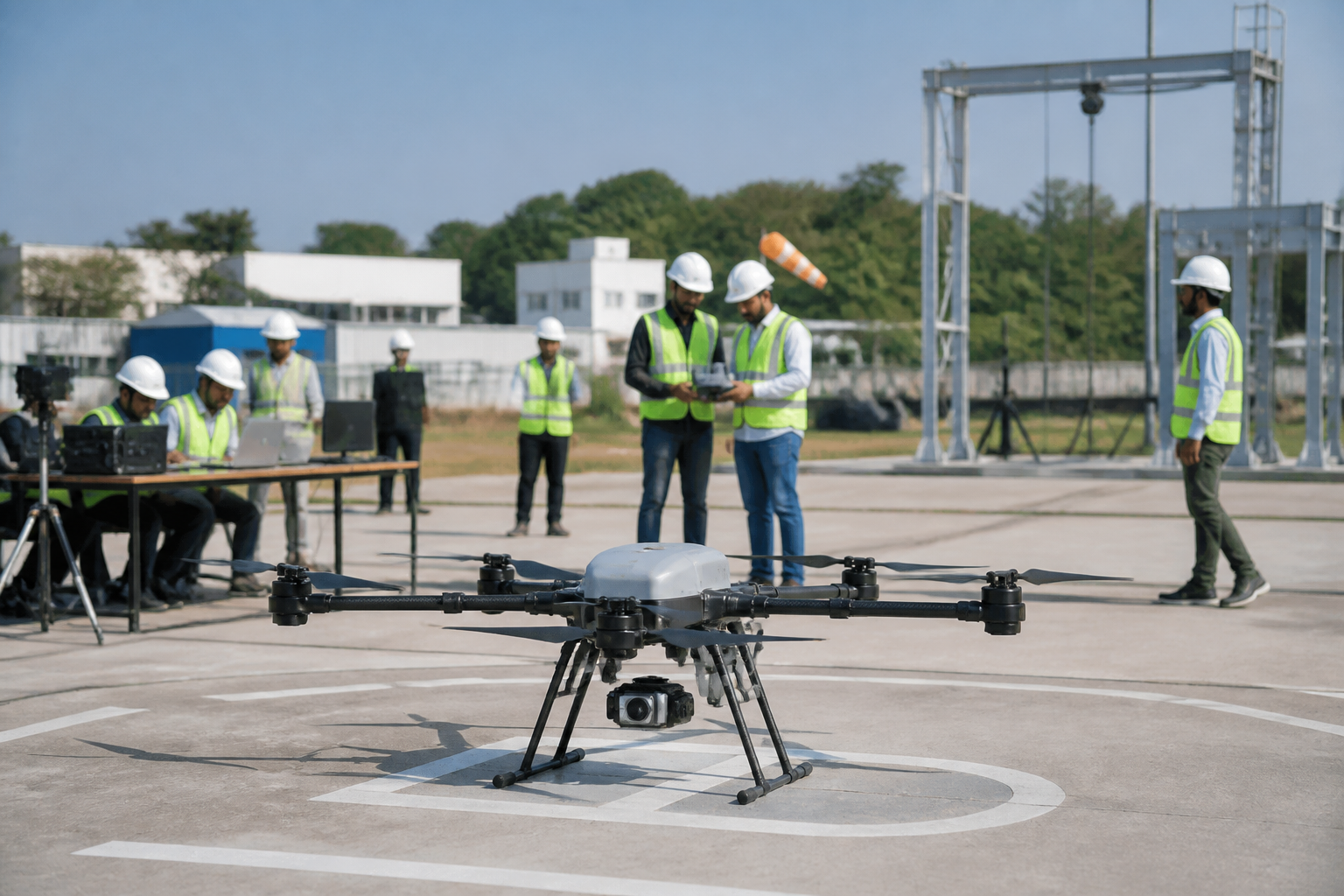
The Automotive Research Association of India (ARAI) has started drone certification services for Unmanned Aircraft Systems (UAS), creating a new assessment route for manufacturers seeking support for Directorate General of Civil Aviation (DGCA) type certification and Unique Identification Number (UIN) allotment.
The service operates under the Certification Scheme for Unmanned Aircraft Systems (CSUAS), which is administered by the Quality Council of India on behalf of the DGCA. ARAI is authorised to evaluate drone platforms against requirements that support the type-certification process.
“India’s drone ecosystem is entering a phase of growth and technological innovation, creating new opportunities across sectors. Our objective is to enable a safe, compliant, and innovation-driven drone ecosystem,” ARAI director Reji Mathai said. He invited organisations seeking certification support to engage with the agency.
ARAI’s process follows the two-stage evaluation methodology prescribed under the certification scheme. The first stage involves document verification, including an assessment of design data, technical specifications, safety provisions and security-related information.
The second stage involves physical and flight evaluation. The submitted drone is examined and tested in flight to assess performance, stability and compliance with the applicable classification. Under the scheme, drones are classified as micro, small, medium or large.
After the evaluation, ARAI issues a Statement of Conformity to the DGCA for compliant platforms. The statement forms the basis for type certification and the eventual allotment of a UIN, which provides an official identification route for approved drone platforms.
Manufacturers can access certification procedures, application formats, evaluation criteria, applicable fee structures and technical guidance documents through ARAI’s dedicated UAS certification portal. The availability of these documents gives companies a defined process for preparing submissions and undergoing assessment.
Drones are increasingly being used in agriculture, infrastructure, logistics, mining, disaster management and defence. For urban authorities and infrastructure operators, certified platforms can support applications involving inspection, surveying, monitoring and emergency response, although the supplied information does not specify particular municipal or commercial deployments linked to ARAI’s new service.
The certification requirement also places greater emphasis on the quality and reliability of drone systems as their use expands. Manufacturers must demonstrate compliance across design, build quality, flight performance, safety and security requirements before their platforms can proceed through the type-certification process.
Data released by the Press Information Bureau indicates that India had close to 38,000 drones operating and 39,000 DGCA-certified drone pilots as of February 2026. ARAI’s certification service comes as the number of operators and use cases expands, adding an assessment institution to the regulatory pathway for manufacturers.
The next steps for applicants are to review the certification procedures and technical guidance available on ARAI’s UAS certification portal, submit the required documentation and complete the physical and flight evaluation stages before the Statement of Conformity is issued to the DGCA.
